Whisper it slowly but spring might finally be here. While the official start of spring depends upon whether you follow the meteorological or astronomical dates, signs of springtime are definitely appearing in gardens across the country.
From delightfully yellow daffodils to multi-coloured crocuses, silky-white snowdrops to the various vibrant tones of tulips, things are brightening up.
But how much do you know about these fabulous flowers? BBC Bitesize has put together a bumper bouquet of flowery facts.

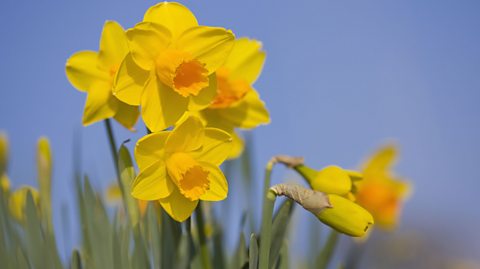
Daffodils or narcissus, is there a difference?
Often bright yellow with six petals and big trumpet-like centres, daffodils are a real sign of spring being underway. They also have a much less common name – their botanical name is narcissus.
There are a number of different flowers that belong to this genus, like jonquils and paperwhites, and of course the common daffodil.
The name is said to come from Greek mythology. It was believed that a handsome but arrogant Greek male called Narcissus was lured to an area of water by Nemesis, the god of revenge.
Some say Narcissus was turned into a flower while admiring his own reflection (with a daffodil's slightly drooping head symbolising him looking into the water). Others suggest Narcissus drowned and the flowers that grew next to the water were named after him.
Over 30 million tonnes of daffodil bulbs are grown in Cornwall every year alone, making the county the biggest grower of them in the world. This represents quite a turnaround, because most types of the flower are not native to the UK and are said to have been brought to Britain by the Romans.
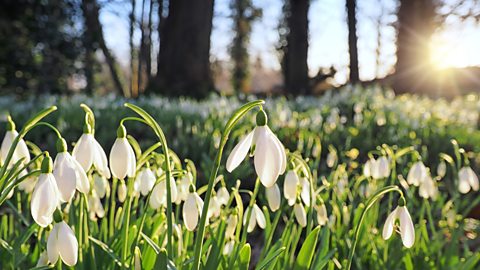
Are snowdrops named after snow?
For many people the first flowery sign that signals spring is on the way is the blooming of the humble snowdrop.
Growing on green stems, often with just one delicate bell-shaped white flower on each, snowdrops can usually be seen blooming in the UK between January and March. But this can depend on the weather, and where in the country you live.
Despite their very wintery sounding name, snowdrops aren’t actually named after snow. Instead they take their name from a piece of traditional jewellery. It’s often claimed that these dainty plants were named after white, drop-shaped, earrings, aptly named ‘eardrops’. These were traditionally worn by women in and around the 17th Century.
Snowdrops might sound delicate but they can cope with chilly conditions. Blooming through winter is no easy task, but these plants are well adapted to the cold.
The tips of their green leaves are hardened allowing them to grow through frozen soil. Snowdrops also contain a sort of natural ‘anti-freeze’ which helps to stop ice crystals forming, protecting the plant’s cells from damage.
Snowdrops’ early flowering doesn't just act as a nice signal of winter being over for us humans though. When temperatures regularly rise above 10-degrees-celsius, the flower’s outer petals open up, allowing queen bees their first taste of nectar of the year.
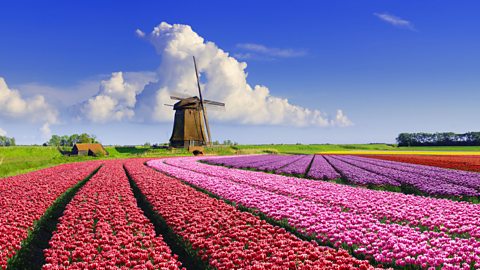
Where are tulips originally from?
Tulips are bold and beautiful, popping up in all sorts of colours. But unlike some of the seasonal flowers we’ve explored, tulips often bloom later into spring.
If flower-fans were asked which county the tulip originally comes from we’re pretty sure the Netherlands would be high up on the list of answers.
After all, according to the Amsterdam Tulip Museum, the country is the world's largest producer of commercial tulips. It’s estimated that over 3 billion tulips will be grown in the Netherlands in 2026.
But although the Dutch lay claim to growing the most, plus having the tulip as a national symbol, it’s widely believed that the flower's original home was in Asia. In fact, the word ‘tulip’ is said to come from a Persian word meaning ‘turban’ - a nod to the flower’s iconic shape.
Tulips bloom naturally in loads of colours with yellow, orange, red, purple, pink flowers common.
But one colour of tulip that doesn’t appear naturally is blue. This is all because of the genetic make up of the flower. They don’t have the pigment known as delphinidin which helps create the colour blue. So chances are if you think you’ve seen a blue tulip it will actually be a shade of lilac or purple.
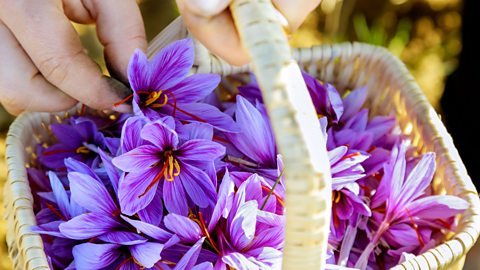
What spice comes from crocuses?
Crocuses are almost cup-shaped flowers that can be seen blanketing the ground from sea-level to mountainsides. There’s around 80 different species that open up during the day and close at night.
These include the crocus chrysanthus (the snow crocus) and the crocus vernus (the spring crocus) which we can see in spring. Like all crocuses, and unlike tulips and daffodils, these don’t grow from bulbs, but from solid stems bases called corms.
But if you’re looking for perhaps the most valuable crocus type, you’ll need to hang around until autumn.
That’s when the crocus sativus, or the saffron crocus blooms. It’s from the stigmas of this particular crocus that saffron, the world’s most expensive spice, is created.
Vibrant in colour, this spice has been used for thousands of years in everything from cookery to medicine, dyeing clothes and even in perfume making.
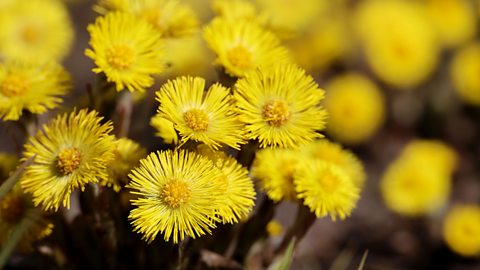
Why can’t I see coltsfoot leaves?
This last little entry on our flower packed fact list might be a little well less known but it’s still pretty impressive.
Coltsfoot looks similar to a short dandelion, with bright yellow heads and slightly pink stems. They add a springtime zing to damp or waste ground anytime from February until around April.
While the yellow heads begin to pop up out of the ground like bursts of spring sunshine, you might find yourself wondering where the plant’s leaves are. But you’d be forgiven, because in a somewhat reversal of roles when it comes to flower blooming, coltsfoot leaves actually make their appearance after the flower heads have bloomed.
When they do grow, and they can grow pretty big, the leaves are a vibrant green. In terms of shape, they look similar to a horse’s hoof, which is why the plant is given its name, with a ‘colt’ being a young male horse.
As spring carries on, coltsfoot flowers turn into tufted seed heads (again like dandelions). Often these fly off in the wind or are picked by small birds for nest building. It is believed that historically they were used to stuff bedding and mattresses.
This article was published in March 2026
Cherry blossom: What is sakura season in Japan?
Thousands of tourists flock to Japan to see the cherry blossom trees each spring - but why is it so important?
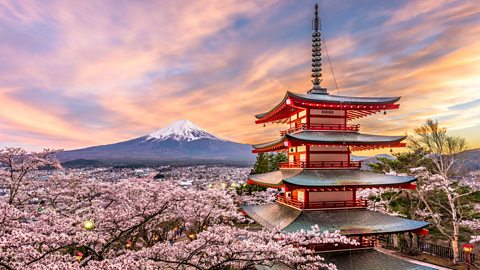
Are these the most mesmerising gardens in the world?
Take a journey across the world to explore some of the most mind-blowing gardens.
The trees that witnessed history
From the American Civil War battlefields to the signing of the Magna Carta, discover how trees have witnessed key moments of history.