Ryan is 26 years old and the founder of a wearable technology company.
Ryan switched aeronautical engineering for sustainable fashion when he noticed how quickly his nephew was outgrowing his baby clothes.
Ryan: I'm Ryan, I'm 26 years old and I'm from London.
So I'm the founder of a wearable technology company, creating clothes that grow with children.
When I bought some clothes for my little nephew, by the time he had received them in Denmark he actually didn't fit in them and it made me start to think how wasteful that industry must be. And after researching for a little bit, I realised that children grow seven sizes in their first two years on earth, and that is a mad amount of clothing. Not only that, but you're having seven sets of garments which are being made in a factory, which means seven times the amount of offcuts, seven times the amount of logistics to move everything around and that, again, is logistically lots of CO₂ emissions. The amount of waste that must result from gifting the wrong size or from outgrowing the garments so quickly.
So I have a background in aeronautical engineering where I specialised in deployable structures for satellites. It involved a lot of research in origami, and I could see how engineering and art could live in the world together. And that multi-disciplinary approach to solving a problem was really what drew me towards the wearable industry.
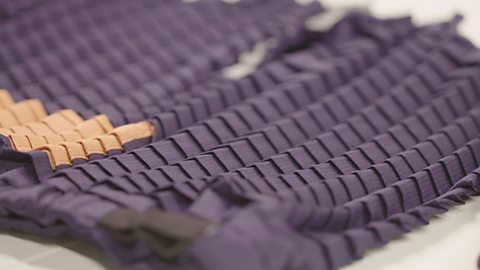
So there's a structure embedded within the garment that has a negative Poisson's ratio and what that means is as you pull it along the length, it grows along the width. By embedding seven sizes into the design, the result is just so much more sustainable, ethical and just better for the world.
What I do every day is a mix of all roles, from designing to working with the team to looking at legal work and essentially taking the company forward to its next stages.
I think it's really great to be solving issues around sustainability and climate change. You could harness problem solving, innovation, engineering and fashion in a single product, but that it could have sustainable credentials and also give this magical, delightful effect. The first time my niece saw these garments, she just screamed as if it was magic, and I think that was the most incredible feeling for me.
So I want my niece and nephew to grow up in a world where innovation and sustainability can live together without any trade-offs, where progress can still be made and it's not harming another person nor the world as a whole, and that's why I want sustainability, technology and fashion to just work together.

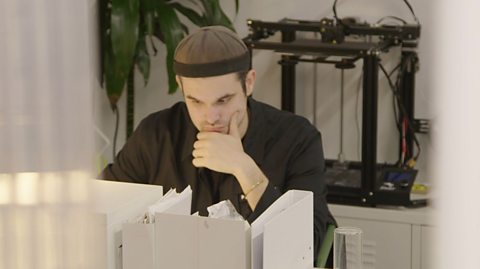
Ryan's journey
Ryan used to work as an aeronautical engineer designing satellites. He turned his attention to the fashion industry when he bought some clothes for his nephew in Denmark, but by the time they reached him, he’d outgrown them.
Ryan learned that “children grow seven sizes in their first two years on earth” and was shocked by the idea of how many sets of clothes this meant, how wasteful the cycle of buying and discarding outfits must be, and how much harm it could cause for the environment.
So, he set about combining his engineering skills with inspiration from the world of art and origami, to create clothes that grow with children.
How can sustainable fashion help the planet?
When clothing is produced quickly, with cheap fabrics, cheap labour and to satisfy changing trends, it’s called ‘fast fashion.’
Fast fashion can have a lot of negative impacts. For instance, it’s wasteful. It can also be it’s harmful to the environment and wildlife because of the synthetic materials and toxic dyes used. In addition, some fast fashion factories are not always run in an ethical, safe or fair way.
Sustainable wearable technology companies, like Ryan's, aim to produce clothing without many of these negative impacts.
What to expect if you want to own your own business
Working for yourself looks different for each person and each business, but in general it means you:
run your own business and are responsible for its success
can decide how, when and where you do your work
charge an agreed, fixed price to perform your work
sell goods or services to make a profit
can hire people at your own expense to help you or to do the work for you.
The salary and working hours when you own a business can vary enormously but what's most important is you work hard and love what you do.
You can be both employed and self-employed at the same time. You can work for your employer during the day, for example, and run your own business in the evenings and at weekends. It’s important to contact HMRC for advice if you’re not sure if you’re self-employed.
You can get help with setting up or developing your business, through the government’s business support services, for example, for advice about tax or about how to find funding to start your business.
Source: GOV.UK
For careers advice in all parts of the UK visit: England, Northern Ireland, Scotland and Wales.
How a blocked toilet led to my sustainable business. video
Scientist Elle spent most of her time in a lab, until her friend’s blocked toilet catapulted her career in a whole new direction.
May: beekeeper. video
Despite a near-death experience, May’s love for our pollinating pals won't fade. Find out more about befriending bees.
Dan: ornithologist. video
Find out how Dan uses nature to calm her anxiety, whilst also protecting the birds and wetlands she loves.