Raising children creates an inevitable increase in chores around the house. There are more bedrooms to tidy, more clothes left on the floor, toys strewn around the place and the never-ending washing of clothes and dishes.
I'm one of the writers on Bitesize Parenting and a parent to a teenager and a tween, I’ve tried many tactics over the years to try to get them to help share with this never-ending housework, with varying results.
But how much should you expect your kids to do around the house? Should you pay them, or is it expected that they share with these mundane tasks? And what jobs are age-appropriate and seemingly achievable?
To help me in my quest to lighten my domestic load, I asked parenting experts and fellow parents how they divide up the work.
'Teamwork makes the dream work'
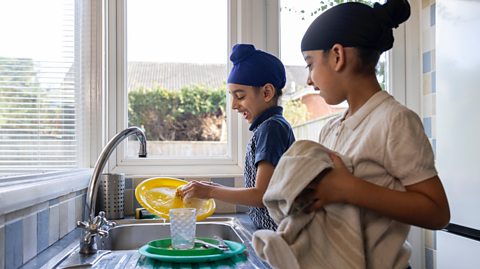
Parenting coach Sue Atkins says giving chores to your children encourages teamwork and discipline – as well as easing your frustration. “Your kids get to understand that they are an important cog in your family wheel,” she continues. “when I did it with my kids, it was about us all being part of a team. You know, you empty the bin, you empty the dishwasher, I'll lay the table. You bring down your laundry - I'll do it when you're young, but when you get older, I'll show you how to use the machine."
She points out - that way they start to do it themselves, and you're teaching them. “I think if you have the mindset right from the beginning about how you're empowering your kids.”
Atkins says the first step is to identify your kids’ daily routines and help them break them down into tasks. That way, you can list them and they can easily see what needs to be done.
“Tasks like putting their pyjamas under the pillow and pulling their duvet into place, clearing the table or laying the table for dinner, list some of the jobs which you would like them to do.”
More home hacks for getting children to help keep a tidy and orderly house.
Boost self-esteem
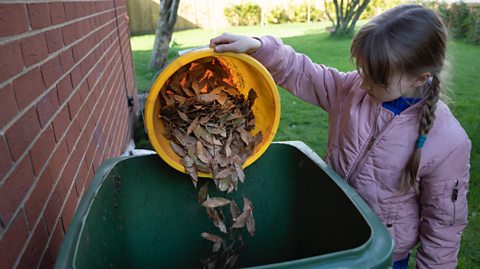
Sue thinks it teaches children independence, and it helps them be self-reliant. "It's also really good for their self-esteem and confidence because it makes them capable and competent in practical ways.”
Talk through it
Sue Atkins suggests choosing a time when your children are relaxed to talk them through what you'd like them to do. In her words, strike when the iron is cold.
“You could say to them, you're growing up now and I'm not your servant running around after you. It’s good for you to learn how to look after yourself. You could say you will do certain jobs because you’re their mum, but that there are jobs you would like help with. Focus on the team spirit element of things.”
Give them age-appropriate tasks
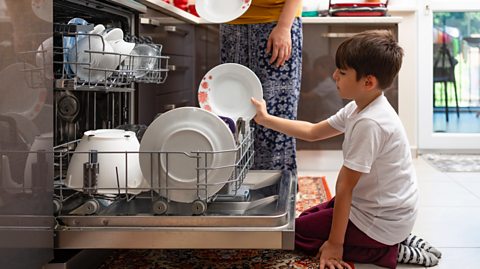
Sue says children can start with certain tasks from a young age, such as putting groceries away. “Kids of eight and nine can help, you know, load cupboards and put the butter away and all that,"
She suggests that you don’t need to be serious or stern, but you can make it fun and make it lively so they can get involved. for instance stick on some music as you tidy or clean with you. “You’re teaching them that we're all in it together - life is about collaboration.”
Colette, who writes the parenting blog Going on an Adventure, said her children - who are aged 12, 14 and 16 - are given regular tasks which they must complete in order to get their pocket money.
She says: “They earn a fixed amount of weekly pocket money – the 12-year-old gets £5 a week, the 14-year-old gets £7 a week and the 16-year-old gets £9 a week.
“It's not a lot because there are three of them and we can't afford to give them more - but it's more about teaching them a work ethic and about financial responsibility and freedom.” She said they choose tasks which are age-appropriate too. “My youngest takes all the laundry upstairs to the right bedrooms, keeps the cupboard under the stairs where we keep coats, bags and shoes tidy, feeds the dog twice the day and clears up after the dog in the back garden.
“The middle child loads and unloads the dishwasher at least once a day, vacuums the stairs and the living room daily, and the eldest empties the bins, cleans the bathroom and sweeps the patio.”
Colette added that these are tasks they're expected to do for their pocket money. “Other things like helping to set and clear the table for dinner, keeping their rooms tidy and washing their own sports kits are just things we expect them to do as being part of the team that live in the house."
Chores can be inclusive
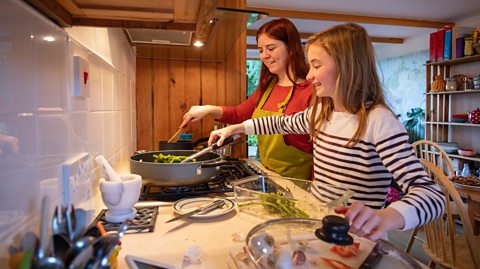
Lizzie Assa, a US parenting expert, says encouraging your children to help out can make them feel included and that things like going to the shop, taking out rubbish and folding towels shouldn't be seen as punishments.
She says "They’re proof that they matter to the functioning of this family. That we need them. Teens crave being seen as capable, not just children we’re managing.”
Should I expect them to pitch in?
Rachel, who has two children, said she doesn’t agree with paying her children to help with the domestic load.
“I don’t pay my children to do anything I do for free,” she says. “But I'm happy to thank them for the huge effort with family treats for everyone. Teamwork makes the dreamwork and all that!”
Easy chores to suggest to your children
Emptying the dishwasher
Tidying their rooms
Putting clothes away
Sorting out laundry
Pet care, such as taking the dog for a walk or cleaning the hamster cage
Cooking a meal
Tidying away toys after play
Taking out the rubbish
This article was published in January 2026

Bitesize Parenting
Fun activities, real-life stories, wellbeing support and loads of helpful advice - we're here for you and your child.

How to sort out family rows: An expert guide
Family dynamics can cause friction, arguments and bad feelings. Expert advice from a psychologist on why rows happen, steps to calm tension and tips to resolve the issues.

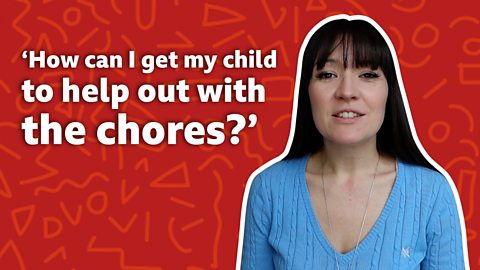
How can I get my child to help out with the household chores? - The Super Tutors
'Home Hack Master' Rhi explains how you can persuade your child to help keep the house clean and tidy.
Six ways to get your kids active at home
How to keep active in a small space at home using Super Movers films.

How to recognise and treat parental burnout
BBC Bitesize spoke with an expert to find out how to identify and treat parental burnout.

Why girls quit sport - and how you can help them stay active
British rower Baz Moffat spoke to Bitesize Parenting to discuss why nearly half of girls lose interest in sport and what can be done to change it.