It's likely you will have heard about famous events during the civil rights movement in the US - but do you know about the Bristol Bus Boycott that took place here in the UK?
BBC Bitesize looks at this stand against discrimination and how it played a big role in UK history.

What was the 1963 Bristol Bus Boycott?
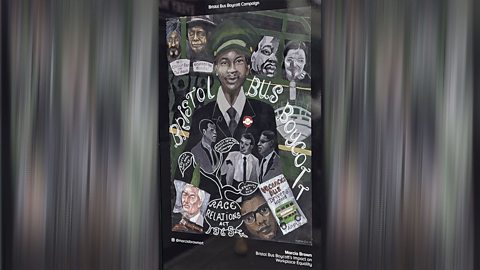
In 1963 the state-owned Bristol Omnibus Company had a so-called When equal employment opportunities in a particular industry or organisation are denied to members of ethnic minorities. in place. This allowed the company to ban anyone who was not white from working as a bus driver or conductor. To prove and challenge this racist policy, the activist organisation West Indian Development Council (WIDC) and local black leaders Roy Hackett and Dr Paul Stephenson encouraged a student called Guy Reid-Bailey to apply for the role of a bus conductor at the Bristol bus service. He was well-qualified for the role and Guy himself was excited by the opportunity, but in the end he wasn’t even given an interview because he was black.
This act of discrimination was legal and a common occurrence at this time. To counter this the campaign for racial equality in the UK grew and eventually involved a lot of events, unrest and people protesting against the status quo.
With clear evidence that a colour bar was in place at the Bristol Omnibus Company, local leaders called for a boycott of the bus service.
This boycott quickly gained momentum. Supporters refused to take the bus, they picketed the bus depot and took park in marches across the city. Students from the University of Bristol also supported the boycott, as well as high profile politicians who voiced their support like Bristol South East Labour MP Tony Benn and Labour leader Harold Wilson, who later became Prime Minister.
From April to August 1963 supporters kept the pressure on, and with their determination they achieved its main aim.
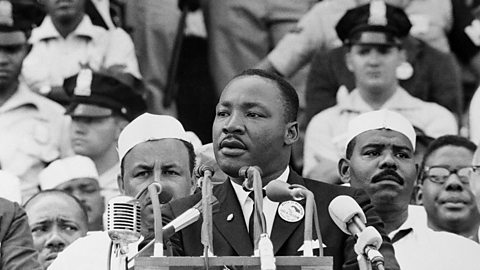
Bristol Omnibus Company lifted the colour bar and changed it's racist hiring policies on 28 August 1963, the same day Dr Martin Luther King Jr. delivered his famous "I have a dream" speech.
How did the American civil rights movement influence Britain?
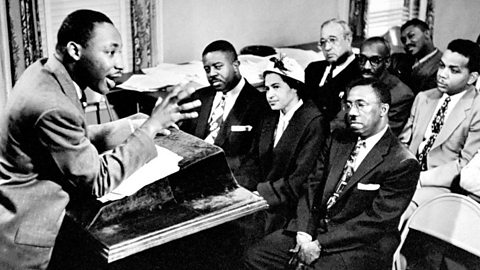
Dr Paul Stephenson was a key spokesperson in the bus boycott. He was the first black social worker in Bristol and was inspired by the civil rights movement then sweeping the US.
In 1955 Rosa Parks refused to give her bus seat up for a white passenger in Montgomery, Alabama. This act sparked a movement which initiated the boycott of the city's bus system. This 13-month boycott was organised by the Montgomery Improvement Association and its president was Martin Luther King, Jr. The boycott ended with the U.S. Supreme Court ruling that the segregation on public buses was unconstitutional.
When Guy Reid-Bailey was refused an interview with the bus company in Bristol, Stephenson said that this “was the time to take up the issue and do what Martin Luther King was doing".
How much impact did it have in the UK?
The success of the Bristol Bus Boycott did not mean that racial tensions in Bristol or Britain went away. But it did highlight the racial inequality that was happening at the time and that put pressure on the government to respond to racism in the UK.
Two new laws were passed in the years after the event:
The 1965 Race Relations Act which made racial discrimination in public places and the promotion of racial hatred an illegal offence.
The 1968 Race Relations Act which made it illegal to refuse housing, employment, or public services to someone on the grounds of their colour, race or ethnic or national origins.
Throughout his life Stephenson spoke out against discrimination, he said "every generation has a duty to fight against racism, otherwise it will find its way into our country and into our homes. Addressing this challenge is our duty if we wish to seek a happy and prosperous existence”.
For their contributions to the civil rights movement in the UK Guy Reid-Bailey was awarded an OBE in 2005, as was Dr Paul Stephenson in 2009. Roy Hackett was also awarded an MBE in 2020.
This article was published in January 2026
Seven wonderful places of worship around the world
Whether you’re a religious person or not, places of worship can often be awe inspiring.
A brief history of UK university fees
BBC Bitesize looks how university fees went from free to over £9500.
The trailblazing female World War II spy you might not have heard of
The story of Noor Inayat Khan features in a new exhibition called Spies, Lies and Deception, at IWM North