Who’d be a referee?
As Erling Haaland and Dominik Szoboszlai swapped fouls in a desperate attempt for the Liverpool man to prevent Manchester City’s striker from tapping into an empty net, the general consensus in the football world was that the two fouls should count each other out, and the goal should have stood.
But the laws of football don’t have a clause allowing match officials to go with the flow, to vibe a decision or use generally accepted common sense despite the pleas of fans and pundits alike.

Referee Craig Pawson and his VAR colleague John Brooks had no choice but to apply the rules as they stand – to deem that two wrongs don’t make a right and that advantage could not be played once Haaland fouled Szoboszlai back. The Liverpool player was sent off and faces a ban, and City saw the chance of a 3-1 Anfield victory reduced to a 2-1 win.
After the game, Haaland, his manager, pundits and supporters bemoaned the referee’s decision, calling for referees to change the way they manage similar situations. Could it lead to a rule change?
There have been plenty of times the laws of football have been ripped up and required a rethink. BBC Bitesize explores times that football rules were scrapped.
Golden and silver goals
While England’s women have had success when it comes to penalty shootouts in major tournaments, spot kicks didn’t come as easily to the men’s team.
England crashed out of the World Cup in 1990, 1998 and 2006 on penalties and on four occasions at the European Championships, including the final in 2021.
So a new rule designed to liven up extra-time in a bid to prevent penalties must be a good thing, right?
Law-makers brought in the golden goal to get rid of extra time periods that were felt to be dull, with teams too nervous to risk losing.
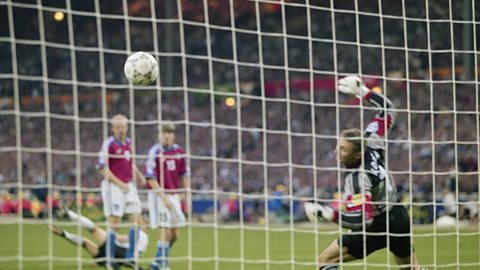
The golden goal meant, that if a team scored in extra-time, they instantly won the game. No chance of a comeback, no need for penalties – the match finished.
The rule change was seen as unfair for teams who had no opportunity for a comeback. The 1996 European Championships final was decided by golden goal after Germany’s Oliver Bierhoff’s deflected strike slipped through the Czech Republic goalkeeper’s fingers, while France also won the Euros in 2000 via the sudden-death winner.
To combat some of the accusations of unfairness, Uefa introduced the silver goal – although this didn’t make things much better.
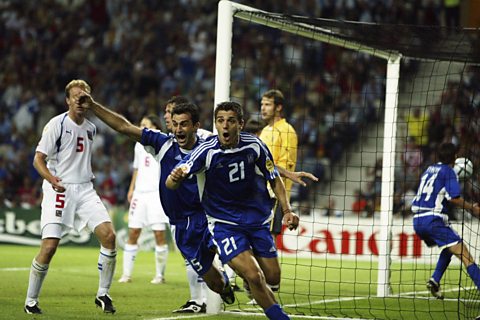
Now, if a team scored in the first period of extra time, play would continue until half time in extra time, where if a team was leading, they would win the match. Similarly in the second period of extra time, a goal wouldn’t stop the match, but still allow time for a comeback.
Silver goals proved just as popular as the golden ones – and both Fifa and Uefa scrapped them after the 2004 European Championships, heading back to normal extra time.
Double golden goals
We can’t mention golden goals without looking back at the 1994 Caribbean Cup.
If you’re not familiar with this competition, you won’t quite believe the bizarre rule they introduced.
As part of the qualification, three-team group stage, organisers decided every game needed to have a winner, and that games would go to golden goal extra time. But, as a twist, any golden goals would be worth two goals – meaning a big boost to a team’s goal difference.
Ahead of the final group match between Barbados and Grenada, Barbados knew they needed to win by two goals to reach the main tournament. They were leading 2-0 when Grenada pulled one back in the 83rd minute.
Knowing a one-goal victory wasn’t enough, Barbados hatched a completely legal, but unique plan. Score an own goal, and take the game to extra time, where a golden goal would give them the two-goal win they needed.
Once they’d deliberately conceded, fans were treated to the bizarre spectacle of Barbados players defending both goals – with Granada knowing a win or a loss by a single goal would be good enough for them.
The plan worked and Barbados went on to score a golden goal, good enough to make it to the tournament proper, where they exited in the group stage. Double golden goals were – unsurprisingly - never used again.
10-yard dissent rule
Often during debates about footballers’ misbehaving, it’s suggested they should take more of a rugby approach.
In both codes of rugby, talking back to a referee – known as dissent – doesn’t happen all that often, with more of a unilateral acceptance of an official’s decision.
Less so in football – where players answering back is commonplace.
So in 2001, the FA borrowed a rule from rugby and brought it into English football – whenever a player protested against an official’s decision, the referee was able to move the subsequent free kick 10 yards closer to the goal.
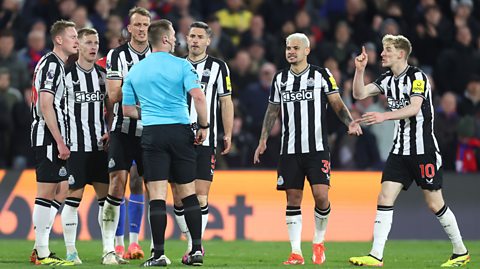
This often led to the bizarre sight of a direct free kick – not a penalty – being given inside the penalty area. It also led to some clever tactics – in one game, a Sunderland player deliberately spoke back to the referee to force David Beckham’s free kick for Manchester United to be moved closer to the goal, making it harder for him to beat a defensive wall.
After four seasons, Fifa told the FA to scrap the rule – as other countries couldn’t follow it at all.
ABBA Penalties
While a penalty shootout often means that The Winner Takes It All, ABBA penalties had absolutely nothing to do with the Swedish pop group.
Instead, it meant a change to the order in which teams take penalties.
For as long as penalty shootouts had taken place, they’d followed the same format. Team A goes first, then Team B goes second – and so on, until there was a winner. This setup is known as ABAB – because teams alternate their kicks.
Research showed that under this format, the team that went first seemed to have an unfair advantage – that they were 60% likely to win.
So a new system was brought in, similar to how a tennis tie-break takes place. Under this system, Team A would go first, then Team B would take two penalties in a row, before Team A then had two spot kicks. Because of the alternating nature, it was known as ABBA.
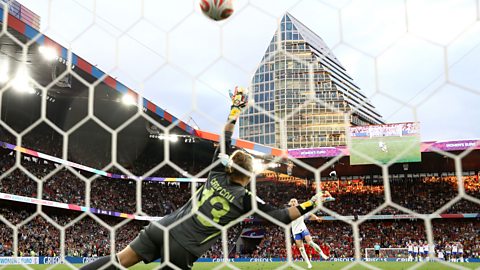
If you think that all sounds confusing and unnecessary, then good news. Football’s lawmakers completely agreed and scrapped it almost as soon as it was brought in. Fans couldn’t follow the format at all and they quickly went back to the original setup.
It’s not the first time that penalty shootouts have been temporarily tweaked.
When league football was being established in the United States, with the North American Soccer League (NASL) in the 1970s and 1980s and Major League Soccer (MLS) from the 1990s, they followed the long-held US sports principle that games should never, ever end in a draw – or a tie, to use the US vernacular.
But instead of using traditional penalties, they borrowed a shootout style from ice hockey – where players take the puck from centre ice, and skate towards goal, with limited time to score.
The soccer shootout version was slightly different – no skates needed, of course. Here, players picked up the ball 35 yards from goal and had five seconds to shoot.
While it was entertaining for fans, it led to a spate of high-speed collisions and injuries. MLS scrapped the rule after a few seasons and reverted to the classic penalty kicks.
This article was published in February 2026
2026 World Cup: When cup draws go wrong
Missing teams, broken equipment and inappropriate jokes - sometimes a football cup draw doesn't quite go to plan
From bedroom to boardroom - three UK businesses that made millions from small beginnings
BBC Bitesize explores the incredible stories of three businesses that went global against the odds

The ultimate Winter Olympics and Paralympics quiz
Do you know your stuff when it comes to sport on snow and ice? Take our tricky quiz to find out!