You might have seen photos across social media and online of pink flowers all over Japan each spring.
It feels as if the whole country is covered in cherry blossom – known in Japan as sakura - and thousands of tourists flock to cities, towns and villages in the country to enjoy the annual blooming.
But why is sakura season so big in Japan?
What is sakura season?
Sakura season is the short period every spring in Japan where cherry blossom trees bloom across the country.
While the blossom only tends to last for a week or two per region, it’s a keenly anticipated time of year for both Japanese people and tourists.
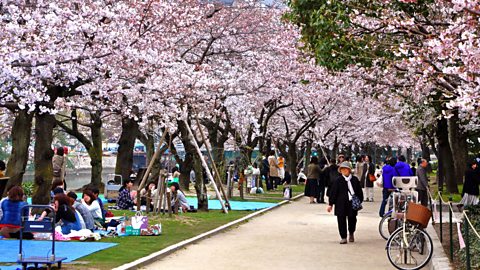
People gather in public spaces and take part in hanami - the Japanese term for flower-viewing. Families get together for picnics under the blossoms.
The season is seen as a time for celebration and reflection – acknowledging the changing of the seasons, and the flowers are said to represent everything from birth to death as well as nature itself, all of which are central themes in Japanese art and philosophy.
When did sakura season begin?
While the perfect pink blossom pictures for Instagram are a relatively new phenomenon, hanami itself is a centuries-old tradition.
It originated during the 8th Century, but was seen as an elitist activity, where aristocrats would gather under initially plum, then later cherry blossoms.
In the 17th Century, the tradition spread to the masses, with leaders encouraging cherry blossom trees to be planted to inspire festivities.
Cities, towns and villages now hold annual festivals during sakura season – known as sakura matsuri.
Why is sakura season important?
Hanami is very closely tied to the Japanese philosophy of wabi-sabi, the principle of finding beauty in impermanence.
The cherry blossoms appear across Japanese art and culture – represented in poems, paintings and songs and even across sport.

The Japanese national football team released a special edition pink shirt in celebration of sakura season, while the national rugby team’s nickname is the Cherry Blossoms - also represented in the team’s official crest.
Sakura season also ties in to the start of the school year in Japan, as well as a new work and financial year – giving the traditional blossoms a sense overall of a new beginning.
Why is sakura season controversial?
It’s difficult to imagine there being a controversy over looking at cherry blossoms – but it’s become more and more contentious in Japan over recent years.
Towns and villages have become overwhelmed with the number of tourists flocking to take part in hanami - and with that, the poor behaviour of some visitors to the country.
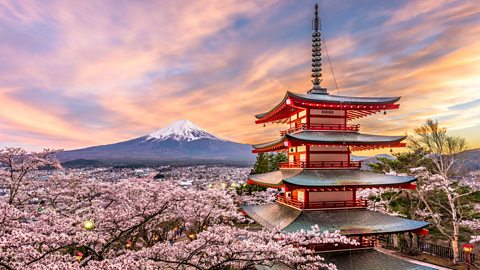
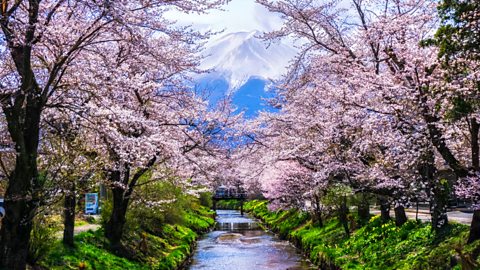
The town of Fujiyoshida cancelled their cherry blossom festival in 2026 because of the stress it was putting on residents. Around 10,000 visitors came to the small town each day during sakura season as they could get the perfect picture of the blossoms with Mount Fuji behind it.
However officials say they often littered or trespassed on people’s properties so called time on the annual celebration. They cancelled it as they wanted to prioritise the lives of their citizens.
Where are the best places to see the sakura?
While the cherry blossoms only typically last for a week or so, the blooming period can span around five months across the country.
The first sakura typically blooms in the southern tropical Okinawa islands in January, while the northernmost Japanese island of Hokkaido typically sees the blossoms in early May.
In major cities like Tokyo, Kyoto, Osaka and Hiroshima, the sakura is often predicted to bloom in late March or occasionally very early April.
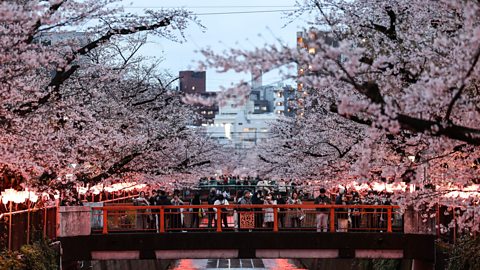
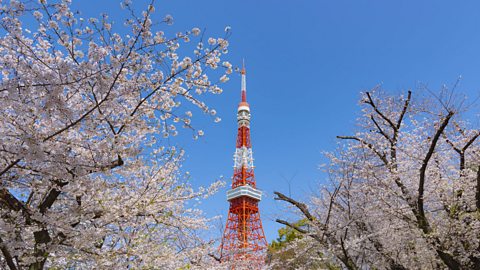
In Tokyo, it’s hard to miss the sakura as cherry trees seem to be everywhere – lining the city’s rivers, parks and streets. One of the most famous spots is on the banks of the Meguro River, where hundreds of the trees arch over the water creating a long tunnel of blossom.
In Kyoto – the former capital – there are plenty of spots for hanami at a slower pace than in Tokyo. The city is home to many temple gardens and parks, such as Maruyama Park, home of one of the country’s most iconic cherry blossom trees.
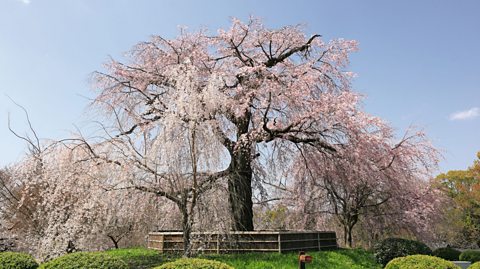
The Gion Shidare-zakura tree is a weeping cherry tree at the centre of Maruyama Park. The original stood for around 200 years before dying in 1947. It was replaced by an existing tree replanted in the same spot, that is almost 100 years old.
Perhaps the country’s ultimate hanami spot is in Himeji, home to the UNESCO World Heritage Himeji Castle.
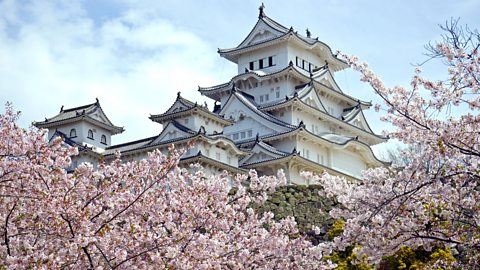
The castle dates back to the 17th Century and is considered to be Japan’s best-preserved and most beautiful castle.
There are around 1000 cherry blossom trees planted in the castle’s grounds and tourists flock to see the pink sakura contrast against the castle’s white walls.
This article was published in March 2026
Six of the most naturally colourful places in the world
From blood-red lakes to emerald-green fields, we explore some of the world's most colourful natural locations

Natural shapes around the world
Circles, hexagons, rectangles and more are all around us in nature
Four UK natural wonders that are shrouded in myth
Discover the legends surrounding four of the UK's natural wonders.