Factors
A factor is a number that divides into another number exactly and without leaving a remainder.
Most numbers have an even number of factors; however, a square number has an odd number of factors.
A prime number has only two factors - the number itself and 1.
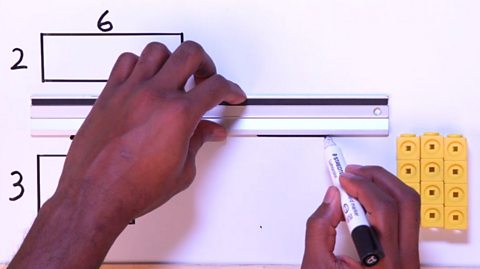
Find out how to work out the factors of a number using eggs!
Factors
The factors of a number are the numbers that divide into it exactly. The number 12 has six factors:
1, 2, 3, 4, 6 and 12
If 12 is divided by any of the six factors then the answer will be a whole number.
For example:
12 ÷ 3 = 4
Square numbers
Square numbers are formed by multiplying a number by itself. All square numbers have an odd number of factors. For example, the number 25 has three factors:
1, 5 and 25
Because 25 is a square number it has an odd number of factors.
Prime numbers
A prime number is a number which is only divisible by 1 and itself. Prime numbers cannot be divided by another number to leave a whole number.
Prime numbers include:
2, 3, 5, 7, 11, 13, 17, 19, 23 and 29
The number 1 only has one factor (itself); therefore, 1 is not a prime number.
Factors quiz
Test your knowledge of factors with this quick quiz.
More on Prime numbers, factors and multiples
Find out more by working through a topic
- count5 of 5

- count1 of 5

- count2 of 5