Celebrating Burns Night: Why it matters in Northern Ireland

 Getty Images
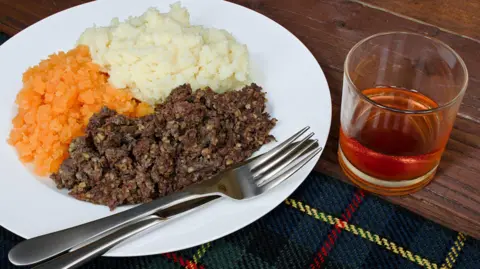
Haggis, the bag pipes and all things Robert Burns - 25 January honours the most prominent poet to have written in the Scots dialect.
But Burns Night is not only celebrated in the Land o' Cakes - it is honoured in Northern Ireland too.
In straths and green valleys, along glens and up braes, people will celebrate Scotland's national poet, separated by a sea from his homeland.
So how has a Scottish tradition ended up in Northern Ireland too?
To understand why, you have to travel back to the 17th Century.
Tens of thousands of settlers arrived in Ulster from lowland Scotland and founded communities across the province, as part of a plan to unite the kingdoms under the rule of King James I, who was a Protestant.
While migration across the North Channel had occurred sporadically prior to this point, it increased hugely in the 1600s.
This began to shape religion, politics, and language.
The Scots language came with those Ulster settlers, developing into what we know today as Ulster-Scots.
While Ulster-Scots refers to those initial settlers, it also refers to their heritage and cultural traditions.
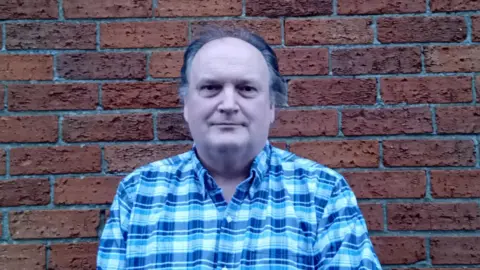
Dr Frank Ferguson, director of the Centre for Irish and Scottish Studies at Ulster University, said migration was important for Burns' work resonating in Northern Ireland.
"You had the movement of people, but also the movement of ideas, the movement of song, and of language," he told BBC News NI.
As migration continued over the centuries, Burns' writings travelled alongside.
"Nearly as soon as Burns was published in Scotland, his poetry was appearing in Belfast papers," he said.
"Belfast was one of the first places to republish Burns' poetry."
As Burns Night became celebrated amongst the Scottish diaspora, its roots became planted in Northern Ireland.
"Burns nights sprung up in the north of Ireland very quickly, because there was such an affinity and love for Burns," he added.
What is Burns Night?
The celebration includes a dinner consisting of haggis - a traditional Scottish sausage made from a sheep's stomach stuffed with diced sheep's liver, lungs and heart, oatmeal, onion, suet and seasoning - served alongside 'neeps and tatties' - more commonly known as turnips and potatoes.
A formal Burns Supper follows a traditional running order of speeches, poems and music.
On 21 July 1801, the fifth anniversary of his death, the poet's friends gathered to honour his memory.
During this gathering, they read aloud some of his works and poetry. One poem, Address to a Haggis, was recited as they dined on haggis and a sheep's head.
Unbeknown to them, this event marked the beginning of a tradition that has endured for 200 years and continues to be celebrated today.
In the years following, Burns clubs started to emerge across Scotland and Northern Ireland. They now exist worldwide.
'Have a wee tipple'
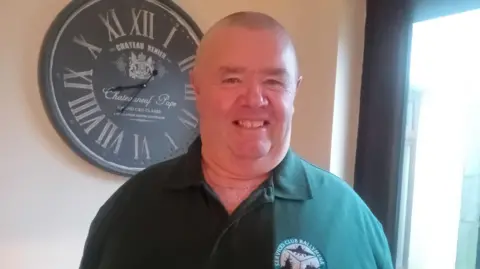
The treasurer of Ballymena Services Club, William Miller, hosted the club's first Burns Night this weekend.
Speaking before the celebration, he told BBC News NI: "There is a strong Ulster-Scots dimension to the culture of Ballymena.
"We will have a wee tipple, and we'll be more confident in our understanding of the role Rabbie Burns has in our Ulster-Scots culture, even today.
"We encourage as many people as possible to wear tartan. We parade in the haggis, and address the haggis," he said.
It's a night celebrated with the traditional dinner, and a wee dram (whiskey - or whisky, if it is Scottish).
"After dinner, we have music and poetry all reflecting on the Burns era," he said.
He said it's important people appreciate Burns' work.
"We encourage people to just sit down and read the poetry. All of a sudden, they start to see the story," he continued.
William believes Burns Night is important to his community's identity.
"It helps us understand who we are and where we come from and what the culture is based on."
'Something that is for anybody'
David Gilliland, director of development at the Ulster Scots Agency believes Burns night is for everyone, especially in Northern Ireland.
"Burns is one of those people who transcends that sort of political divide.
"This is something that is for anybody.Young and old," he said.
While the tradition has its roots in Scotland, it is a worldwide celebration.
There are Burns statues as far away as Canada, United States and Australia.
"He just appears to be someone who lots of people have looked at and go, actually, you know what, this is quite interesting," he said.
Burns works you might know
Even if you have never been to a Burns Night, chances are you come across his work.
- A Red Rose is a Valentine's Day classic that offers one of Burns' most famous takes on love: "O my Luve's like a red, red rose"
- Auld Lang Syne, which Burns based on an older Scottish folk song, is traditionally sung to bid farewell to the old year at the stroke of midnight on Hogmanay (New Year's Eve): "Should auld acquaintance be forgot, and auld lang syne"
- The proverb that the best laid plans of mice and men often go astray, meaning even the most carefully constructed plans can fail, originates from his poem To a Mouse poem: "The best-laid schemes o' mice an 'men Gang aft agley"
- To a Louse tackles the aspiration to see ourselves as others do: "O wad some Pow'r the giftie gie us. To see oursels as ithers see us!"