Port expansion threatens wildlife, warns charity
 Iain Perkins
More work must be done to protect wildlife after plans to expand the Port of Tilbury were approved, a charity warned.
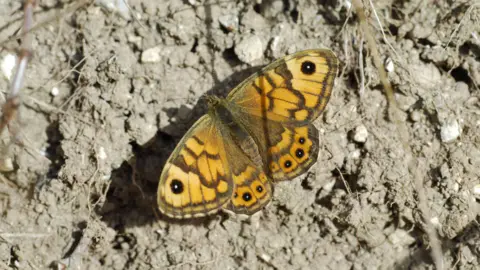
Buglife said losing greenbelt land for the Tilbury3 project in Essex was a blow for the area's "beleaguered wildlife", which includes rare bees and butterflies.
Thurrock Council approved the port's expansion plan at a meeting on Tuesday, where it was told new habitats would be created for species affected by the development.
But Jamie Robins, from Buglife, said: "We cannot keep losing key wildlife sites and relying on future promises to create habitats using unproven techniques."
The charity has warned of "irreversible losses of species" such as the shrill carder bee and the critically endangered stripe-eyed paragus hoverfly.
 Forth Ports
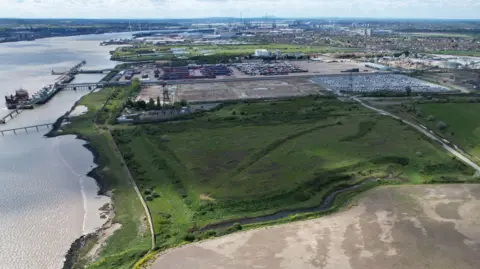
The site earmarked for development sits across both green and grey belt land east of the existing Port of Tilbury and Tilbury2, on the north bank of the Thames estuary.
Robins, the charity's programmes manager, said building on the land would undermine efforts to reverse declining invertebrate numbers.
"We urgently need to see a coordinated masterplan to secure the future of Thurrock's wildlife," he added.
But Stuart Wallace, chief executive of Forth Ports, said new habitats created as part of the expansion would "protect and enhance" the area's nature.
Council meeting papers showed Natural England and the Environment Agency had been consulted on the plan since 2022.
Papers said the scheme's effects were "fully mitigated and compensated", with a 69-acre (28ha) "compensation site" planned at Mucking Marshes landfill.
 Jamie Robins
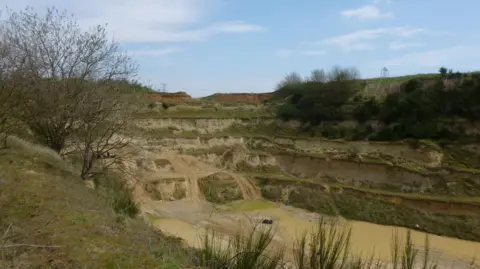
During the meeting, plans to infill the former Buckingham Hill Pit quarry, in nearby Stanford-le-Hope, were rejected.
Buglife had previously said this proposal would be damaging to nature, which had reclaimed the land after quarrying stopped in the 1990s.
Robins welcomed the decision but said it had been a "mixed" day for the charity.
Follow Essex news on BBC Sounds, Facebook, Instagram and X.