Charity plea for extra cash after weather setbacks

 Ben Andrew/RSPB
A charity says it needs to raise £10,000 to continue urgent work delayed by flooding and heavy rain at a major nature reserve.
The RSPB says it faces a "race against time" to protect eroding salt marsh banks at Titchwell Marsh, near Brancaster on the north Norfolk coast, by the spring.
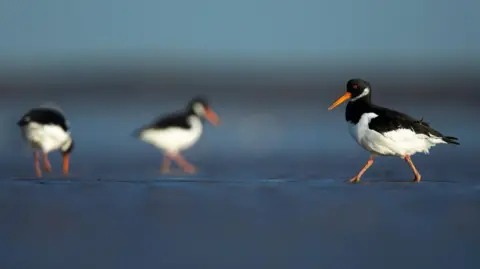
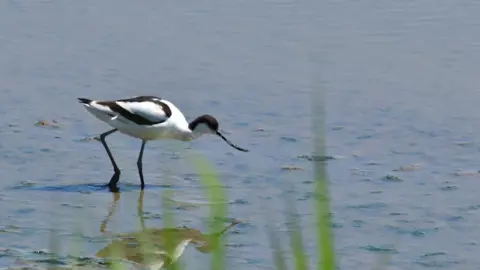
It started a £100,000 project in the autumn at the reserve - home to rare and protected birds such as avocets, bearded tits and bitterns - but said it now needed to find more money to finish the work after costly setbacks.
Nature reserve manager Hayley Roan said the delays had "very nearly exhausted contingency funds".
 RSPB
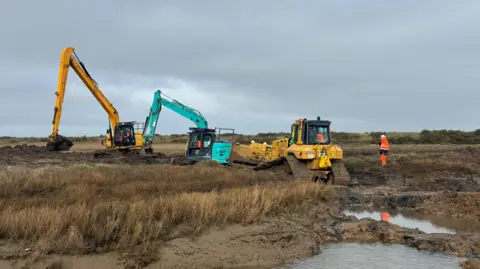
RSPBThe work is being carried out along the "rapidly eroding" banks of an intertidal salt marsh, known as Volunteer Marsh, which attracts flocks of wildfowl each winter.
The marsh provides a natural barrier to defend freshwater habitats from the sea, according to the RSPB.
"Despite careful planning, heavy rain and flooding have caused major delays, forcing us to rebuild access to Volunteer Marsh and restart parts of the work," said Roan.
"We're racing against the clock to complete the work before spring - a crucial time when protected birds arrive and start nesting on the marsh."
She added that the charity was also concerned about how the site would withstand many more spring tides, with the issue adding pressure to the project deadline.
The marsh was named after the RSPB's conservation volunteers and created to work as a buffer between the North Sea and Titchwell's freshwater area.
 Robert Simmons/RSPB
Money from the appeal is being spent on several measures, which include:
- Partly filling in a man-made breach on a sea wall
- Installing pipes to try to control how much tidal seawater flows into the marsh
- Strengthening part of a bank to create a lowered section to let water flow over it rather than build up.
The RSPB said the work should gradually create a more stable salt lagoon and water would be able to flow more freely across the area.
Follow Norfolk news on BBC Sounds, Facebook, Instagram and X.