Hospitality businesses say lower VAT would help attract visitors across the border

 BBC
BBCBusinesses across Northern Ireland are calling for cuts to taxes in the hospitality sector, warning that rising costs and higher VAT rates are putting increasing pressure on already tight margins.
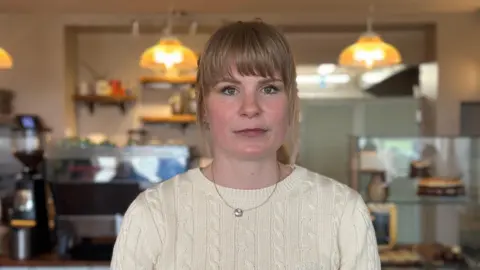
Cafe owner Tiffany McKay said the rising cost is forcing business owners like her to make some "extremely painful" decisions.
Competing for visitors against similar destinations just across the border where rates are lower has become increasingly difficult, she said.
In the UK, VAT is charged at 20% compared to 13.5% in Ireland, and that gap is set to widen with the rate for food-led hospitality dropping to 9% in the summer.
Northern Ireland's finance minister has made the case for a system that allows businesses to compete in an all-island economy, but the UK Treasury said reducing the rate for hospitality on a regional basis would introduce complexity.
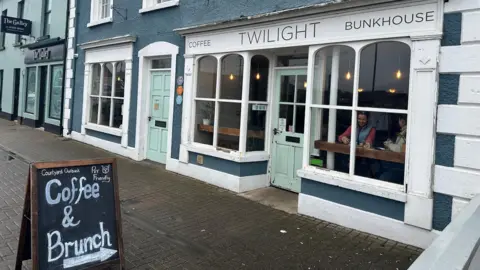
Businesses say a lower rate will allow hospitality to keep prices more affordable for the public.
McKay, who owns a cafe in Carnlough, said she is having to make other decisions to help manage costs.
"Whether that means we change portion size, whether we prepare fewer things in house from scratch...maybe we trim our hours a little bit to cut off the least profitable 30 minutes at the end of the day.
"Maybe that means we go down to three days a week, which we do for six weeks in the winter.
"But whenever we cut the hours down, that wage increase that that our staff members got this year is effectively negated.
"We're doing everything we can within our zone of control and yet it still doesn't feel like it's enough."
She said passing costs on to customers also "feels a little bit like a moral crisis because we don't want to be unable to be afforded by our customers and we know they're feeling the squeeze as well with the cost of living being what it is.
"Each of these decisions is extremely painful."
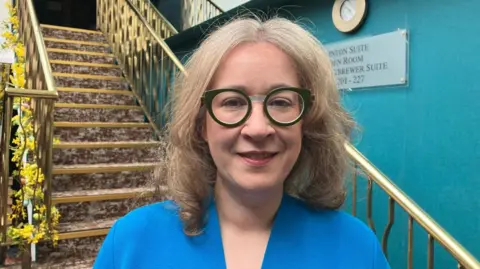
County Londonderry hotel owner Selina Horshi said "it is really challenging" especially as her "international competitors are actually only three miles down the road" in Donegal.
"That difference in the tax rate makes a huge difference to your competitiveness," she said.
"A customer looking at where they might want to spend a night, where they might want to celebrate their wedding is not looking at a different tax policy, they're looking at the final price and the final prices can be significantly cheaper in the Republic of Ireland than in Northern Ireland simply due to that tax policy."
She said it is having "a big impact" on hospitality business in Northern Ireland.
"Whether that is somebody who's booking a single event or whether that is a big multinational tour company who brings thousands of tourists in on buses.
"Imagine if they're making the decision as to whether they stay in Derry where it's more expensive, or they stay in Donegal where it's cheaper.
"Suddenly our city just becomes a day trip. They walk the walls which are beautiful, they go to the Guildhall but essentially they haven't spent a penny in this city.
"They aren't spending money in local retail, in local pubs and they're not putting money into local taxi driver pockets."
'Huge competitive disadvantage'

Colin Neill from Hospitality Ulster said the UK's higher VAT rate puts Northern Ireland "at a huge competitive disadvantage".
"Particularly if we take it that the Republic of Ireland is our largest tourism market.
"We're dearer, so it makes it harder to come up."
He said lots of hotels, bars and restaurants rely on domestic trade across the border for weddings and functions and that the 9% rate being introduced in the Republic in the summer will affect them.
"If your wedding is going to be 11% cheaper, where are you going to go?" he said.
"We've already started losing businesses, we've seen them cutting hours, cutting days and indeed the headline of 2,000 jobs reduced in the hospitality sector in Northern Ireland is because we're just not viable now."
Hospitality Ulster is lobbying the UK government for a pilot scheme "to prove to Westminster how quickly it [reduced VAT] pays back.
"Over a period of time it builds to create more jobs, more employment and the taxes generated by the extra sales" Neill said.
The UK Treasury said it recognised the important role that the hospitality and tourism sectors play in regional economies.
"However, reducing VAT for hospitality, on a regional basis, would introduce complexity for businesses and reduce the revenue available to fund vital public services like schools and health," a spokesman said.
"The Northern Ireland Executive received a record £18bn settlement in 2025/26 – and they can provide further support to hospitality and tourism should they choose to."
A spokesperson for the Department of Finance said the power to change VAT rates rests solely with Westminster.
"The finance minister is acutely aware of the challenges facing local industry particularly in relation to the impact of higher VAT rates here and has repeatedly made the case to the Westminster government for a tax system which allows our businesses to compete on a level playing field in the all-island economy," a spokesperson said.
"It is disappointing that the British government continues to show no willingness to substantively consider this issue and has failed to take the decisive action needed to provide meaningful support to the hospitality sector here."