University team creates vest to detect hypothermia

 Nottingham Trent University
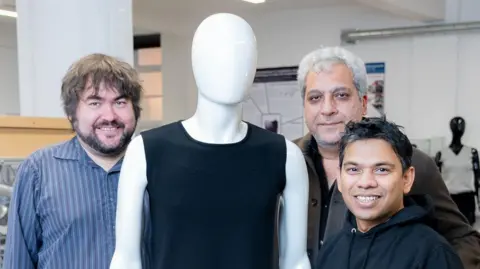
Scientists at Nottingham Trent University say they have created a vest that can monitor body temperature and detect risk of hypothermia.
The vest uses "smart textiles" to monitor sustained changes in body temperature.
It can then share data to a mobile phone or computer and notify someone if abnormal temperatures persist over time.
"Hypothermia is a very dangerous condition, particularly for those who are elderly and live alone without anyone to raise the alarm for them should they become ill," said project leader Dr Theo Hughes-Riley, from the university's Advanced Textiles Research Group.
"By combining electronic textiles with an everyday garment such as a vest, carers and medical professionals would be able to respond immediately to any detected risk and help save the lives of older people who may need urgent support."
 Nottingham Trent University
The NHS describes hypothermia as a dangerous drop in body temperature below 35C (95F). It says it is a medical emergency that needs to be treated in hospital.
University researchers said the garment was aimed at helping elderly people as they can lose body heat faster and have impaired temperature regulation, chronic conditions and frailty.
They said a prototype of the vest had been trialed with a variety of different activites such as sitting, walking and jumping to help find abnormal body responses before they become dangerous, said the university.
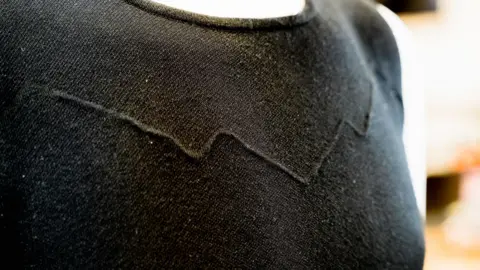
The temperature readers or "Thermistors" within the vest are coated in resin to make them fully washable.
Researchers said the next step would be gathering feedback on the designs from older people.
Kalana Marasinghe, a PhD researcher who tested the prototype, said "This research shows how smart textiles have the potential save people's lives by providing carers and clinicians with real-time data about a person's health to help ensure they receive treatment."
Follow BBC Nottingham on Facebook, on X, or on Instagram. Send your story ideas to eastmidsnews@bbc.co.uk or via WhatsApp on 0808 100 2210.