Drones used to carry blood in trial aimed at saving lives

 BBC
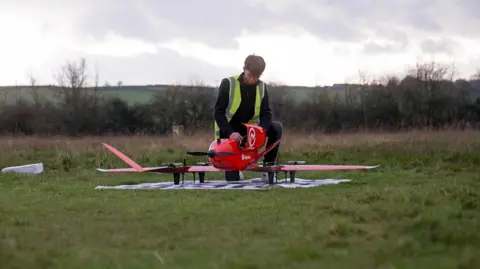
BBCSpecially commissioned drones will be used to fly blood donations as part of a new trial.
Currently, blood donations are processed in south Wales then transported by road, a journey that can take hours.
The ultimate ambition of the Dragon's Heart project is to fly life-saving blood samples to the scenes of accidents using drones weighing about 55lb (25kg) and 5.5ft wide (1.7m).
The pilot, which is due to start in early 2026, was described as significant and exciting by the Welsh Blood Service.
A hatch in the top means the blood sits in the body of the drone, helping to control the temperature of the blood and minimise vibrations.
The Welsh Blood Service said it would be testing the blood transported as part of the trial, with drones only going as high as about 2,000ft (610m).
Peter Richardson, deputy director and head of quality, safety and regulatory compliance, said: "Rest assured we will make sure that not only is the blood safe when it arrives for use, but actually that we don't waste any of the really valuable donations that our generous donors give us."

Buckinghamshire-based Skyports Drone Services operates drones and service routes across the world, but chief executive Alex Brown said what the company planned to do in Wales would be world leading.
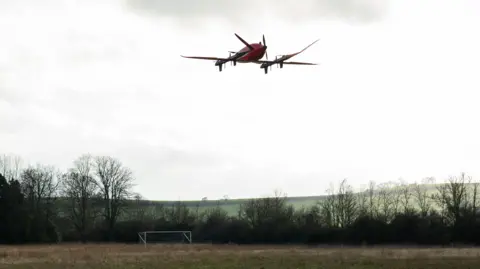
"It's quite unique because they've got these propellers, so it can go up like a helicopter and then transition into what we call fixed-wing mode and fly like a plane," said Mr Brown.
He added that the drones could land in small areas, cover a distance of about 62 miles (100km) and withstand winds of about 30 knots.
The company and partners still need to convince the Civil Aviation Authority that the missions they fly are safe.
Mr Brown said: "If we can get that right... that means we can connect medical practices and locations all over rural Wales and really bring the benefits of drones to people of Wales."
Leading the partnership is Snowdonia Aerospace Centre, based at Llanbedr airfield, Gwynedd.
Technical director Jeremy Howitt said the advantage of trialling the service there was the large amount of airspace around the airfield that cannot be used by non-approved aircraft.
"It means it's clear of other aircraft, so we can be confident that we're flying in a safe environment," he said.
"And we're able to fly out over the sea, so there's no underlying ground risk either.
"So we can prototype all of the systems together in one go and show that it's safe and then look to migrate that to other places in the country."

The next stage would be to fly blood between the Welsh Blood Service headquarters in Talbot Green, Rhondda Cynon Taf, to the blood store in Wrexham.
It is estimated this could reduce travel time by about three hours.
After that, the project could move into linking up the blood stores with hospitals.
"What we're trying to do is put corridors, motorways, A-roads for drones through Wales and once those have been put in place, then you could look at being able to support emergency responses within those same regions as well," said Mr Howitt.
"Beyond the blood service, we're also in discussion with the ambulance service about how these could support their 999 response."
Mr Richardson said: "We're very conscious that we're an all-Wales service, but we are based in south Wales and at present our journeys to west Wales and particularly to north Wales are once a day, unless there's an emergency.
"The idea of a drone is that instead of sending one large vehicle on a journey each day, we can send multiple small loads, so that improves the frequency, it reduces the wait time, and allows us to respond much quicker to the needs of the patients across Wales."