Farmers still 'fearful' of bluetongue as restrictions eased

 Getty Images
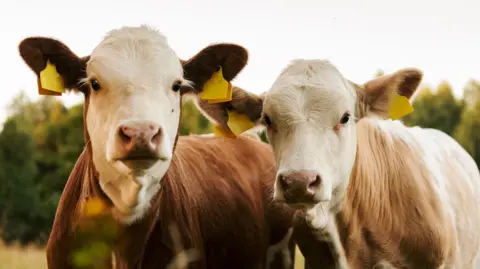
Farmers are still "very fearful" of the bluetongue virus (BTV) although restrictions on livestock are easing, the Ulster Farmers' Union has said.
Animals will be able to be moved within Northern Ireland and across the border from 09:00 GMT.
Movements have been restricted since BTV, a disease spread by midges, was discovered at a farm in November.
Glenn Cuddy from the UFU said it was "significant news" but he would urge farmers not to rush to import stock from the EU and "be mindful of where they are getting the breeding stock from".
Agriculture ministers in Northern Ireland and the Republic of Ireland have now agreed that animals may travel between the two jurisdictions and the temporary control zone in County Down can be lifted.
But they acknowledged that easing restrictions came with "an increased disease risk".
Cuddy added: "The strain which we seem to have, it hasn't done the sheep or the cattle any harm but through the rest of Europe there's other strains there that can come here by the midge as they migrate."
 UFU
UFUCuddy said farmers and stock keepers needed to "keep a good eye on their animals".
He urged farmers to remain vigilant and talk to their vet as there were vaccines available.
'We could have moved a bit quicker'

Michael Watson is a sheep and cattle farmer based near Dundonald, County Down, which was within the 20km temporary control zone.
He said the easing of restrictions makes life simpler for farmers.
"It was time it happened, with our colleagues in the south, it's nice to see we are moving but we could have moved a bit quicker in my opinion."
He added: "It takes things back to where they were, although there's a lot of other issues we probably should be looking at outside this."
"I'd one livestock unit that I had to move, it was a bull, and it basically would have cost me about between £400-£500 extra, the cost of the vets coming in and other issues ."
'Still at risk'
Department of Agriculture, Environment and Rural Affairs (Daera) veterinary officer Ignatius McKeown said the restrictions worked "reasonably well".
He said that because the virus is spread through midges, which are unpredictable, "farmers should be aware that their animals are still at risk of Bluetongue".
He said one of the difficulties of the virus is that it cannot be controlled simply by relocating animals as midges carrying Bluetongue "know no bounds".
He has urged farmers to protect their stock by getting them vaccinated.
McKeown said there is enough vaccination stock in Northern Ireland to administer to 100,000 animals.
The change does not apply to movement of live animals from Great Britain to Northern Ireland which remains suspended.
BTV is a viral disease affecting ruminant animals such as cattle and sheep. While it poses no risk to human health or food safety, it can have significant animal health and trade implications.
A vaccination against BTV has been approved and farmers are being encouraged to discuss options with their vets.
Cross-border trade and bluetongue virus
Agriculture Minister Andrew Muir said protecting animal health was "paramount" but he recognised the "significant disruption that trade restrictions have caused".
"This balanced and proportionate approach, developed in close collaboration with farming organisations and wider industry, will allow trade to resume while managing disease risk," he said.
Irish Minister for Agriculture, Food and the Marine, Martin Heydon, said cross-border trade was "essential to the all-island agri-food economy".
Since the Republic of Ireland confirmed its first case of BTV Serotype 3 (BTV-3) in January 2026, only movements of cattle and sheep direct to slaughter have been allowed as certification requirements could not be met.
Engagement has been ongoing between veterinary authorities in Ireland and Northern Ireland, and with the EU Commission to establish a pathway to restore trade flows.
What is bluetongue virus?
 Getty Images
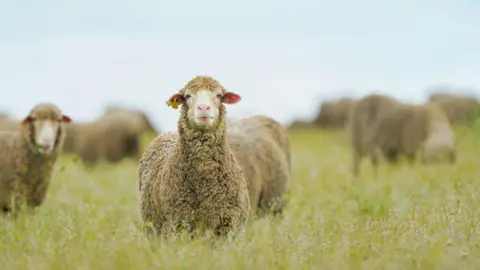
Bluetongue virus affects cattle, goats, sheep, deer and camelids such as llamas and alpacas.
It can cause ulcers or sores around the animal's mouth and face, difficulties swallowing and breathing, fever and lameness, foetal deformities and stillbirths.
The virus is primarily transmitted through biting midges which are most active from April to November.
It poses no public health risk and does not pose any threat to food safety.