Record number of cattle-friendly birds at reserve

 Lisa Wilkinson Gamble
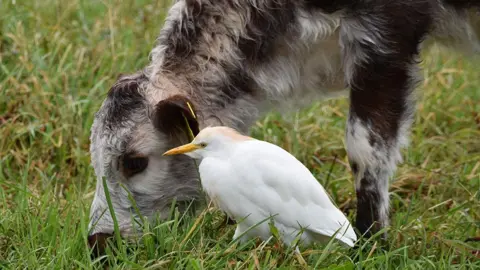
More cattle egrets have been spotted at a wetland nature reserve than ever before.
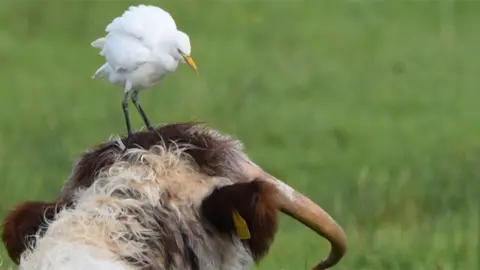
Experts used a thermal imaging camera to count the small, white herons - renowned for their close relationship with grazing animals such as cows, sheep and horses - as they gathered to roost at Martin Mere in West Lancashire.
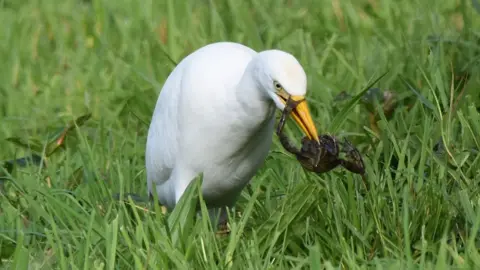
The species feeds on invertebrates, including grasshoppers, ticks and crickets, taking advantage of grassy areas being churned up by hooves.
Martin Mere said the rise from 29 to 74 cattle egrets was likely linked to a combination of a warmer winter and breeding habitats being better protected.
 Lisa Wilkinson Gamble
Highly sociable, cattle egrets typically nest and roost in large colonies, often alongside other heron species.
Their growing presence at Martin Mere mirrors a wider trend across the UK.
Once considered a rare visitor, the species first bred in Britain in 2008, when two pairs nested in Somerset following a large influx of birds that winter.
Since then, their population has expanded, from occasional sightings to dozens of breeding pairs nationwide.
Wildlife-friendly farming practices may also be contributing to their numbers, Martin Mere said.
Regenerative approaches that improve soil health support richer invertebrate populations, creating ideal feeding conditions for the cattle egret.
 Lisa Wilkinson Gamble
Listen to the best of BBC Radio Lancashire on BBC Sounds and follow BBC Lancashire on Facebook, X and Instagram and watch BBC North West Tonight on BBC iPlayer. You can also send story ideas via Whatsapp to 0808 100 2230.