Reeves fixated on 'dysfunctional' borrowing rules, says IFS

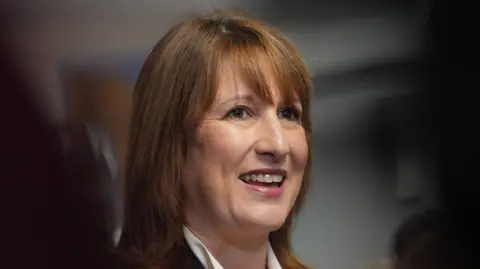 PA Media
Chancellor Rachel Reeves is "fixated" on borrowing rules which are contributing to "dysfunctional policymaking," according to a leading think tank.
The Institute for Fiscal Studies (IFS) said the chancellor's approach "needs a rethink" to move away from constraints that "require some measure of borrowing or debt to be below a particular threshold in a specified year".
Reeves set her so-called fiscal rules when Labour came to power, which determine how much "headroom" the government has for its tax and spending plans.
The Treasury said: "The government's non-negotiable fiscal rules help to keep interest rates low while also prioritising investment to support long-term growth."
But Ben Zaranko, associate director at the IFS, said the current framework was judging economic sustainability by a system that is "boiled down to to a single number".
At the Autumn Budget, the Office for Budget Responsibility forecast that the amount of headroom the government has against its borrowing rules will be £22bn in five years' time. This was more than earlier forecasts of £9.9bn.
But research from the IFS, funded by the Joseph Rowntree Foundation, suggests that instead of "pass–fail fiscal rules", the UK "would be better served by a new framework based around a set of 'fiscal traffic lights'".
These would be used to monitor performance against high-level objectives and principles set out at the start of each parliament.
Zaranko said: "Moving to a broader set of fiscal indicators, assessed according to a traffic light system, would provide a better picture of the government's overall fiscal position, and reduce the incentive for governments to contort policy in pursuit of a particular 'headroom' number."
The IFS report said that the current framework is not delivering sustainable public finances and aggressive "gaming" of rolling targets and frequent changes to the rules have undermined their credibility.
IFS director Helen Miller urged a debate on public finances sooner rather than later, ahead of the next general election, because the current fiscal framework "isn't delivering".
"A broad traffic light assessment of the public finances would make governments' multiple objectives – and the associated trade-offs faced – much more transparent and explicit," she said.
The Treasury said: "In the Budget, we doubled the fiscal headroom, and we are cutting borrowing more than any other G7 country with borrowing forecast to be the lowest in six years as share of GDP."

Sign up for our Politics Essential newsletter to read top political analysis, gain insight from across the UK and stay up to speed with the big moments. It'll be delivered straight to your inbox every weekday.