Hospital waiting lists in Wales lowest in almost three years

 Getty Images
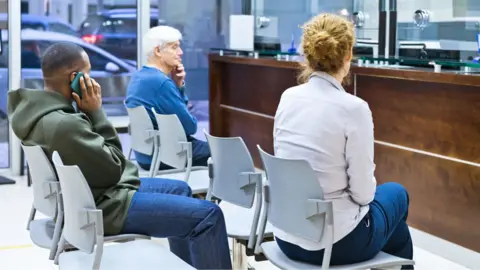
Hospital waiting lists in Wales have fallen to their lowest number in almost three years, latest figures have shown.
There were just under 741,000 recorded patient pathways as of December 2025, compared to 734,721 in March 2023.
The December data also represented both a drop of 17,000 on the previous monthand a fall for the seventh month in a row, according to Digital Health and Care Wales.
Meanwhile, long waits - of one or two years or more - are at their lowest levels since the height of Covid, which the Welsh government said showed "real progress".
However, the figures showed 19% of the overall list in Wales was waiting a year or more compared to England, where the figure is less than 2%, according to comparable NHS data.
As of December 2025, there were 5,252 waits of two years or more in Wales, down more than 1,600 (27%) on the previous month.
Betsi Cadwaladr health board accounted for two thirds of the two-year waits, with general surgery, oral surgery, and ENT specialisms posting the longest waits.
The health minister set a target last year that no-one should be left waiting that long by March.
First Minister Eluned Morgan said she had made a commitment to cutting waiting lists and the longest waits and "that's exactly what is happening".
She added: "Seven months of the waiting list falling. The longest waits down by more than 90% from their peak. Tens of thousands more outpatient appointments delivered. This is real progress that's making a massive difference to people's lives."
Waiting lists figures in Wales in 2024 rose to more than 802,000.
The average wait for hospital treatment is currently 19 weeks - down from about 24 weeks the previous year, but higher than in England, where it is 13.
Some people are waiting for more than one treatment or on more than one patient pathway - the journey through the NHS system to get care.
It's estimated therefore that there were 580,289 actual patients waiting to go into hospital in December.
This constitutes a drop of more than 11,700 on the month before.
Emergency units across Wales also saw their busiest January in a decade, with 63.4% of patients seen in A&E within the four-hour target time.
This is a slight improvement on the previous month but still the third lowest in 12 years.
However, compared to major emergency units in England, Wales performed worse in each of the last 23 months, up to December 2025.
The three main hospitals in north Wales all had their worst performance months on record for meeting the four-hour target.
Across the country, 11,400 patients waited 12 hours or more to be seen in A&E - the most in three years.
The NHS Confederation in Wales said January had brought "significant demand" on urgent and emergency care, which was evident when some health boards declared critical incidents.
'People waiting for treatment'
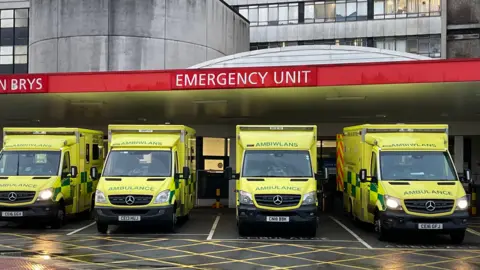
For ambulance calls, the data showed average response times to cardiac emergencies were within the target range of between six and eight minutes, averaging seven minutes and eight seconds.
But the response to emergency "red" calls averaged nine minutes 33 seconds, longer than the target introduced last summer of between six and eight minutes.
Elsewhere, patient pathwayswaiting more than a year for a first outpatient appointment dropped 14% between November and December and are at their lowest point since the autumn of 2020.
But they still stand at more than 32,700, and the goal that no-one should wait more than 12 months was supposed to met by the end of 2022.
In cancer care, 60.7% of patients started treatment within 62-days of the disease being first suspected. This is an improvement but still less than the 75% target.
 Getty Images
Plaid Cymru spokesperson for health and social care, Mabon ap Gwynfor MS, said the waiting times were too long.
"There remains 741,000 on treatment waiting lists, and a record high figure of 137,300 diagnostic patient pathways – people in pain and waiting for treatment or answers for far too long, right under Labour's watch."
Peter Fox MS, Conservative health spokesman, suggested the picture was worse in certain parts of the country.
"It is clear that after 27 years of Plaid-backed Labour governments, our NHS is broken. In some areas, the situation is getting worse. It's clear that Labour and Plaid are failing those in need of emergency care."
Meanwhile, Reform UK's James Evans MS raised concerns about spending.
"Ambulance waiting times are getting worse as Plaid and Labour's budget deal sees cash splashed on making ambulances 'greener".