How yellow hearts became a symbol of Covid loss

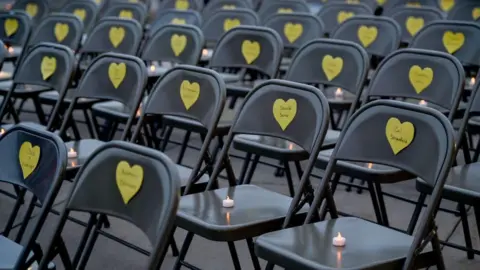 SOPA Images via Getty Images
A paramedic's campaign to remember lives lost during the Covid pandemic has received official government recognition.
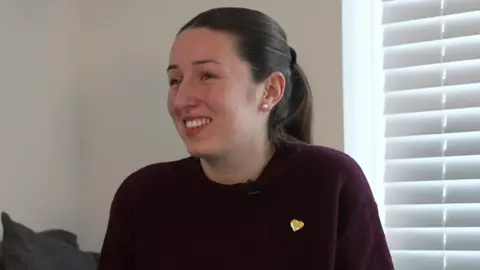
Hannah Gompertz, from Devon, was 19 when her grandmother Sheila died and at the suggestion of her grandfather David she placed a yellow heart in her window as an act of remembrance.
The simple gesture caught on internationally through word of mouth and social media.
The government responded on recommendations on how commemorations should take place by acknowledging the Yellow Hearts to Remember campaign as a symbol of pandemic loss and this week MPs wore yellow hearts in the House of Commons, which Hannah said was "incredibly significant".
Recalling life in the pandemic, Hannah, now 25, described the daily figures of Covid deaths as "really, really tragic".
She said: "We'd hear these statistics on television and they would say, 'This many people died today'.
"But actually that doesn't materialise into an actual individual person that we've lost, which is really, really tragic, but also for every person that's died, there's even more people grieving."
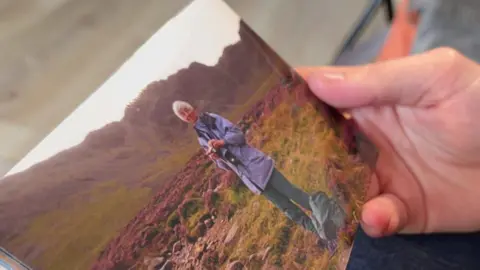 Gompertz family
Hannah's grandma, a retired computer scientist, was 83 when she died on Easter Sunday in 2020.
She was a "very, very intelligent woman who just loved her garden, loved her family", she said.
"Initially, the yellow heart was a symbol to say, 'Look, I'm grieving, I've lost someone to Covid'.
"It evolved to more than that, it evolved to be a symbol of pandemic loss... a symbol of support for those who were all bereaved because we were all uniquely bereaved in tragic circumstances where you couldn't even hold someone's hand or you couldn't even attend their funerals."
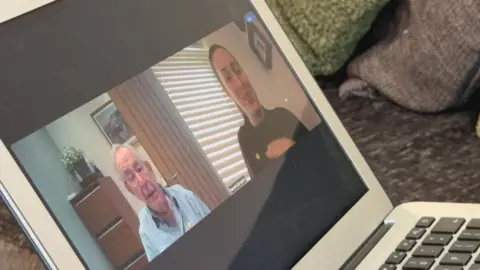
Her grandfather David came up with the yellow heart idea from a war-time practice of tying a yellow ribbon around a door handle to remember a loved one.
Hannah said: "At the time I was getting letters from people saying they'd lost their loved ones from Covid, they were in pieces, they didn't know where to turn.
"They found yellow hearts and suddenly they were no longer alone in the world."
Hannah developed the idea and it took off with bereaved people contacting her daily through social media. She now runs the campaign alone.
David, 89, who regularly talks to Hannah online, described her achievement with the yellow hearts campaign as "incredible" and "something to be proud of".
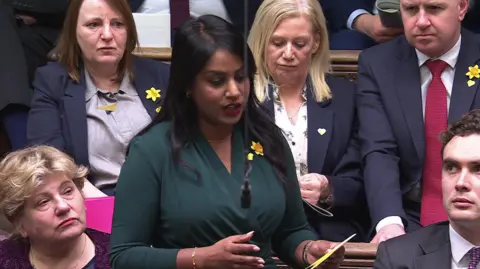
This week MPs from across the political aisle wore yellow heart pin badges during Prime Minister's Questions in recognition of the campaign.
Hannah said the cross-party recognition was "incredibly significant".
"It ensures the yellow heart remains an apolitical symbol of remembrance for those lost during the pandemic and of support for those bereaved under such unique and devastating circumstances," she said.
"I think sometimes it doesn't sink in how big it has become because I feel like we still do have work in making sure people feel supported.
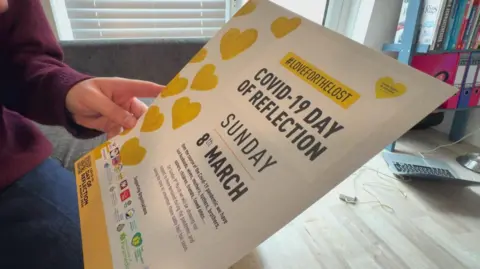
"But actually if you do take that moment to reflect like a lot of us will do on the Covid-19 Day of Reflection, I could never have imagined it would have got this big."
The next Covid-19 Day of Reflection is on Sunday.