Facial recognition pilot cuts crime, says Met

 BBC
BBCA trial of Live Facial Recognition technology (LFR) in south London has helped cut robbery and shoplifting and led to more than 100 arrests, according to the Metropolitan Police.
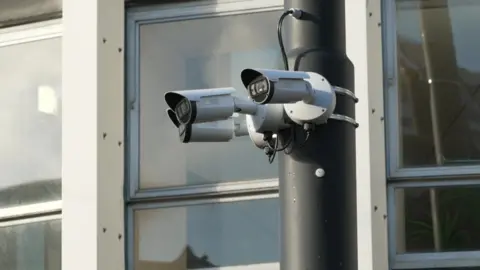
The pilot scheme in Croydon, which launched last October, has seen fixed cameras mounted on street furniture instead of mobile vans, which map a person's unique facial features and matches them against faces on watch lists.
The Met said a third of the arrests involved offences against women and girls, including strangulation and sexual assault.
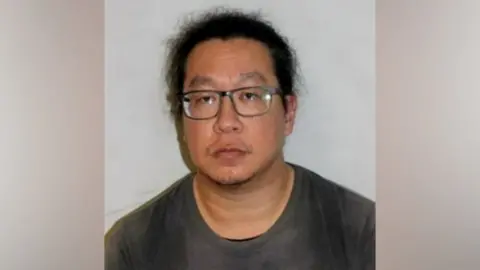
It comes ahead of a High Court challenge against the force's use of the technology, after a man was wrongly identified near London Bridge last year.
The Croydon pilot involves fixed 15 cameras, attached to lamp posts, at two sides of the busy North End high street.
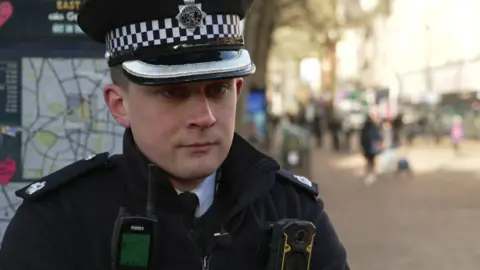
Sgt Kevin Brown from the Met's LFR team said the cameras are only switched on when officers are deployed, which has taken place 13 times over the three-month trial.
Any biometric data from members of the public who are not wanted by the police is immediately and permanently deleted, he added.
He said of 103 arrests made, only one was a false alert which did not result in an arrest.
Supt Luke Dillon said overall crime figures in the Fairfield ward, where the pilot has been held, fell by 12% per cent.
"We're seeing reductions in almost all crime types, certainly in shoplifting and robbery," he said.
Among those arrested were a 36-year-old woman who the Met said had been wanted since 2004 for failing to appear at court on suspicion of assault.
The force said it has also arrested a 27-year-old man wanted on suspicion of kidnap and identified a 37-year-old registered sex offender in breach of a sexual harm prevention order for having an unregistered mobile phone and access to social media.
Brown said the fixed cameras meant deployments were "more efficient" than using the mobile vans, as the camera feeds could be monitored remotely, and that arrests were being made on average once every 34 minutes.
However, the force said there were no current plans to expand the pilot to any other sites in London.
Although the Met has described LFR as a "game-changing" tool in crime fighting, civil rights groups and privacy campaigners have consistently opposed the technology.
They argue it invades people's privacy and carries an unacceptable risk of misidentification. They are also concerned there is no specific domestic legislation regulating police use of LFR.
Next week, those arguments will be the focus of a High Court challenge by the director of the group Big Brother Watch and 39-year-old Shaun Thompson, who was wrongly identified by LFR and stopped by police in February 2024 outside London Bridge Tube station.
He said officers had asked him for his fingerprints, but he refused, and he was let go only after about 30 minutes, having shown them a photo of his passport.
He previously described LFR as "stop and search on steroids".
The UK's equality regulator, the Equality and Human Rights Commission, which has been granted permission to intervene in the judicial review, said the Met's current use of the technology breached human rights law.
The Met has said it was confident the use of LFR was lawful and proportionate.
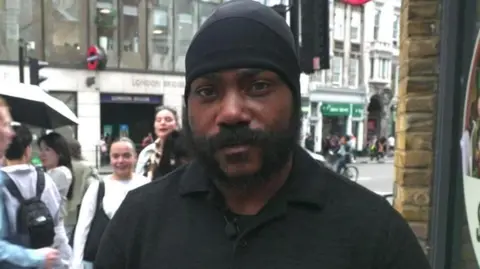
Lindsey Chiswick, the Met and national lead for LFR, said more than 1,700 dangerous offenders had been taken off London's streets since the start of 2024, including those wanted for rape and child abuse.
Mobile van deployments of LFR have been used at the King's coronation in 2023 and outside a north London derby between Arsenal and Tottenham Hotspur in November.
The technology was also used at the entrances and exits to Notting Hill Carnival last summer, despite objections from campaigners and anti-racism groups who argued it could be "less accurate for women and people of colour" and the move "unfairly targets the community that carnival exists to celebrate".
The Met has said the force used an LFR algorithm that did not exhibit bias following tests by the National Physical Laboratory.
Privacy campaigners have questioned why Croydon, which has a higher proportion of black residents (22.6%) compared to London as a whole (13.5%) had been selected for the LFR fixed cameras pilot.
The Met said it had chosen Croydon because it was a "crime hotspot" and because there was "local support" for the pilot.
What do people in Croydon think?
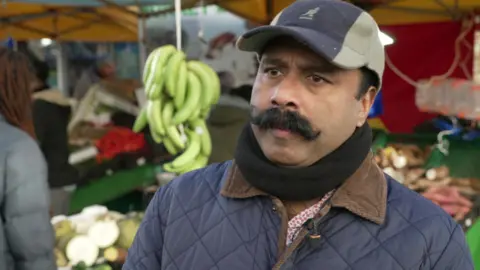
Jose Joseph, chair of the Croydon Business Association and stall-holder on Surrey Street, has called for the scheme to be widened locally and for cameras to be added in West Croydon and Church Street.
"We want it to keep a safe environment in Croydon, to make it better for business and good for the residents, good for the women and children, safer for everyone."
He has long been campaigning for the police and council to take tougher action on crime, particularly knife violence and young children being groomed into drugs gangs.
Joseph acknowledged some residents had told him they were worried about privacy, but insisted he did not share their concerns.
"When you go to any shopping centre, any supermarket, there is cameras, when you use any public transport, there is cameras. Why are you worried about facial recognition cameras? This is only for people who have a criminal background."
Several others I spoke to in North End on Friday agreed with him, telling me the cameras made them feel safer.
"If you're not doing anything wrong, I don't see why you should be scared," Bright Dankwa said.
Innis Looby said the technology would help Croydon's struggling businesses by driving crime down and was amused at the idea of anyone being worried about privacy.
"In this world of the internet, and all the access that's available today? They give everything to the internet and they're worried about this? That's sort of funny to me."
Dawn Harris said she worried for the safety of her teenage daughter, although she was not sure how effective the technology was.
"I don't have anything to hide, so I really don't feel an intrusion from it, as long are in places that are not private. So public walkways and things like that, I think it might make it safer at night."
However, Lance Payne said he wanted to see legislation to safeguard the use of LFR.
"We don't know how government is actually going to use the data. Not only now, but in the future," he said.
"I also know that these facial recognition algorithms tend not to work very well on darker-toned people, so it could very well lead to a lot of mistaken identities."
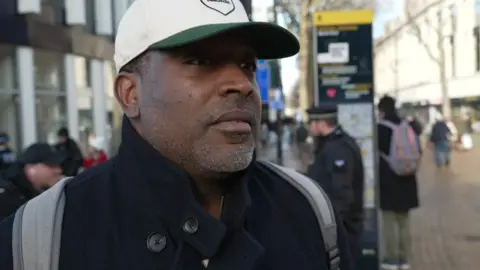
Jasleen Chagger, legal and policy officer for Big Brother Watch, said the police had been "using the public like guinea pigs" and "operating in a legal vacuum."
"I think we all want serious criminals to be caught but that doesn't justify subjecting the entirety of your population to suspicion-less identity checks."
She said there was no place for the technology on London's high streets as it treated "every single person who walks by the camera as a suspect by default."
A 10-week government consultation on how LFR is used is currently under way, which it says will help develop a legal framework for its use.
Crime and Policing Minister Sarah Jones, MP for Croydon West, has said facial recognition, including LFR, is "the biggest breakthrough for catching criminals since DNA matching."
Shadow Home Secretary Chris Philp, MP for Croydon South, has supported the pilot scheme, saying LFR had "the potential to revolutionise crime fighting."
Dillon acknowledged there was more to be done to address concerns.
"There's a constant thought about this being a legitimate tactic, so we need to take people with us as well," he said.
"We're trying to demystify it, we're trying to explain how it works, what the benefits are and also what the safeguards are."
Listen to the best of BBC Radio London on Sounds and follow BBC London on Facebook,X and Instagram. Send your story ideas to [email protected]