America's most notorious outlaw can trace his family roots to Wales

 Getty Images
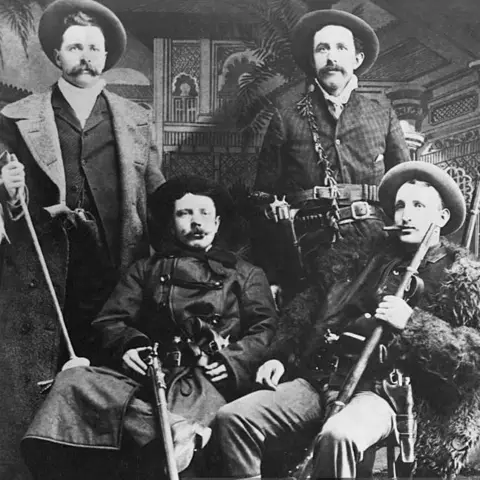
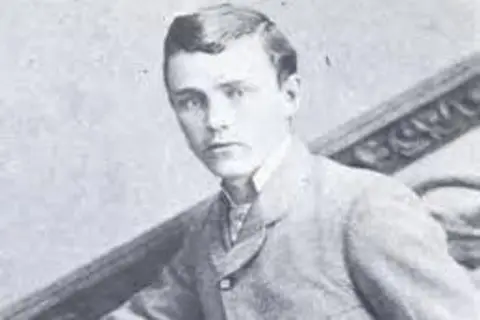
He is perhaps the most notorious outlaw of America's Wild West and a name that struck fear into many.
While his name was infamous, what many don't know is that Jesse James can trace his ancestry to Wales.
Although the gunslinger grew up in Missouri, his great-grandfather William James was born in Little Newcastle, Pembrokeshire, in 1754 and emigrated to Pennsylvania in the late 18th Century before the family moved west to Kentucky, and then to their eventual home in Missouri.
Starting as a Confederate guerrilla fighter during the American Civil War of 1861-1865, until 1882 Jesse and his elder brother Frank carried out countless armed robberies, murders and violent crimes.
Yet he remains an American folklore hero to this day, in part thanks to the legend of his murder by fellow gang member Robert Ford.
As record keeping in a fledgling United States was still in its embryonic stages, information about the family is patchy at best, not helped by the fact that virtually all males before Jesse and Frank seemed to have been called either William or John.
From the Pembrokeshire end, it is possible to deduce that great-grandfather William was born in Little Newcastle in August 1754.
Once in Pennsylvania, William appears to have had a son named John. While this is impossible to prove definitively, it would seem likely as Jesse and Frank's own father was also named John and was also a Baptist minister.
Though as Swansea University's professor of American Cultural History, Stephen McVeigh outlines, despite William coming from the same tiny village as infamous Welsh pirate and fellow outlaw, Barti Ddu, it's doubtful how much of his roots James would have appreciated.
"Immigrants from Britain to America at that stage were usually fleeing religious persecution or financial ruin, so they weren't keen to carry their original identities with them," he said.
"They were far more likely to identify as Americans first and foremost, washing themselves of everything which had gone before, in search of a more egalitarian existence offering them the hope of breaking free of class structure and striking out for themselves on an even footing based on their own abilities."
 Getty Images
Jesse was born into a staunchly Southern tradition of slave-owning Confederacy beliefs.
As the Civil War ensued, he reacted to the encroaching Unionist threat of slave abolition by joining the Confederacy "Bushwhacker" militia led by General William Quantrill.
Pulitzer Prize-winning author TJ Stiles penned what is regarded as the controversial figure's definitive biography Jesse James: Last Rebel of the Civil War.
In it, he said James "saw little or no action during the conflict itself, but continued the fight under the Confederacy banner well into the 1870s".
 Getty Images
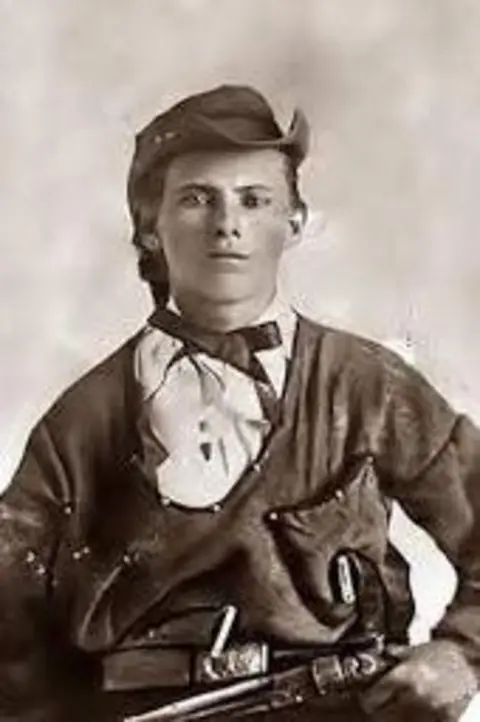
Stiles doubts how devout Jesse's principles were, highlighting his gratuitous use of violence - sometimes scalping his victims - his indiscriminate targets and his flagrant courting of public opinion.
"What may have started out as a cause soon descended into blatant criminality for financial gain and the sheer pleasure of hurting and killing people.
"He legitimised his targets as holding assets belonging to Unionist and Abolitionist powers, but in reality, most of the banks he robbed held the meagre wealth of small farmers such as his own family.
"His violence and audacity only grew as he saw himself reported in newspapers, granting him mythical status by Confederate-leaning editors such as John Newman Edwards."
 Jesse James Museum
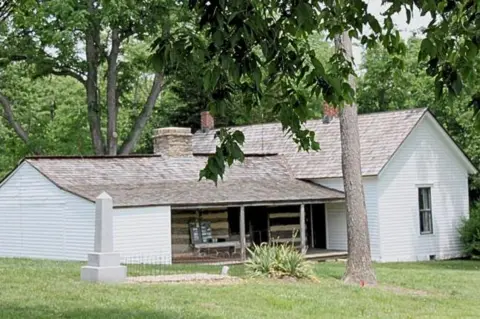
Prof McVeigh concurs: "Jesse became a figure of the Dime Novels, throw-away fiction celebrating the romance and grit of the bandits, but that was only a self-fulfilling prophecy.
"Rebels have many motivations - political beliefs, local rivalry, financial greed and outright psychopathic sadism.
"You can see all of these traits in Jesse, but it's hard to attribute many noble motivations to his actions."
In the mid 1870s Jesse and Frank did attempt a quieter life. While Frank settled down, Jesse was restless and by 1876 he'd joined forces with another group to form the James-Younger gang.
They branched out from bank robberies to holding up trains, which Stiles said ultimately proved to be James's downfall.
Any good publicity he had enjoyed rapidly waned "as soon as he started affecting the railroad companies' bottom line, then his days were numbered", said Stiles.
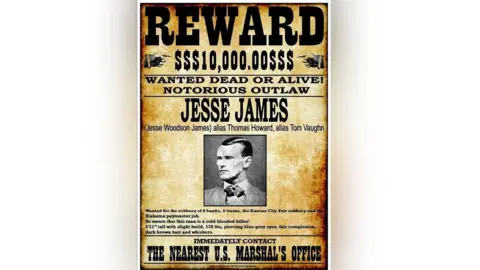
Until that point, the Missouri governor could only offer a $300 bounty for a wanted fugitive, but the railroad companies put up extra to inflate that to $10,000, making James "a much more attractive proposition for his gang members to betray".
 Getty Images
Robert Ford was just such a traitor, agreeing to kill James for a share of the bounty.
On 3 April 1882 he shot James in the back of the head, as legend has it, after Jesse had laid his own pistols on a sofa as he readjusted a wonky picture in his parlour.
As if to prove the adage that crime doesn't pay, Ford found himself "double crossed by Missouri Governor Thomas Crittenden".
Stile said he was arrested, tried, sentenced to death and pardoned all on the same day and, while he did get a small piece of the bounty, it was "nothing compared to the $10,000 he'd originally been promised".
The story of his life was made into a film starring Brad Pitt as James and Casey Affleck as Ford, who received an Oscar nomination for his role.
Prof McVeigh said: "It's interesting to know Jesse's Welsh connections, but probably not something we should be overly proud of.
"From time to time he is reinvented as a figure of American spirit by the likes of Donald Trump, but I think it's fair to say that overall he wasn't a nice man and not someone who we should be celebrating as a Welsh or Pembrokeshire hero."