'They thought it was heatstroke but meningitis killed her in 24 hours'

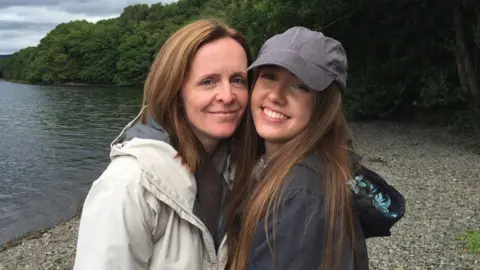 BETH ALKER
The mother of a teenager who died from a rare strain of meningitis has said her symptoms left friends thinking she had heatstroke.
Emily Alker, who was 18 years old when she died from meningitis W, had been celebrating her A-level results and offer to university while on holiday with her friends in the summer of 2017.
On the last day of her trip, Emily had gone to bed with a suspected headache and temperature chills, telling friends she was not feeling well.
Emily's mum Beth Alker, from Goosnargh in Lancashire, said: "Her friends thought it could be heatstroke. She was hot and cold [with] cold hands and feet and after a few hours she said she needed to go to hospital but then it went downhill very quickly".
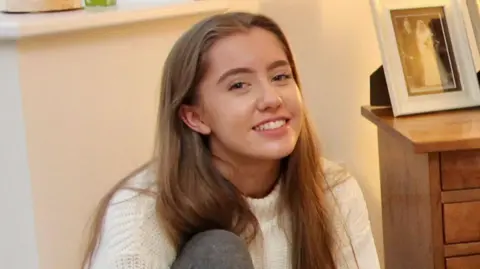 Beth Alker
Emily had then started to fit in the ambulance, while her parents flew out on the next flight to meet her.
After arriving, nearly 24 hours after Emily had first started to feel unwell, a doctor told the pair that Emily's brain had "gone".
Emily had ambitions to become a lawyer and had received an unconditional offer from the University of Birmingham to study law.
To mark the occasion, she flew to Crete with six friends on holiday after Beth had given them a lift to the airport.
"I remember saying to her that this is your summer, it's all out there for you.
"Her life was just about to start, everything she'd worked for was all going to come into fruition," Beth said.
'She's always missing'
Since her daughter's death, Beth has campaigned on the disease, warning a lack of education about it and awareness of vaccines compounds the problem.
Beth has since campaigned to legislate on booster jabs for over-16s, along with a greater understanding of the disease.
She said: "The thing with meningitis is, you think 'oh I've got a headache, flu or an ear ache', but within a few, very short hours it takes hold of you and there is nothing you can do.
"That's why it's so important to know the symptoms and that [young people] have had the vaccinations."
On the morning of the funeral for Emily, who her mother described as a "happy, healthy 18-year-old", the family received something through the post.
Beth said: "She got a letter from UCAS with a stamp on the front saying 'there's a deadly strain of meningitis doing the rounds, make sure your child's vaccinated'."
She admitted she had not been aware of such a vaccine, which could have potentially saved her daughter's life.
"I'll never get over the fact that I didn't know about this," she said. "She didn't need to die but it's just something we're just going to have to deal with."
In the near nine years since her daughter's passing, Beth said life had been "unbearable".
She said: "I'll never get another Emily, she's always missing."
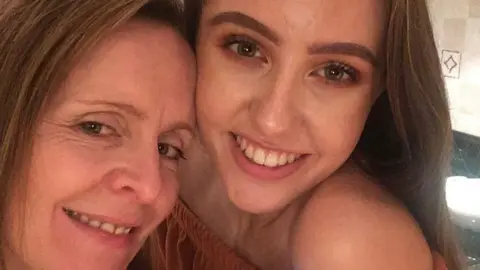 beth alker
Emily died of what is a rare strain of meningitis, a disease usually spread through close contact with an individual.
It is different to the more common B strain, which has resulted in the deaths of two students in Kent and 20 more confirmed cases at the University of Kent.
Speaking to BBC Radio Lancashire, Beth said events in Kent had brought "the horror" of her daughter's passing into focus, adding she was happy the disease was now getting coverage.
She said that although a course of vaccinations can be costly for many parents, with two doses equalling £220, the benefits vastly outweigh anything else.
"There is no excuse to not protect our young people," she said.
"They haven't done anything wrong, they're healty, they're fit, they're going out to festivals and just starting their lives - we should do absolutely everything to make sure they get to adulthood."
Listen to the best of BBC Radio Lancashire on Sounds and follow BBC Lancashire on Facebook, X and Instagram. You can also send story ideas via Whatsapp to 0808 100 2230.