Family of teen who died in meningitis outbreak call for wider MenB vaccine programme

 Meningitis Research Foundation/PA Wire
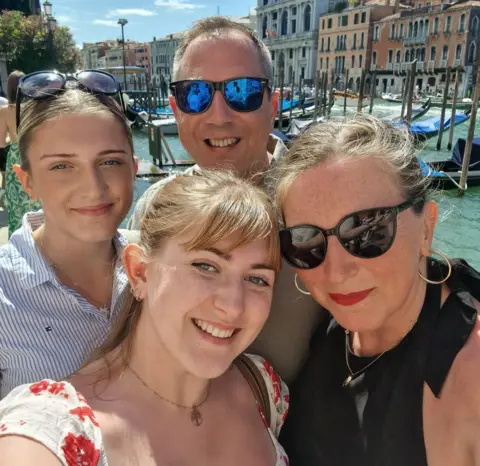
The family of an 18-year-old woman who died following a meningitis B (MenB) outbreak in Kent have called for young people to be better protected from the illness.
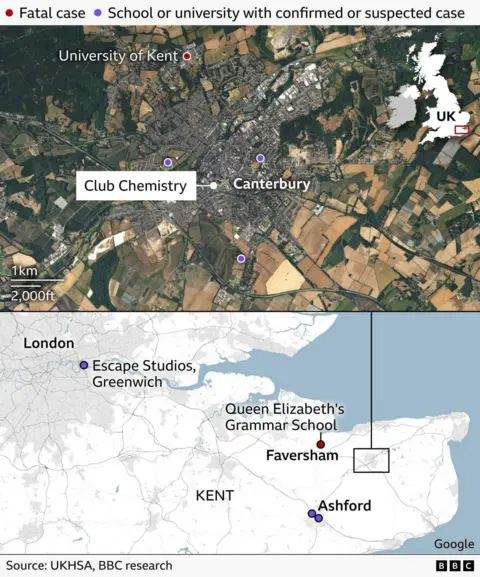
Juliette Kenny is one of two people to have died from the infection last week, the other being a 21-year-old University of Kent student.
Her father Michael Kenny called her "a force in this world" who "spread fun, love and happiness".
It comes as the number of confirmed or suspected cases of invasive meningitis rose to 29 on Friday - up from 27 on Thursday.
The UK Health and Security Agency (UKHSA) now says everyone who went to Club Chemistry in Canterbury - where the outbreak is believed to have originated - between 5 and 15 March can get a MenB vaccination.
Year 12 and 13 pupils at schools with confirmed or probable cases, students and staff at the University of Kent and anyone who has been offered preventative antibiotic treatment by the UKHSA are also eligible.
Previously, only University of Kent students living in halls had been offered the vaccine.
However, Juliette's family have urged the government to extend routine NHS access to the MenB vaccine to teenagers and young adults.
MenB is the most common cause of meningococcal meningitis in the UK, but routine vaccinations only began to be rolled out in 2015, meaning the current generation of students and others in their late teens are not protected.
'Pain and tragedy'
Juliette died one day after showing meningitis symptoms of vomiting and discolouration in her cheeks, according to her father Michael.
He said he remembered his daughter was "fit, healthy and strong" before she died.
"The devastation of her loss to us, her family and friends is immeasurable."
Michael added the illness, which took his daughter "so quickly", could "be avoided".
"No family should experience this pain and tragedy," he said. "The work to protect young people has started. It needs to be more."
Kent County Council's director of public health, Anjan Ghosh, says it is too early to tell whether the outbreak has peaked.
He suggests there could be more cases through next week.
Vinny Smith, chief executive of Meningitis Research Foundation, told BBC Breakfast a "nationally, freely available vaccine programme" was necessary to reduce the risk MenB poses to teenagers and young adults.
He said a vaccine programme is not currently offered due to its cost effectiveness.
Health Secretary Wes Streeting said earlier he had asked the Joint Committee on Vaccination and Immunisation to revisit its advice on a wider catch-up programme following the Canterbury outbreak.
Smith said he welcomed this review, but suggested the "framework" for deciding whether one was necessary needed to account for the impact of the illness.
 PA Media
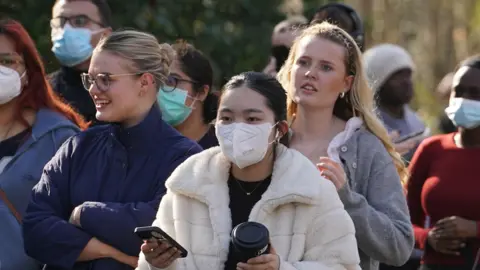
University students have been queuing for hours for the vaccine this week.
More than 2,500 had been given out as of Friday afternoon, according to the NHS.
Some 100 students were turned away on Thursday due to the queue being too long for all to be seen by staff before the end of the day.
One case has been confirmed at a higher education institution in London, which was "directly linked" to those in Canterbury, the UKHSA said.
Three cheerleaders from the University of Kent are among those in hospital, according to a team member.
The supermarket Morrisons said a staff member had contracted meningitis after attending Club Chemistry.
On Thursday, Streeting told the BBC that the risk remained "extremely low".
"It's absolutely fine for people to go about living their lives in a normal way," he said.
Forty MPs have signed a letter calling on the government to work with universities on catch-up vaccination programmes, and to improve awareness.
The UKHSA has issued a public health alert for doctors in England to watch out for meningitis symptoms.
Its chief executive, Prof Susan Hopkins, told the BBC that she had never seen "such an explosive start to a meningitis outbreak".
The detected strain had been circulating for five years, she said.
Hopkins added the bacteria was being studied and hopefully there would be more answers in the coming days and weeks.
Historically the "vast majority" of meningitis outbreaks had been successfully controlled by interventions, she said.
Follow BBC Kent on Facebook, on X, and on Instagram. Send your story ideas to southeasttoday@bbc.co.uk or WhatsApp us on 08081 002250.

Get our flagship newsletter with all the headlines you need to start the day. Sign up here.