Why are more GPs opting to work outside the NHS?

 Martin Giles/BBC
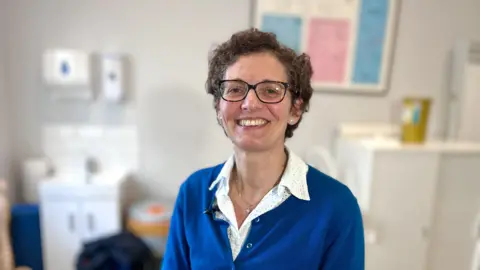
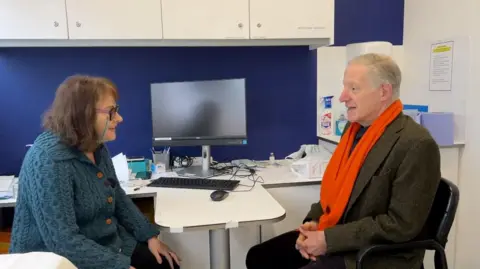
In her consulting room, Dr Yvonne Girgis-Hanna is at work as a GP, but not for the NHS.
She is one of an increasing number of family doctors opting to practise privately.
"I could not work as a full‑time NHS GP," she says.
"The days I do in the NHS, the next day I'm totally wiped out... You might have 30 face‑to‑face contacts, then extra telephone calls and paperwork. You just don't have time to even go to the toilet."
BBC analysis of Care Quality Commission (CQC) data shows the number of doctors registering to practise outside the NHS has risen sharply.
And a 2024 report by healthcare business‑intelligence company LaingBuisson estimated that 13% of GP consultations were private, up from 3% two decades earlier.
So why are more doctors opting to work outside the NHS – and why are patients prepared to pay to see them?
 BBC/MARTIN GILES
In the five years to the end of 2025, the CQC received 1,238 new registrations for "independent consulting doctors" in England, compared with 396 in the previous five years – a 212% increase.
Between 2024 and 2025, new registrations rose by 58%.
Independent consulting doctors are individual clinicians who provide medical care privately, outside the NHS, either in person or online.
The category covers a wide range of specialities, from general practice to skin complaints, women's health, and aesthetics.
Both the CQC and NHS England say there is no category that isolates private GP registrations.
For context, the Royal College of GPs says 6,229 NHS GP practices were active as of September 2025.
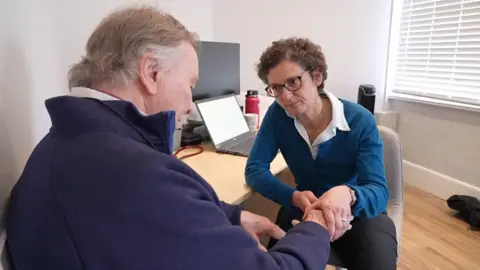
In Essex, where new independent registrations rose from six in 2024 to 12 in 2025, Girgis‑Hanna divides her working week between the NHS and private consultations, operating from a chiropractic clinic in Saffron Walden.
The company she works with, Cambridge Private Doctors, says demand has grown. Once sessions were ad‑hoc, but now it has 14 GPs working across multiple sites.
Girgis-Hanna's patients pay from £129 for a 20-minute appointment, with options of up to an hour.
Longer consultations allow for continuity, she says, similar to when she started her career and family doctors gave "cradle to grave" care.
Working privately gives her more time and resources to care for patients, she says.
Demand is the central challenge in the NHS, she believes. Some patients, she says, present 20 or 30 times a year to general practice, which has an annual budget of roughly £120 per patient.
"If you imagine £120 for somebody that might be presenting 20 times, it is very little," she says.
Girgis-Hanna admits she and many fellow GPs feel conflicted about working privately, but that it is ultimately helping to prevent burnout and keep them in the profession.
 BBC/Martin Giles
So what do her patients think? Vanessa Ravazzotti, 51, says getting an NHS appointment took too long, and that by the time she was seen, her symptoms were "so much worse".
On seeing a GP privately, she says: "Mentally, it's better. I don't have the anxiety of waiting. She [Girgis‑Hanna] knows me; I know her."
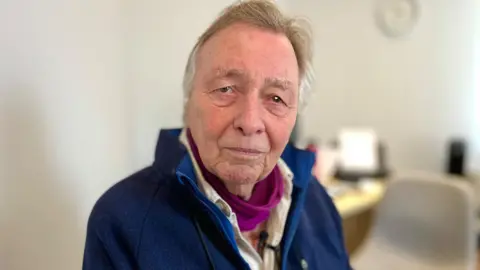
Ian Miller, 85, who has arthritis in his right hand, says he dislikes seeing different clinicians and finds short NHS appointments difficult.
On private appointments, he says: "You immediately get down to the problem because you have that familiarity."
 NICOLA HASELER/BBC
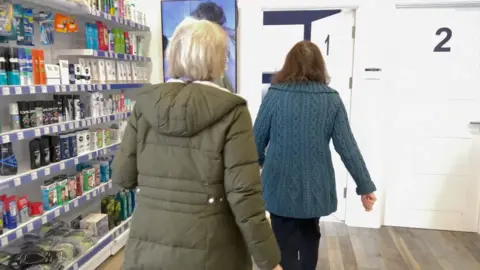
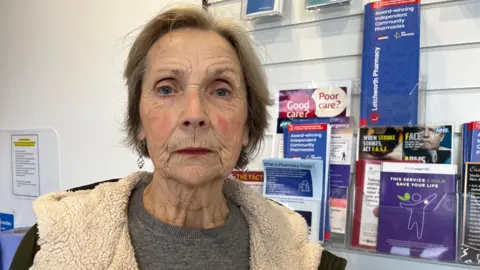
In neighbouring Hertfordshire, GP Dr Karen Benson works privately from a pharmacy in Letchworth.
She began volunteering during Covid and flu vaccinations and says it was "like a casualty department".
"I said to the pharmacy owner, 'You need to have a general practitioner in your place... there are some things [pharmacists] can't deal with,'" she says.
"I haven't got constant interruptions… it's a much more relaxed atmosphere."
Benson also offers appointments of up to an hour and says she has more freedom to practise lifestyle medicine, looking at underlying causes and sometimes deprescribing.
Skin problems and weight loss are the most common reasons patients come to her, and she runs an NHS specialist skin clinic one day a week.
 Nicola Haseler/BBC
Some patients, however, cannot afford to continue privately for specialist care, so she refers back into the NHS.
Janet Tomlin, 79, says she opted to go private because of difficulty in getting an NHS appointment.
"If you phoned, you'd be in a queue, and you could wait forever," she says.
"If you've got some money and you want to be sorted out, you might as well pay and get it done, especially when you're older."
 Nicola Haseler/BBC
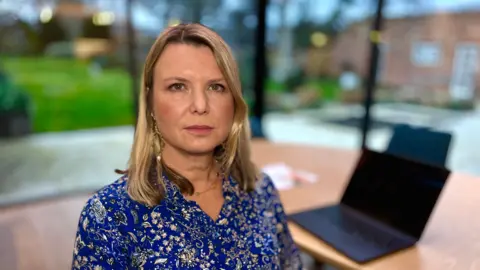
Dr Oliver Denton, a member of the British Medical Association's (BMA) private practice committee, says: "We can't be definitive about why we're seeing a rise in doctors practising privately, but with growing pressures within the NHS it is no wonder more may be considering looking to work outside the health service."
Denton says many doctors "may choose to split their work between NHS and private practice, in order to have better control over their workload, wellbeing and work‑life balance".
 Martin Giles/BBC
The BMA's GP committee representative, Dr Diana Hunter, an NHS GP in Cambridgeshire, says: "I know colleagues who work in private general practice and really enjoy it.
"But the fact that more patients are choosing that [private care] says to me there's a problem with NHS general practice."
Hunter says the government believes patients want access, pointing to changes in October requiring practices to keep online consultation systems open from 08:30 to 18:30 Monday to Friday.
But she argues: "What patients are paying for in the private sector is access to see the person they want and time for that consultation."
She says the BMA had lobbied for a further £2.5bn investment into the core GP contract. However, the government responded last week with a £485m uplift.
Referring to the new GP contract for 2026/27, Amanda Doyle, NHS England's national director for primary care and community services, said: "Ringfencing £292m will allow practices to recruit more GPs and strengthen the care they provide.
"We've also upgraded thousands of practice phone systems and introduced online request forms, making it easier for people to contact their surgery... while keeping phone lines free for those who need urgent care."
Health Secretary Wes Streeting said: "We're fixing the front door to the NHS.
"Many more patients with urgent needs will be able to get an appointment the day they contact their practice."
Additional reporting by Matt Precey, Jonathan Fagg and Nic Rigby
Follow East of England news on X, Instagram and Facebook: BBC Beds, Herts & Bucks, BBC Cambridgeshire, BBC Essex, BBC Norfolk, BBC Northamptonshire or BBC Suffolk.