Train ash used to seal leaky canal lock gates

 BBC
BBCA centuries-old method of sealing gaps in lock gates lives on across West Yorkshire thanks to a partnership with heritage steam railways.
"Ashing up" dates back to the 19th Century when heavy boat traffic meant water was often in short supply.
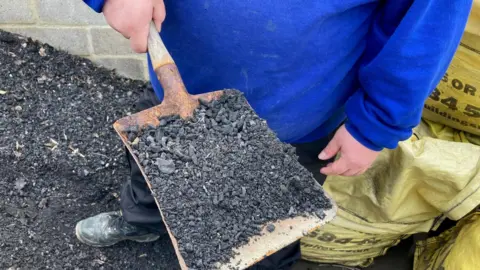
Lock keepers would float coal ash, from nearby steam railways, on the water's surface overnight which would then be drawn into gaps in the gates and form a bung.
The Canal & River Trust (CRT) is working with the Keighley & Worth Valley Railway, Embsay & Bolton Abbey Railway, and most recently the Middleton Railway in Leeds to use their ash.
Darren Trolley, the CRT's team leader in Yorkshire & the North East, has decades of experience using the technique along the Leeds & Liverpool Canal.
He said: "The process of ashing up is a simple, cost-effective solution that reuses a byproduct of the heritage railways.
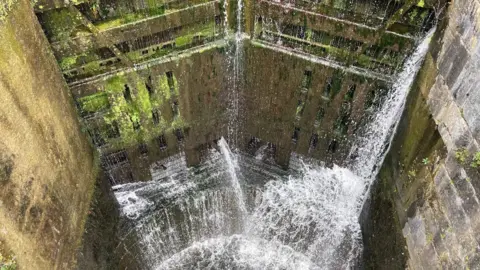
"We pour a small amount of ash into the canal just above a lock, and the flow of water draws it into the gaps in the gates, forming a completely watertight seal.
"It's amazing to see this technique in action and to think it's still being used centuries later."
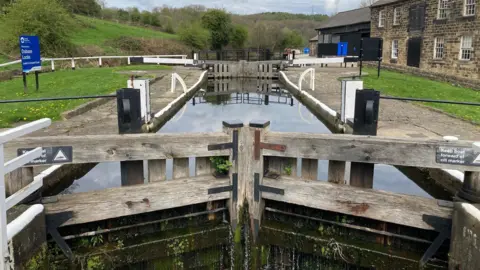
Over the years, rubber and polymer sealants, soaked sawdust, wood chips and even natural clay have all been tested.
But the CRT said none matched the effectiveness of railway ash in creating a reliable, watertight seal.
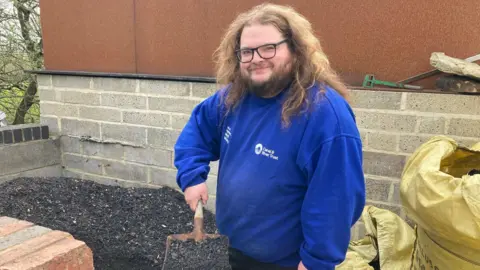
Tom Jefferys is a waterways operative for the trust based at Dobson Locks in Apperley Bridge where the ash is stored.
He said: "Apparently the way they found out... lock keepers, back in the day, when they had their coal fires they just dumped it out and they realised it was sealing the gates.
"Whether or not that is true, I don't know, but somebody discovered it.
"We go and collect it from the heritage steam railways now. It's a by-product for them, but we can use it and it's brilliant."
Ian Smith, vice-president of Middleton Railway, said "This really is a win-win for ourselves and the Canal & River Trust.
"We have a responsible way of disposing of our ash, and the trust can use it to repair locks and keep another heritage operation running for many people to enjoy."
Trolley said: "Sometimes the old ways really are the best when it comes to working on the canals and it's great to see Yorkshire's heritage railways and canals supporting each other."
Listen to highlights from West Yorkshire on BBC Sounds, catch up with the latest episode of Look North.