'A heart condition put a stop to my football career'

 Alex Bailess
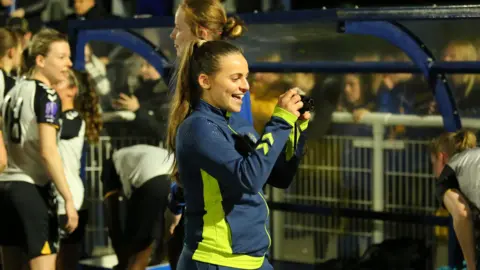
Alex Bailess was preparing to start a new season as captain of Hashtag United Women when genetic screening put a stop to her playing career.
Alex - who was 26 at the time - underwent screening following the sudden death of her younger cousin. It revealed she had inherited a heart muscle disease.
Doctors told her that because of the disease, known as cardiomyopathy, she would have to give up football.
"I felt really lost in that, if I wasn't a footballer then who am I?... I needed to find my football fix in a different way."
Now aged 31 and in front of the mic as a broadcaster, she is hopeful that a research programme at Oxford University could help cure the condition for future generations.
Cardiomyopathy affects an estimated 260,000 people in the UK and can lead to heart failure or sudden cardiac death due to an often inherited faulty gene.
Speaking about the death of her cousin, Alex, who is from Essex, described it as a "huge shock" for her family, and that getting her own diagnosis made her "lose her identity".
She said she would cry watching her team train, "cry in the shower, and then drive to work crying the next day".
"I've never experienced anything like that before. I was like that for weeks."
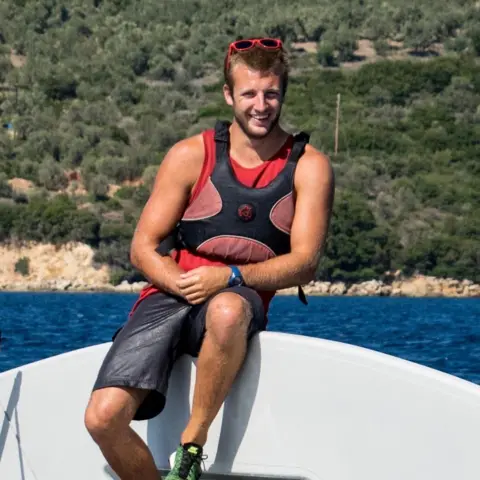
Alex was invited to visit the University of Oxford's Institute of Developmental and Regenerative Medicine to learn about the development of gene-editing and RNA therapies that could one day correct the faulty genes responsible for cardiomyopathy.
 Alex Bailess
Professor Hugh Watkins, British Heart Foundation Professor of Cardiovascular Medicine, said he believes the work they are doing at the institute will be "transformational".
"One of the things that we are quite far down the road doing is creating a medicine that would... get into the cells in the heart, and be able to tell apart the healthy copy from the faulty one, and turn off the faulty one."
"I think editing therapies will come, but they will be a bit longer.
"So if I'm talking with a family... and they're asking what the future looks like, let's say for their young teenage kids, I'm absolutely optimistic.
"I think that we will get this done in time for them."
Alex said the work at the lab is "inspiring" and that she never thought a cure or treatment would happen in her lifetime.
"The fact that we're so close to that is amazing, seeing that the next generation, hopefully, if they do have conditions like this, then there is hope."
She said despite not being able to play, swapping boots for broadcast has given her opportunities "she would never have been able to do before".
"And I get to do that everyday."
Alex's visit was part of the British Heart Foundation's Every Minute Matters campaign in conjunction with Sky Bet to deliver training in lifesaving CPR.
You can follow BBC Oxfordshire on Facebook, X (Twitter), or Instagram.