What is Trump doing with the US Forest Service?

 Getty Images
The US government recently announced plans to relocate the headquarters for the national forest service from Washington, DC, to the state of Utah, stirring up worries that it intends to greatly shrink - or even shut down - the agency that manages the nation's forests, fights wildfires and conducts biological research.
The US Department of Agriculture (USDA), which oversees the service, has said the move is part of a sweeping restructuring that will make the agency more effective and tie it closer to the millions of acres it oversees. Along with moving the headquarters, President Donald Trump's administration also plans to shut down regional offices and transition to a state-focused model.
But as the administration bills the move as a "common-sense approach", opponents have said it threatens to limit people's access to national forests and weaken protections for public lands, potentially opening them to private businesses and extractive industries.
Here's what we know about the impending changes to the US Forest Service (USFS):
What is the US Forest Service?
 Getty Images
Established by President Theodore Roosevelt more than a century ago, in 1905, the USFS manages 154 national forests and 20 national grasslands, which cover 193 million acres in 43 states, the Virgin Islands and Puerto Rico.
Employees focus on sustainable management, conservation, and use and stewardship of natural and cultural resources.
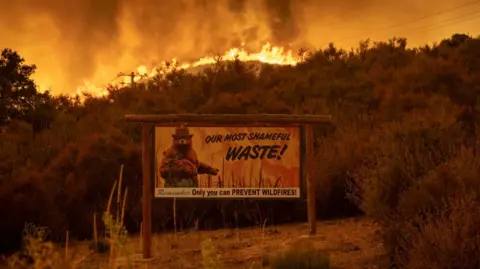
The USFS also handles fire management and other safety initiatives. Famously, its wildfire-prevention programme is fronted by mascot Smokey the Bear.
No timeline for the move to Utah has been announced yet. The BBC has contacted the USDA.
Why is Trump moving the headquarters to Utah?
 EPA/Shutterstock
On 31 March, the Trump administration announced it would move the USFS headquarters away from the East Coast to Salt Lake City, Utah, in part, because public lands "are overwhelmingly concentrated in the West".
The USDA has said the move will save money and boost employee recruitment, pointing to Salt Lake's lower cost of living, proximity to an international airport and "family-focused way of life".
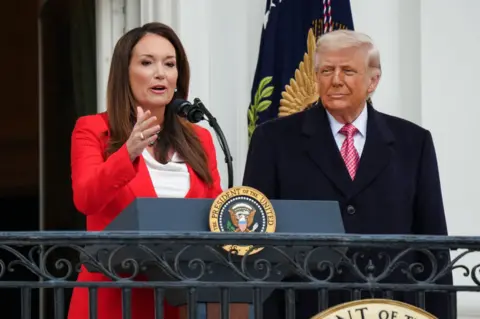
"This is about building a Forest Service that is nimble, efficient, effective and closer to the forests and communities it serves," said Forest Service Chief Tom Schultz.
"Effective stewardship and active management are achieved on the ground, where forests and communities are found - not just behind a desk in the capital," he added.
The plans also include moving away from regional offices to a state-based model "to shift authority closer to the field", the USDA said.
Fifteen state directors will be distributed throughout the US to oversee operations within at least one state. Many functions of the regional offices will also move to a network of centres in New Mexico, Georgia, Colorado, Wisconsin, Montana and California - places that already have an existing USDA presence, the agency said.
Utah Governor Spencer Cox, a Republican, and Colorado Governor Jared Polis, a Democrat, both back the plan and its state-focused approach.
The Trump administration has already made steep cuts to staff at national parks and other places that have triggered a backlash, with critics saying they have limited access to public lands.
Why is there opposition?
The National Federation of Federal Employees (NFFE-IAM), the labour union that represents tens of thousands of USFS workers, has condemned the changes, calling them "a reckless disruption to the dedicated workforce that manages the nation's forests, fights wildfires, and serves the public".
"Uprooting their careers and blowing up the structure they work within is not a reform. It is chaos, and the American public and our public lands will pay the price," said NFFE-IAM National President Randy Erwin.
The restructuring will reportedly shut down 57 of 77 research facilities and nine regional offices across 31 states, in addition to the headquarters move.
Many in and out of the union have also expressed worries that the changes will take place during the country's wildfire season, which stretches from May through November.
What broader impact could the move have?
While the Trump administration has said that frontline operations, including wildfire response, will continue uninterrupted, businesses and groups tied to the outdoors have expressed scepticism about the changes.
A coalition of 70 companies oppose Trump's plans, saying their business relies on well-managed, accessible public lands.
The companies - including REI Co-op, The North Face, Columbia Sportswear Company, Elkhorn Coffee Co, Flickr and others - have raised concerns about the agency's ability to properly manage the vast wildlands and continue its decades of research under the plan.
They estimate recreation on USFS land annually drives $23.3bn (£17.3bn) in economic output. Local communities, visitors, businesses, and others stand to suffer if the agency does not receive the funding and resources it needs through the transition, they said.
In a separate statement, retailer Patagonia said: "By shutting down its research stations, culling its staff, and moving the headquarters to Salt Lake City, it will be surprising if USFS can effectively manage anything at all."
"The only beneficiaries of the move and other rollbacks to public land policy from this past year are billionaires and extractive industries."