The women urging the police to listen to them

 Contributed
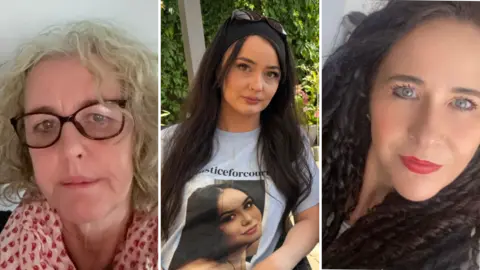
When Nicki Durbin's 19-year-old son Luke went missing after a night out almost 20 years ago, she never expected to be doing her own investigative work because she did not feel listened to.
The mother, from Ipswich, says some officers looked down on her as she pushed for answers when he still had not been found years later.
She is not the only one to feel the same way — the family of Courtney Mitchell said their concerns for her safety went ignored by Suffolk Police officers before she was then murdered by her ex-partner in Ipswich in 2024.
Earlier this month, Emily Doherty also said in a statement she was made to feel like a "silly little girl" by officers when a man, now known to be the serial killer Steve Wright, attempted to kidnap her in Felixstowe in 1999.
These women and families are desperate to be heard and some have now shared their stories.
'No compassion'
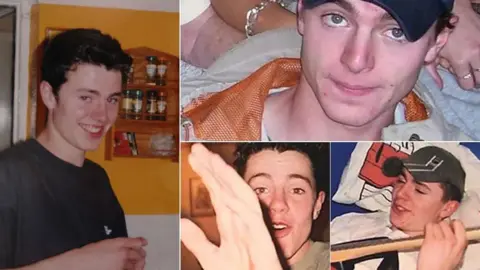
Nicki, 56, has been trying to find her son Luke who went missing on a night out in Ipswich when he was 19 in 2006.
She says in the initial weeks after his disappearance the police were "amazing" in their investigations, but it changed.
After several months, officers arrived at her home unannounced. She feared they had found a body.
Instead, she was told someone had reported seeing Luke getting into a car in Woodbridge days after he vanished, and that he had "wasted police time" — despite still being missing.
"I was sitting on the settee crying," she says.
"It is the way he stood over me like I was some naughty person. There was just no compassion in that."
 Suffolk Police
Nicki's relationship with the police has vastly improved, but she says it was frustrating when a detective said her determination to do her own investigation had "driven" the inquiry.
She believes a lot of information was lost because she was not heard, which she thinks was partly because she was a single mother.
"I don't think I was heard until I'd put a situation to them that wasn't comfortable and that's really awful because what I should have been doing was grieving my son.
"But all I could do was fight."
 Suffolk Police
In September 1999, Emily Doherty escaped Wright when a couple let her into their home to call police.
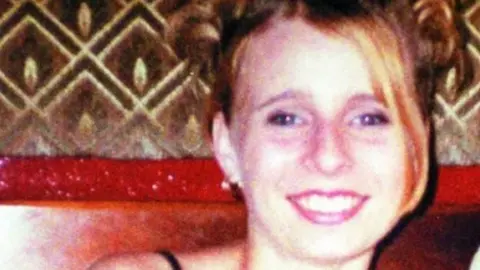
The following night, Wright kidnapped and murdered 17-year-old Victoria Hall.
At his sentencing earlier this month, Emily's victim impact statement said that when police arrived they first questioned how much she had drunk.
"To this day I am furious," her statement said.
"I wasn't taken seriously. I was made to feel like a silly little girl."
Her official statement was not taken until 2021, two years after police reopened the investigation into Victoria's kidnap and murder.
Det Supt Phill Gray at Suffolk Police previously apologised for "the way in which Emily feels police treated her that night", but said officers "understood the enormity" of what she had told them.
'Laughed at me'
Carla Oakshott, 49, from Ipswich believes she had valuable information from the same night as Emily's incident on 18 September 1999, which could have helped police.
She was a young single mother living on High Road in Felixstowe and late that night she grew concerned when a man in a van parked outside her home could be heard saying he was looking for a girl or woman and, if he did not find her, he would "find another one".
Two days later, after seeing news of Victoria's disappearance, she called the police to give them details she noted down including a part of the number plate.
But she says they were not interested and did not follow it up. She tried again in the following days, with the same result.
She says they instead questioned if the man was the father of her child.
"They were more concerned about why I was a single mum than anything else, they just dismissed me," she recalls.
"At one point they actually laughed at me and said, 'Oh you're just trying to get involved; it's nothing to do with you, so stop contacting us please'."
In 2019, when police reopened Victoria's case, Carla contacted them again and was asked to provide an official statement. She now believes it was Wright in the van.
"It bothered me for a lot of years because I didn't know Vicky, I didn't know her family, but that poor family were going through absolute hell and I was just trying to get somebody to listen to me and take the partial number plate."
 Suffolk Police
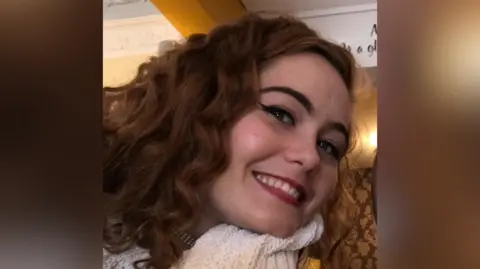
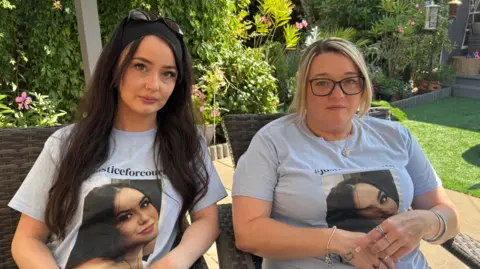
Courtney Mitchell, a 26-year-old mother-of-three, and her family had raised concerns of her abusive ex-partner to police before he murdered her almost two years ago.
They even raised concerns on the day she died.
Her sister, Charleigh Mitchell, 30, says Courtney was failed and would still be here had the family been listened to.
"There were several calls I'd made where I was hung up on and they weren't listening," she says.
"They weren't taking the gravity of what actually happened to her properly and the severity of the attacks that had been made on her physically.
"They said they were putting it through as urgent, but it never got put through as anything."
 George King/BBC
Senior officers did admit there had been missed opportunities to protect Courtney and the Independent Office for Police Conduct also said Essex Police officers had failed to attend Courtney's former home in Colchester following a report of a domestic assault, made when her ex-partner was believed to still be present.
"I felt like I had to protect her all on my own with our family," Charleigh adds.
"We weren't able to protect her in the way a police force should be able to protect her.
"It makes you feel like you've failed a job in protecting someone you love, because a force that is meant to protect them has failed and neglected their role."
 Ending Violence Against Women
According to data published by charity Refuge in 2024, a quarter of women said their trust in police to handle the issue of violence against women and girls had gone down in the last year.
In 2021, the kidnap and murder of Sarah Everard by a serving police officer in London also sparked national outrage and calls for more action to tackle the issue.
Interim director of charity Ending Violence Against Women, Janaya Walker, says police and the justice system "routinely disbelieve and minimise victims and survivors' experiences, including focusing on a women's perceived 'credibility' rather than investigating a suspect's actions".
"Investigations into misconduct are important and necessary, but the reality remains that many women and girls are let down by a system that can harm them, and often fails to hold perpetrators to account," she adds.
There has been some progress though, with the likes of Operation Soteria that has led to a new national operating model for rape allegations that expects officers to investigate the suspect's actions rather than the victim's perceived credibility.
But Walker says change in policing "has proven difficult" and the issues are "seemingly embedded in its culture".
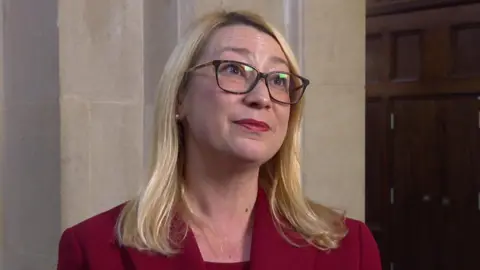
Last year, Jess Asato, the Labour MP for Lowestoft in Suffolk, was appointed Violence Against Women and Girls adviser to reform NHS response as part of the government's mission to halve this type of violence within a decade.
While her work does focus more on how victims can seek support through the healthcare system, she says this will be closely linked with the criminal justice system.
She says specialist support services that are well funded are needed so that they work with police and other agencies to tackle violence.
"Too often we turn a blind eye to so-called low-level crimes," she adds.
"If we were to reframe that and see this as the start of a pattern of potentially escalating behaviour, then we might be able to actually get to the perpetrator and stop the crimes from happening in the first place."
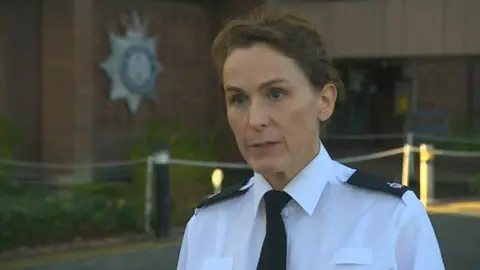
Det Ch Supt Jane Topping at Suffolk Police says the force understands how "deeply distressing" it can be when victims and families do not feel heard.
"We are genuinely sorry for the impact this can have, and we are committed to ensuring that every woman, every survivor and every family who comes to us feels listened to, respected and supported from their very first contact with us," she says.
"We know that trust is built through actions, not words.
"In recent years we have strengthened the way we engage with victims, with a renewed emphasis on trauma-informed communication, empathy and clear, consistent updates throughout an investigation.
"Our officers and staff receive ongoing training to help them better understand victims' experiences, to identify vulnerability earlier, and to respond with the compassion and professionalism people rightly expect."
Topping adds that the force is part of the work being delivered through Operation Soteria and it remains "fully committed to listening, learning and improving so that every victim and survivor who comes to us feels safe, believed and treated with the dignity and care they deserve".
A Home Office spokesperson adds: "We expect all forces to carry out thorough investigations and to support victims at every stage.
"Where standards fall short, it is right to review their actions and take steps to improve.
"Tackling violence against women and girls is a priority and it is vital that forces prioritise victims and continually learning from cases like this."
Follow Suffolk news on BBC Sounds, Facebook, Instagram and X.