How do islands compare on price of food essentials?

 BBC
BBCA consumer council has questioned why Jersey shoppers are paying more for food than those in Guernsey.
It comes after a minister said last week it was "really unfortunate" if having separate ferry operators between the islands increased food prices.
BBC analysis of 12 everyday items suggested prices in Jersey were on average 6.2% higher than those in Guernsey - exceeding the 5% goods and services tax (GST) in place in Jersey but not Guernsey.
Jersey Consumer Council chairman Carl Walker said: "People can understand why prices are going to be more expensive in Jersey than the UK, but when you start looking at Guernsey with it being so close... you have to start asking 'what's going on?'."
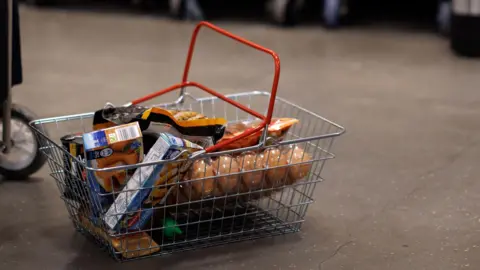
The BBC tracked the price of the same 12 items of food over the past week at four island supermarkets, revealing a disparity in the cost of produce including easy peelers, chopped tomatoes and beef mince.
In addition to the GST, the minimum wage in Jersey is 40p an hour higher than in Guernsey.
However, Walker said having two ferry operators was also driving up prices.
Lifeline freight services to Guernsey and Jersey are provided by different companies after a joint tender process by the island's governments failed to result in a unanimous decision.
Walker said: "We've got two different ferry operators charging potentially different prices.
"We saw one of the big retailers recently go public about the difference in freight and the red tape and the struggles that they have in operating in the island.
"What both islands lack is some sort of discounted supermarket like an Aldi or a Lidl. That would help drive prices right down."
Sustainable Economic Development Minister Kirsten Morel, who led the negotiations for the ferry deal, said it was unfortunate if choosing separate operators led to higher prices on food but added he would not apologise for "protecting Jersey's food supply chain".
Sandpiper CI, which manages the M&S franchise in Jersey, in December 2025 wrote to the island's scrutiny panel requesting a review of the contract signed between DFDS and the Government of Jersey.
Mark Cox, chief executive of the Channel Islands Coop, previously said dealing with the two different ferry contracts was "challenging" and added to the "complexity of a very expensive supply chain".
Waitrose said its prices were "fairly based on additional costs" while Morrisons said prices differed in the islands from the UK "due to the additional costs such as logistics".
CI Coop, a separate business to the Co-op Group in the UK, said: "Our location means higher shipping and freight costs, and getting goods on to island shelves is simply more expensive.
"Over the past three years, inflation in the islands has been higher than in the UK, and local wage levels already exceed the UK National Living Wage.
"These factors all contribute to the cost of operating here and, inevitably, influence the prices customers see.
"We also apply the same pricing across Jersey and Guernsey, with differences only where required by local taxes.
"This means any variation is limited to GST and products subject to different duty rates, such as tobacco, beers, wines, and spirits."
In 2024, Morrisons began running supermarket franchises in the islands and began expanding later that year.
It said: "Since acquiring our stores in the Channel Islands we have been working hard on reviewing our customer offerings.
"Since November, we have reduced over 890 prices and currently offer the cheapest prices for a wide range of basket staples such as bread, milk, tea, eggs and butter."
The BBC contacted Sandpaper CI but the company declined to comment.
Follow BBC Guernsey on X and Facebook. Follow BBC Jersey on X and Facebook. Send your story ideas to channel.islands@bbc.co.uk.