Thermal imaging helping households save energy

 BBC
BBCA not-for-profit scheme is using thermal imaging technology to help people save money on energy bills and lower their carbon emissions.
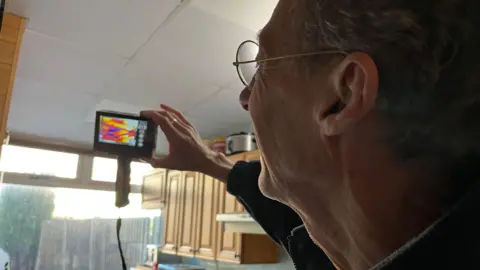
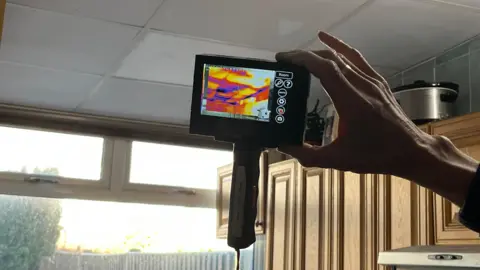
The project, run by Cold Homes Energy Efficiency Survey Experts (Cheese), surveys homes in Bristol and Bath, using an infrared camera to identify where heat is escaping, offering advice to fix the issues.
Home visits, which cost about £55, are funded by the West of England Combined Authority (Weca) and Retrofit West.
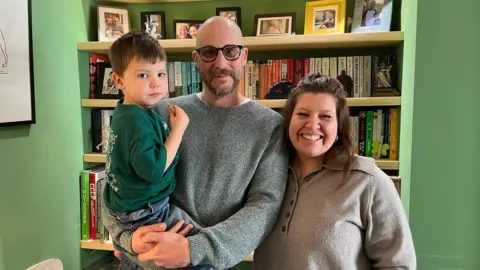
Emily, whose home in Bedminster was surveyed, said: "To be leaking all this energy seems such a waste."
Emily and her partner Scott have been renovating their home.
"Energy bills are so expensive and we've had all this work done and we want to know that we haven't kind of wasted our time and money, and we want to try and reduce the amount of heating [lost] as much as possible," she said.
"Based on the advice we've been given so far I think it should be quite easy to rectify anything that's a problem," she added.
More than 1,000 homeowners in the Bristol area have benefitted from the scheme, which funds 70% of the survey costs.
Willow Merewood, from Cheese, said: "The idea was to use technology in a way that can help people deal with the cold homes.
"We have the oldest and the coldest housing stock in Europe. So it's great to be able to find out where we can start to fix those problems efficiently."
On Tuesday, the government announced its Warm Homes Plan would invest £15bn Households in green technology and insulation to help householders lower their energy consumption.
Merewood described the infrared cameras as being able to "help you see what your eyes can't see almost like a superpower unveiling hidden heat leaks".
"Some of the most common things that we see [are] loft hatches, draughty floorboards, badly fitted windows and doors, missing insulation in the loft, holes around pipes," she explained.
By identifying the problems, homeowners or renters can make changes that could save energy in the long run, reducing bills and keeping the home warmer. But it also helps to lower carbon emissions.
"Both of us are really interested in sustainability, climate change and doing anything we can to reduce our energy expenditure," said Emily.
"Not just the financial cost but the carbon cost of these upgrades can be quite extensive, so focusing on where they're really effective is really key," added Scott.
Follow BBC Bristol on Facebook, X and Instagram. Send your story ideas to us on email or via WhatsApp on 0800 313 4630.