How an architect revolutionised school design

 BBC
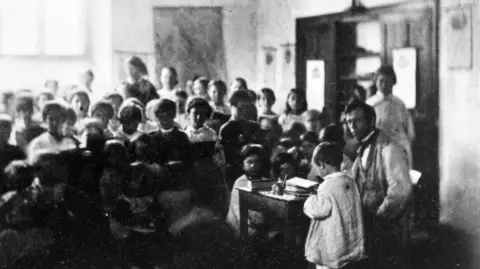
BBCIn the late 19th Century, schools across the UK were "crowded and grim" with up to 60 pupils in a classroom.
Schools were built around a main hall with small and narrow classrooms, and suffered from poor ventilation.
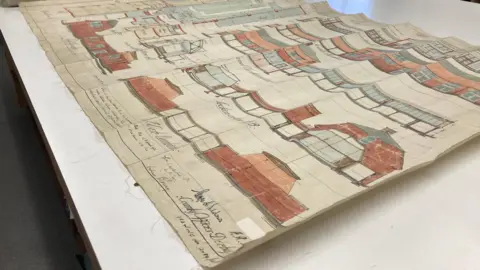
One architect, who worked for Derbyshire County Council in the early 20th Century, aimed to revolutionise the way schools across the country were built in an effort to make the classroom "conducive" for learning.
According to Historic England, George Widdows designed more than 70 schools in his career after the Elementary Education Act of 1880 - which made school attendance compulsory between the ages of five and 10 - was passed.
 Getty Images/ Colonel H.W Verschoyle
Widdows, originally from Norwich, was appointed as architect to Derbyshire's education committee in 1904, after county councils were granted administration over schools in 1902.
He later became the chief architect for Derbyshire County Council from 1910 to 1936.
The county, according to Historic England, had the greatest percentage increase in population in the country in the 1890s, particularly due to the growth of manufacturing communities in the east of the county.
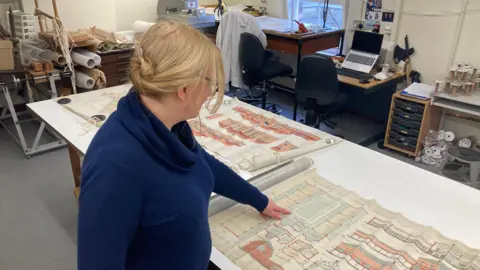
Sarah Chubb, archives and local studies manager at Derbyshire Record Office, said Widdows wanted to design "healthy classrooms" with "fresh air in mind" - and pointed to Dronfield New Junior School as an example.
She said the classrooms at the school were built around a courtyard with a veranda so children would be in the fresh air when they moved around the school.
"George Widdows really thought the gardens for the children were very important, so his order of importance was pupils first, then the teachers, then gardens, and lastly, buildings," Chubb added.
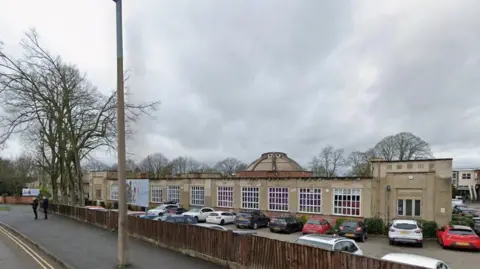
Another school Widdows designed is the Grade II* listed Ilkeston School - now the Ormiston Ilkeston Enterprise Academy - which was built in the early 20th Century.
 Google
Chubb said the designs of the school were "beautiful."
She added: "Widdows was really keen to be using local materials, high-quality design, high-quality materials.
"He did say his schools were a bit more expensive than some others, but it was worth paying that extra money to have a really good school."
According to Historic England, Widdows was "at the forefront" of the movement to build schools where "high standards of hygiene were as important as educational provision".
In 1907, legislation was brought in which required schools to become subject to regular medical inspections.
Widdows subsequently worked with his medical officer, Sidney Barwise, and two deputy architects, C. A. Edeson and T. Walker, to develop a series of innovative designs introducing high levels of natural daylight and effective cross ventilation in schools", Historic England said.
The Builder - a trade magazine now called Building - described Widdows' work in 1913 as a "revolution in the planning and arrangement of school buildings".
"Derbyshire was considered to have perhaps some of the best schools in the world at the time because even in America they would say they didn't have such good schools as Derbyshire because they were so well designed," Chubb said.
Listen to BBC Radio Derby on Sounds and follow BBC Derby on Facebook, on X, or on Instagram. Send your story ideas to eastmidsnews@bbc.co.uk or via WhatsApp on 0808 100 2210.