The house hidden in the garden of a Catford terrace

 BBC
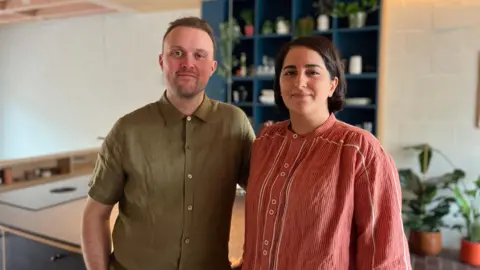
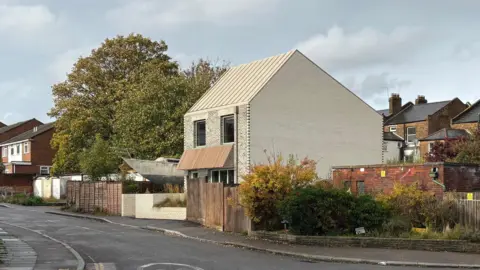
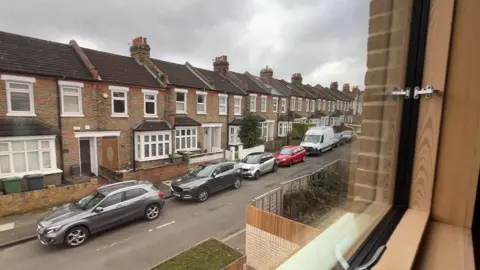
BBCOn a quiet street in Catford, south‑east London, where long back gardens form a patchwork behind rows of tall Victorian terraces, Will and Sogand Howard have created something unusual.
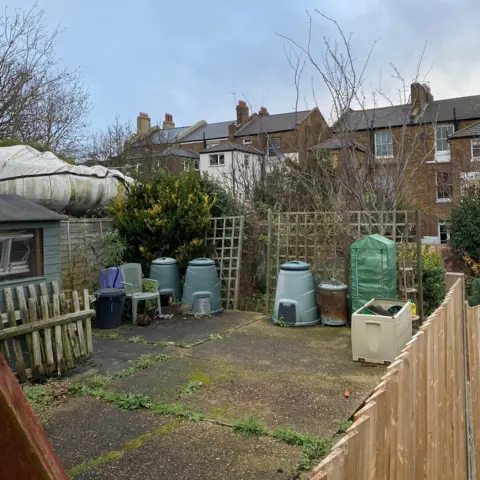
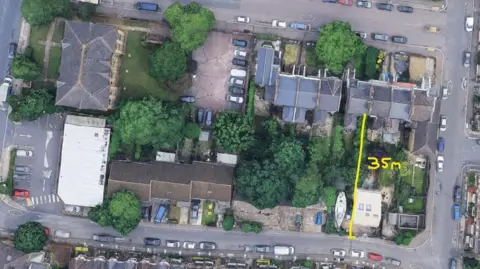
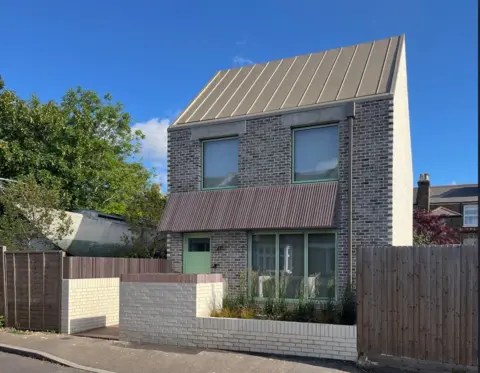
They built a new, modern home in the garden that once belonged to their neighbour.
Their carefully designed "terraced house in waiting" began as a lockdown idea, one that grew while the two architects were living and working in a small flat.
"We had a lot of time on our hands," Will Howard said.
"It started as a bit of a dream, really."
 Will Howard
 Will Howard
The couple took lots of walks - making notes of big gardens and writing more than 100 letters to homeowners whose gardens or side plots looked promising.
"Our families thought it was strange," Sogand Howard laughed.
"They saw us writing to people they considered completely random. But that's very often how the land market works in this country."
The pair, who have a four-year-old son, had explored buying an existing house, but prices were high, and most of the properties they viewed would have required significant renovation.
"As architects, we knew that if we bought an older house, we'd then end up spending extra to bring it to the standard we wanted," Sogand Howard said.
"Building gave us another route."
Through their search, the Howards discovered that many opportunities exist but accessing them can be complicated.
A serendipitous seller
Some gardens were jointly owned, other potential plots fell foul of inconsistent planning policies. In many cases, people were willing to sell but didn't know how to begin the process.
"In theory, identifying small sites is quite easy," Will Howard said. "The challenge is getting those sites onto the market in a way that ordinary people can actually buy them."
The couple struck lucky finding a family who had already been trying to sell off their garden.
Sogand Howard added: "We had a few conversations with people who wanted to sell but not quite ready and then and the family who owned this garden were primed to sell and ready to go."
 Will Howard
She added: "They tried to get permission on this site before and they weren't successful so they were stuck and they were looking for a way to unlock the value of their land.
"They wanted to raise value to convert a bungalow elsewhere, so it was a way for them to raise funds to do that.
"It was serendipitous really, that we met them at that time and that it worked for both of us."
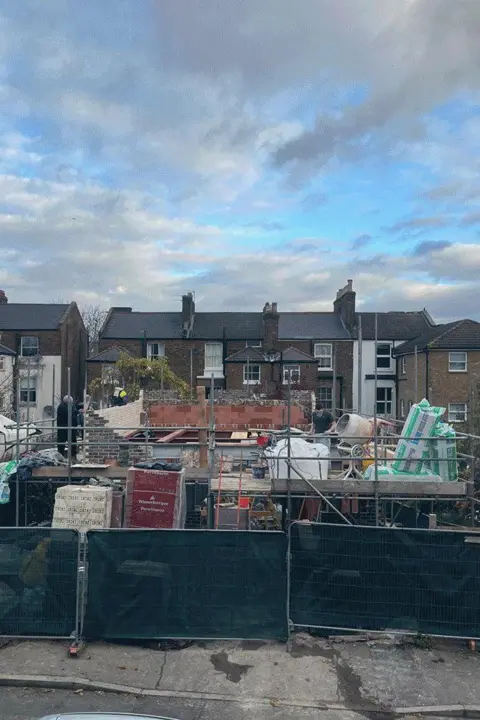
The Howards bought the garden plot for £200,000 and their construction cost £360,000.
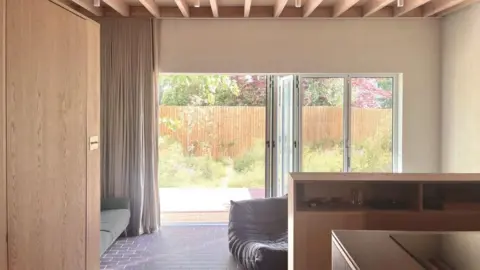
It meant their total spend was comparable to buying a traditional terrace house on the same street but instead of an older building needing £100,000 of further work, they ended up with a bigger house which is more energy‑efficient, high‑performing and tailored to their taste.
"It put us in the same position financially," Will explains. "But we've got a house that doesn't need upgrading."
 Will Howard
Planning permission, often the most stressful part of small‑scale building, turned out to be the easiest stage.
"Because we understood the process as having done it professionally, we were confident about what was achievable on the site," Will Howard said.
"It wouldn't be the same for everyone, but the policy definitely made it more possible."
Sogand Howard added: "Lewisham had a great small sites policy out at the time, so we knew that it was more possible to do a self-build in this particular area.
"The borough has a very strong self-bought tradition that's decades old. So we kind of saw ourselves as slotting into that tradition."
A stifled land market
The Howards say national guidance on small plots would help more people follow a similar path. Policies like this have existed before, and the couple say their absence is partly why the UK's self‑build rates remain low.
Recent data from the government indicated that only 4,302 planning permissions for serviced self-build plots (plots with road access and basic utilities) were granted in England in the year to October 2024.
This is an 18% drop from the previous year and roughly half the level seen around the late-2010s peak.
The UK also has significantly lower self-build rates compared to many countries in Europe.
 Will Howard
"The land market in London is challenging, it's quite stifled, there's not that much land available. In order to identify a piece of land it's quite challenging and there's not sufficient supply of self-build plots for individuals," explained Sogand Howard.
"There's lots of people out there, I think there's about 100,000 on the self-bought register who want to build their own homes, but there isn't a sufficient supply of land, and that's due to a kind of myriad of reasons, but depends if it's kind of public or private land mainly.
"There are many places where you could do exactly what we've done.
"It doesn't have to be unusual."
 Will Howard
A low‑impact way to add homes
The couple, who now have started their own self-build business, Bricolage Projects, said building single homes had a ripple effect - they freed up their old flat for someone else, helping ease pressure on the local housing chain in a subtle but meaningful way.
The project is both personal achievement and proof that carefully placed small homes can contribute to easing the capital's housing shortage.
"It's not bothersome for local people because it isn't a huge tower block. It makes sense because it's an efficient way to build homes.
"If there were lots of self-build plots available, and they were slotted in places that worked, and policy responded to that in a really meaningful way.
"It could be a transformational way to deliver lots of homes."
Listen to the best of BBC Radio London on Sounds and follow BBC London on Facebook, X and Instagram. Send your story ideas to hello.bbclondon@bbc.co.uk