Ketamine should be a Class A drug, says ex-addict

 Supplied
A former drug addict said that ketamine should be a Class A drug as data revealed the number of people being treated in Suffolk for using it has risen by 251% since 2022.
Drawing from the National Drug Treatment Monitoring System's figures, Suffolk County Council's Health and Wellbeing Board said there were currently 183 ketamine users being treated in the county, which has a population of about 760,000.
The government has been consulting with experts on whether to reclassify the drug from a Class B to a Class A controlled substance.
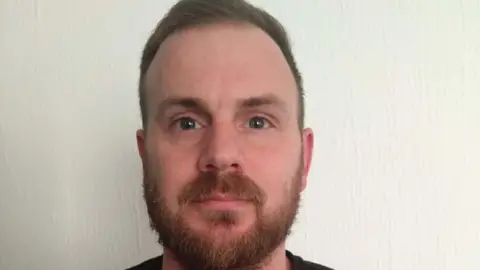
Tony Pascall, from Ipswich, said he used ketamine daily for 22 years before stopping 18 months ago, adding it was "definitely" one of the most dangerous drugs.
"It should be Class A because it is definitely on the top of the list for ones that deteriorate your body and your mind quickly," Pascall said.
"It's a way to forget everything that's going on in your life and an escape from reality, but then it gives you more problems because it's only a short-term fix.
"I've lost family, relationships and work from using - it deteriorates your body very, very quickly and then it's just a vicious cycle," he added.
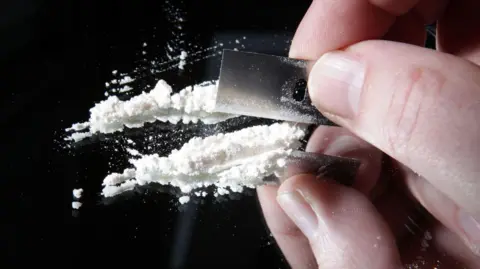
Ketamine, a powerful horse tranquiliser and anaesthetic, is a licensed drug and can be prescribed medically. However, when misused, it can cause serious and sometimes permanent damage to the bladder and kidney and liver problems.
 Getty Images
Turning Point, a charity that helps people with drug and alcohol-related issues, said it has treated 332 ketamine users across Lowestoft, Bury St Edmunds and Ipswich since 2018, before which only one person misusing the drug was being supported.
During that time there has been a steady year-on-year increase in the number of people using ketamine engaging with its services, the charity said.
Last year Turning Point treated 130 ketamine users, compared with 85 in 2024, 64 in 2023, 21 in 2022, and 11 in 2021. It has treated 19 ketamine users so far this year.
A report published by the Office for Health Improvement and Disparities in December revealed the number of adults in England entering treatment for ketamine misuse between 2023 and 2024 was 2.3% and between 2024 and 2025 it was 3.2%.
The data also revealed the amount of ketamine users starting treatment in England from 2024 to 2025 was 5,365 - more than 12 times higher than it was in 2014 to 2015, when the number was 426.
Pascall, who helps run a drug support group in Ipswich, said it was shocking how accessible the drug had become.
"It is astonishing and incredible how easy it is to get – I see people, daily, walking around town using it," he said.
"It's scary because it destroys your body and your mind. It's an absolutely horrible drug."
 Supplied
Ketamine became a Class B drug in 2014, but the Advisory Council on the Misuse of Drugs said it should not be reclassified as a Class A drug.
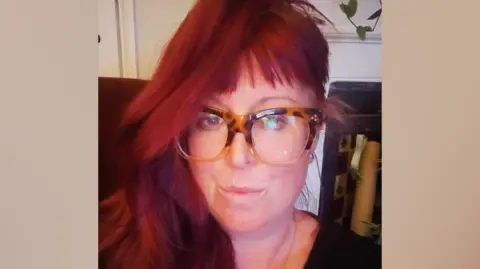
Ruth Lee, from Turning Point, which is based around Suffolk, said making ketamine a Class A drug could be detrimental to users and those wanting to help them.
"It is not something we support because reclassification does not change drug use because people will use a drug they want to use it," she said.
"All that happens is some people do not come forward for support because they are more concerned with getting criminal convictions."
Lee said ketamine had become "much more normalised" and was the third most-used drug by young people in Suffolk after alcohol and cannabis.
"It's worrying and really sad we have young people who feel so disconnected that they would rather being using ketamine to be in oblivion than connect with people.
"Young people are not taking drugs for pleasure, they are doing it because they have poor mental health, and ketamine is the one of the drugs they are using for that," she said.
 Vikki Irwin/BBC
In 2025, the Office of Health Improvements and Disparities provided Suffolk County Council with a £1.52m drug and alcohol treatment and recovery improvement grant to tackle the issue.
The money has been used to improve the quality and reach of the authority's drug treatment service and provision, which it said had already "resulted in progress".
Since the authority received the money, 84 young people were in treatment for ketamine use between July to September 2025.
The rise in ketamine usage in Suffolk was discussed as part of Suffolk County Council's Health and Wellbeing Board meeting on Thursday.
According to a report from the council's combating drugs partnership, opiate usage – such as heroin – has declined, but the use of cocaine, crack, cannabis and ketamine has risen.
Clair Harvey, the council's senior manager for public health and communities, said: "Unfortunately, drugs continue to have adverse effects across all of Suffolk, all ages – it touches individuals, families and communities."
Steve Wiles, a Conservative councillor and the authority's cabinet member for public health, said everyone was "doing their level best" to address the issue.
"I'm personally quite shocked that in this time, this century, we are still suffering with the conflict between good health and the use of man-made drugs," he said.
A Home Office spokesperson said the rise in the use of the "extremely dangerous" drug was "deeply concerning".
"Conversations with those affected are essential to understanding what more needs to be done to tackle supply and addiction," a spokesperson said.
"We are grateful to the Advisory Council on the Misuse of Drugs for publishing their assessment. We will now consider the report carefully and respond as a matter of priority."
Follow Suffolk news on BBC Sounds, Facebook, Instagram and X.