Leaseholders forced to pay for cladding removal

 MATTHEW LOCKWOOD/BBC
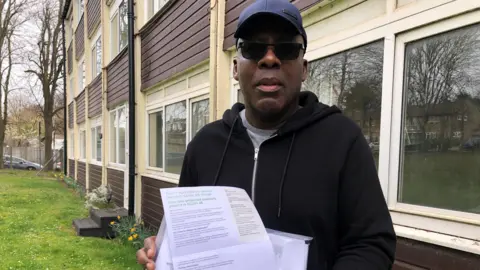
Leaseholders have described their dismay at facing "unaffordable" increases in charges to pay for the removal of cladding on their building.
Joseph Brown, 63, has owned a flat in Harrowden Court, Luton, for more than 30 years.
He has been told the cost of his service charge and sinking fund contributions, which pay for the building's maintenance, would increase by more than £500 a month from April, which have caused him "significant anxiety and stress".
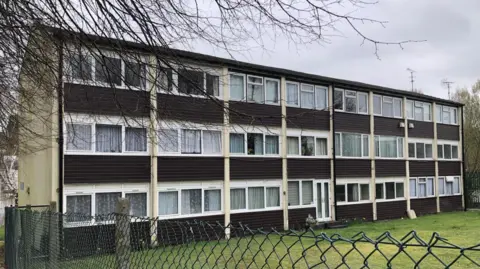
Hastoe Group, which manages Harrowden Court, said: "This increase is intended to cover the costs of the fire safety remediation works [and the] removal of the cladding in 2027-28."

Brown's neighbour, Thomas DeRonde, 36, bought his flat in Harrowden Court in 2018 with money he had saved from serving in the Army.
Following the 2017 Grenfell Tower fire - where cladding caused a fire to spread rapidly and led to the deaths of 72 people - DeRonde said in February 2025 he received a £65,000 bill for the fire safety remediation works and the removal of the cladding his housing association installed.
In July the government said it would provide funding on a "strictly exceptional basis" to multi-occupied residential buildings under 11m (36ft) to address life-critical fire safety risks from cladding when there was no alternatives to fund the works.
Thomas said he had "seen no evidence" the Hastoe Group had been in contact with the government regarding funding for the cladding's removal.
DeRonde said the housing association had divided the cost of the fire safety work into equally "unmanageable payments", which would be "reviewed after two years to see if they need more money".
The leaseholders would have to pay about £9,400 this year in charges, compared with nearly £3,000 last year.
Possible bankruptcy
DeRonde said the situation had affected his ability to provide for his family and he had "begun seeking financial advice, including exploring the possibility of bankruptcy".
He added that he and his partner could no longer afford to have another child and he felt "trapped in a property [he] cannot sell".
DeRonde said he felt "deeply disappointed with the lack of support from the government [as] leaseholders across the country continue to accumulate significant debt for fire safety issues they did not cause".
Similar to Brown, DeRonde said the situation has had a severe impact on his mental health.
 MATTHEW LOCKWOOD/BBC
Brown said he has asked the Hastoe Group to find an alternative solution to pay for the fire safety work.
Other housing associations have taken a "different approach", he said.
"They have looked at other clever financial models which allowed them to take advantage of their existing reserves to support the work that is required," he added.
Suzanne Muna, the co-founder of the Social Housing Action Campaign, said: "We are seeing increases of hundreds of per cent in some cases.
"The disregard by landlords for the impact of such increases is obscene - it is driving people into debt and into deep despair because they know the charges are extortionate, they can't pay, but they don't know where to turn."
A Hastoe spokesperson said: "Hastoe is a non‑profit social housing provider, and we must use our funds in line with our charitable purpose of delivering and maintaining social housing. Where costs relate to private owners, we are required to recover those costs in accordance with the terms of their leases.
"We understand the increases may be very difficult for the homeowners affected; we have invited any leaseholder experiencing financial hardship to contact us and we will advise them of their options."
It added the organisation has been in communication with leaseholders since 2024.
"Leaseholders have been informed that they are not facing a £65,000 bill, as we have scaled back an original proposal to also replace the roof alongside the fire safety works," a spokesperson for the firm said.
"Leaseholder reserve fund contributions are set to increase to £7,502.75 per property, for the 2026-27 and 2027-28 service charge years (running from 1 April to 31 March). They are then estimated to reduce to £530.37 per year thereafter.
"We have committed to residents that we will review the fund and contributions every two years, to ensure contributions remain accurate and take upcoming works into account," they added.
The BBC has approached the Ministry of Housing, Communities and Local Government for comment.
Follow Beds, Herts and Bucks news on BBC Sounds, Facebook, Instagram and X.