Roads or 'potholes you can swim in?'

 John Devine/BBC
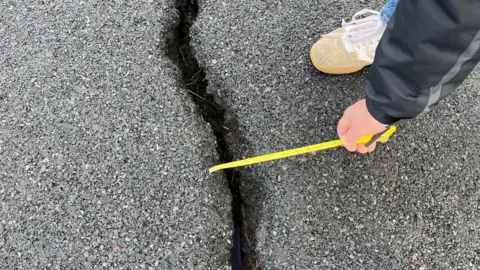
People in Cambridgeshire have criticised the condition of the county's roads, with one resident saying there are "potholes you could swim in".
Essential repair work recently began on Forty Foot Bank, an accident blackspot between Ramsey and Chatteris.
But the county council says issues on fenland roads are harder to fix.
So just what is the problem, and what is being done about it?
What do locals think about Cambridgeshire roads?
 Mousumi Bakshi/BBC
Alison Searle, who lives in March, travels to Wisbech for her job as an educational support worker.
The 57-year-old spends her free time looking after her horses, and travels to competitions with one of them, Billy, in a trailer.
Searle says: "If I take him in the trailer, he's thrown around all over the place, bless him. He puts up with it all and it's like a rollercoaster."
She says the last year "has been the worst ever" for potholes and that she has been "forced to drive down the middle of the road".
"The roads are bad... they are subsiding; they're uneven. There's potholes you could swim in," she says.
 Mousumi Bakshi/BBC
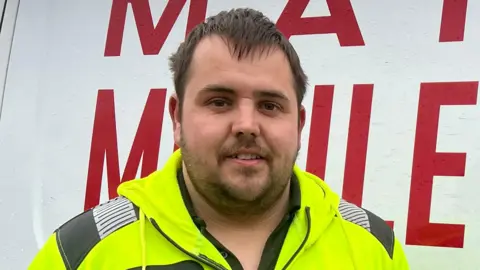
Ben Setchell owns a mobile tyre company in Manea, near Ely, which offers a 24-hour callout service.
He says his business has grown in the last year and he has had to buy a third van.
Asked the main reason for callouts, he says: "Potholes – say no more than that, really.
"We have gone from doing 30 jobs a day up to in excess of 40 to 45... which we are struggling to keep up with."
Setchell says although the state of the roads has helped his business, he has to deal with angry customers.
"We cannot fix potholes," he adds.
What are peatlands and where are they?
 Henry Stanier
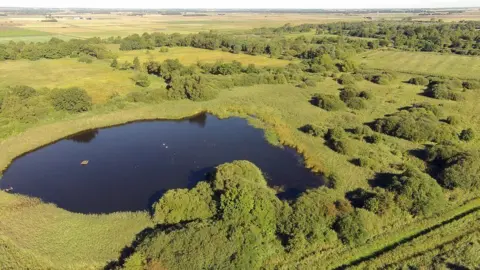
Peatlands are formed after waterlogged conditions slow the process of plant decomposition.
They are known to preserve biodiversity, provide safe drinking water and help to minimise the risk of flooding.
They occupy about 12% of the UK, according to the government.
In Fenland, fertile soils are "vital" for both farming and as a store of buried carbon.
 Natural England
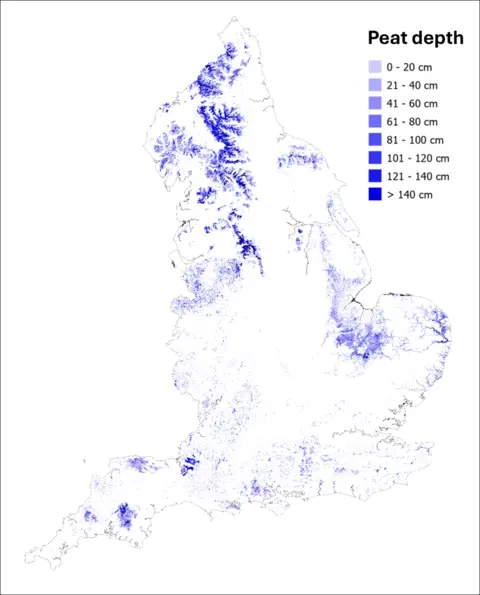
Damaged peatlands are known as "wasted", and about 60 to 80% of these in the UK are located within Cambridgeshire.
The county council said the wasted areas become a source of carbon emissions, responsible for about 5.1 million tonnes a year.
There are multiple peatlands across the county, including Holme Fen Nature Reserve, near Peterborough, the lowest point in Great Britain.
The rich peat that once covered the fen has dried out, lowering the ground level by 4m (13ft) since 1852.
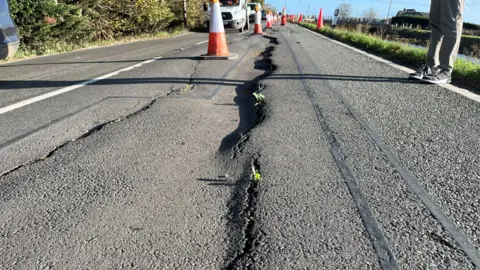
How can peatlands affect roads?
 John Devine/BBC
About 40% of Cambridgeshire is made up of peatland, according to the council.
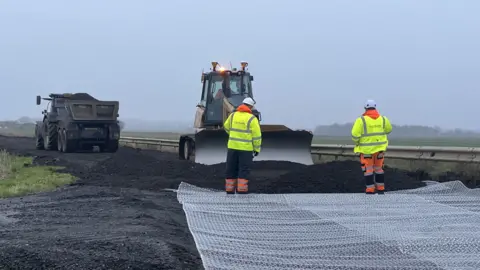
Roads in these areas are harder and more expensive to maintain, with the reconstruction process involving digging down about 40cm (16in).
The council has to recycle the existing material by grinding it up and re-laying it to help stabilise the road base before resurfacing.
 Mousumi Bakshi/BBC
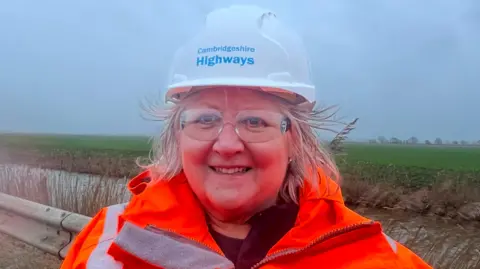
Lorna Dupre, a Liberal Democrat member of the council's transport committee, says the authority has "a particular problem" with roads built on peat soils, as at Forty Foot Bank.
"The soil shifts, which means that the surface will crater and split and fall off the edge," she explains.
Dupre says the council is responsible for about 1,600km (2,575 miles) of such roads, which can cost five times as much to maintain per kilometre than roads in the south of the county.
She says the council put in an extra £20m in the last year for roads.
"We're hoping to do the same next year to do as much as we can to bring these roads back up to a condition that people are comfortable driving with, but it means extended road closures, and digging down the road surface," she said.
A spokesperson for the Department for Transport said: "We are investing a record £7.3bn over the next four years to tackle the poor condition of our roads – with Cambridgeshire and Peterborough Combined Authority set to receive up to £55.7m a year by 2030."
What is being done to fix routes in Cambridgeshire?
 Mousumi Bakshi/BBC
A report to the council's highways and transport committee claimed fixing the "soil-affected" roads would take £500m, almost half the authority's entire 2026/27 budget of £1.2bn.
In the past year, 11km (seven miles) of such roads were reconstructed or resurfaced at a cost of £5.5m, the authority said.
Work to reconstruct 0.6 miles (1km) of Forty Foot Bank would take about six weeks, and cost more than £550,000, the council said.
The total cost of repairs and to that road and to Coates Road in Coates, near Peterborough, would be £2.1m.
Reconstructing about a mile (1.6km) of Long Drove in Holme, near Peterborough, would cost about £1.1m and take about two weeks, it added.
Follow Cambridgeshire news on BBC Sounds, Facebook, Instagram and X.