Concern after death of 700 fish during dry summer

 BBC
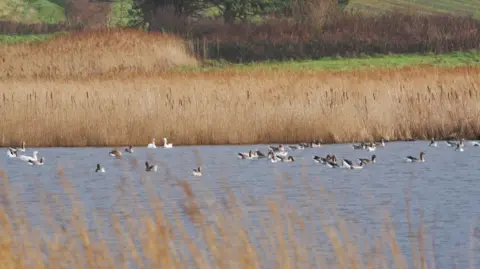
BBCEnvironmental experts have expressed concern about climate change after more than 700 fish - including hundreds of endangered European eels - died at one of Jersey's most ecologically sensitive sites last summer.
St Ouen's Pond, which is home to a plethora of wildlife, is the island's largest freshwater lake and one of 30 protected Sites of Special Interest (SSI) as of 2018.
Jersey's National Trust said a dry 2025 had caused water levels to drop lower than usual and the Met Office has said last year was the island's fourth hottest year on record.
Ecologist Henry Glynn said his team would increasingly have to deal with the "erratic nature of the weather" to protect species.
He added: "The water level got really low and warm and that causes conditions that really encourage cyanobacteria to really proliferate.
"When they die off naturally, when they reach a certain point, they just absorb all of the oxygen in the pond and then there's nothing left for the fish."
The trust said nearly 300 of the 725 dead fish were European eels, which Glynn said were "one of the most endangered species" in Jersey. Roaches, carp and bream also died last August.
Jersey's Environment Minister, Deputy Steve Luce, said the deaths had been caused by "exceptionally dry conditions" and low water levels putting "severe pressure on this important wetland".
"We are strengthening monitoring and wetland management to make sites like this more resilient to climate change, work that directly supports our 2050 net zero goals," he added.
Glynn said one of the other concerns for the pond was its location and its water quality - which he said the team "regularly monitored".
"There's a lot of agricultural fields behind the pond and the escarpment above which is part of the water catchment area and from that we get run-off of sort of pesticides and fertilisers."
The ecologist said the team planned to work alongside landowners and the government and to create new habitat features within and potentially outside the site to create buffer ponds or reed beds "that will help filter out some of the some of the pollutants that might come in".
Jersey's Infrastructure and Environment (I&E) department said it would work in partnership with environmental bodies and land managers to "strengthen ecological resilience across wetland sites".
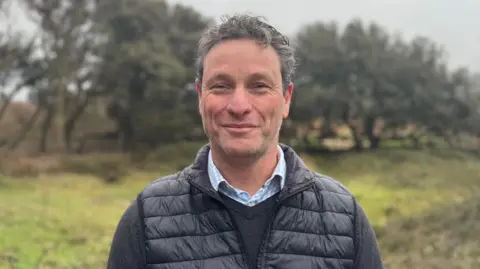
Greg Morel, CEO of Jersey's National Park, said the world was seeing a change in its climate.
He said: "We are seeing temperatures rising, not just in terrestrial but also in the marine space as well.
"From the National Park's perspective, we are looking to make the natural spaces that we have in Jersey as resilient as they possibly can be."
He added that educating islanders about the environment and how it could support their health would give them "a reason to look after these natural spaces".
"Fighting climate change in Jersey all by ourselves is going to be tricky but I think we can put those two things in practise to try and start making a very small difference on island."
Morel said regarding building on the protected sites, if "planning and infrastructure and buildings are required in the space", the National Park would encourage they were done "in a way that they complement the natural spaces and they enhance them rather than compete or perhaps degrade them".
Deputy Luce said St Ouen's Pond and other SSI sites including at Rue des Prés and Grouville Marsh were protected by the Bridging Island Plan, which he said included "robust policies to ensure that any development proposals avoid harm to sensitive wetland environments".
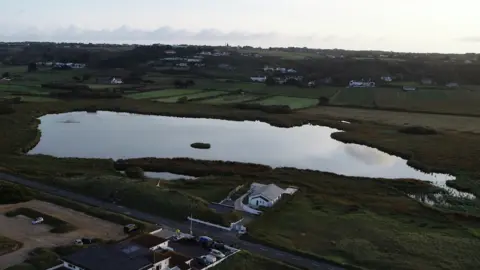
The I&E department said it was "taking a proactive and preventative approach to reduce the risk of similar events occurring in the future".
This includes "enhanced monitoring" of water levels, temperatures and oxygen levels during "prolonged dry periods" and improved wetland management planning to ensure they are "more resilient during drought conditions".
It will also include climate adaptation measures to recognise "extreme weather events are becoming more common and that our natural assets must be managed with this reality in mind".
Follow BBC Jersey on X and Facebook. Send your story ideas to [email protected].