The alleyways that trace town's medieval history

 Getty Images
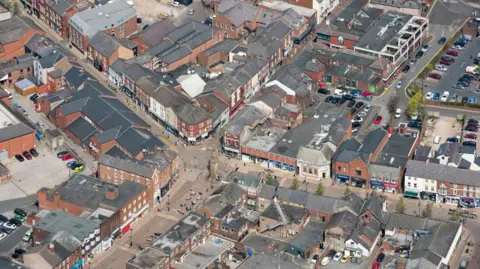
The criss-cross of narrow passages that make up a town's historical town centre are set to be repaired by campaigners after £100,000 council cash boost.
But what is so special about Ormskirk's side streets?
The alleyways, called ginnels, are said to reflect medieval street patterns.
Ormskirk Community Partnership (OCP), believes they give an insight into the town's history, providing a valuable link to the market town's past.
 Ormskirk Community Partnership
The alleyways were built in the 17th and 18th centuries, patterned on a medieval template to move goods into the yards and outbuildings behind the buildings facing the main streets of the town.
Later, in the 19th century, some of these back spaces became "courts" where the poorest inhabitants lived in crowded and insanitary conditions.
Only a small number remain but they are said to be a "distinctive feature" and some are homes for independent shops and businesses.
Dave Mutch from OCP said as well as the historical context, the streets have a modern significance as well.
He explained: "They are important access points across the town for visitors and improving them adds greatly to the town's appeal."
The community partnership has been working with owners, local businesses and the council, to repair them and to make them "better and more welcoming for visitors and local people".
Ginnel is northern dialect for alleyways although in Liverpool they are called a jigger.
West Lancashire councillors have provided the grant, which is to be spent on display boards, signage and artwork and lighting the historical alleys which will promote Ormskirk's history to the public.
Mutch said he was delighted to be launching the Ormskirk Ginnels Project in July at the town's annual Gingerbread festival which celebrates the biscuit treat associated with the town.
 Ormskirk Community Partnership (OCP)
Ormskirk became known for its gingerbread which local women baked in their own homes and sold to passengers at staging inns
When the railway arrived in the mid 19th century, the local gingerbread sellers found a new market.
One particular customer Edward, Prince of Wales, later Edward VII, enjoyed the local gingerbread so much he sent orders to the town.
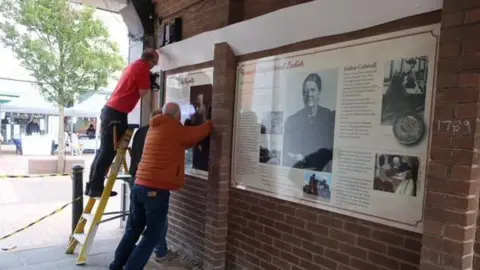
A well known local woman, Sally Woods, was a recognisable figure on the market selling her gingerbread.
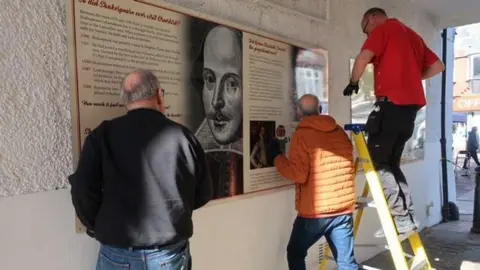
Some of the restored ginnels have boards telling the story of people such as Woods and the town's gingerbread connection.
Another already in place marks the town's purported link to William Shakespeare who is said to have played there in 1587.
In 1588 he is reputed to have appeared again in a theatre behind the Ship Inn (now a shop) on Moor Street in Ormskirk, as well as Rufford Old Hall.
 LDRS
LDRSWest Lancashire Council said the ginnels formed "part of the medieval street pattern and their character contributes to the distinctiveness of the town centre".
"The ginnels lie in the town centre conservation area, designated for its special architectural and historic interest," it added.
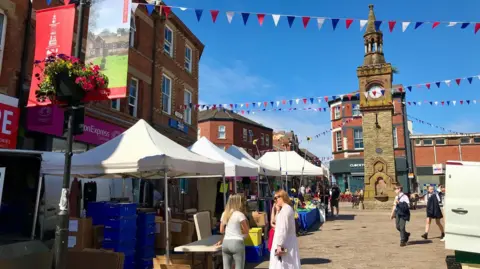
Several town celebrations are expected this year, including Ormskirk Clock Tower's 150th anniversary and the 740th anniversary of its market, the Local Democracy Reporting Service said that .
Listen to the best of BBC Radio Lancashire on Sounds and follow BBC Lancashire on Facebook, X and Instagram. You can also send story ideas via Whatsapp to 0808 100 2230.