'A mammoth task': Dealing with the cycle of violence against women in NI

 Pacemaker
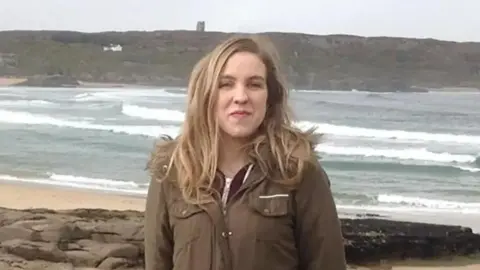
Natalie McNally is one of 30 women who have been violently and brutally killed in Northern Ireland since 2020.
The conviction of her murderer, the father of her unborn son, threw an underlying issue back into the spotlight.
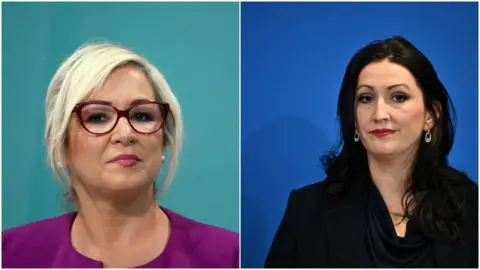
After he was found guilty by a jury that deliberated for just over two hours, the First and Deputy First Ministers of Northern Ireland Michelle O'Neill and Emma Little-Pengelly spoke out, reiterating the need to "end violence against women and girls".
For friend of Natalie, and solicitor, Sarah Creighton, it's a "mammoth task".
"I don't know how you can begin to address it really, sometimes it feels quite overwhelming," she said.
"But it is quite clearly obvious that Northern Ireland has a problem, a serious problem."
To her, Natalie McNally was "extraordinarily kind" and "very much a woman of conviction".
But the the thing she'll remember most about her is her "dark, witty sense of humour".
She adored her family and animals, Creighton said. Her dog River was in the house the night she was was beaten, strangled and stabbed.
Speaking to BBC News NI's Good Morning Ulster programme, Creighton said: "She was so funny, it was the one thing I always remember about her was that she was so whip-smart and funny.
"She was very passionate, she would have stood up very strongly for what she believed in.
"She cared passionately about social justice."
'Natalie and her son should be here'
Creighton first met Natalie on Twitter and the two later joined a group who talked on social media and met up with each other for several years.
She was holding her four-week old baby son when she heard that Natalie had been murdered.
"It was like a gut punch and all of us that had been in that group together were just in absolute shock.
"I had heard the day before that somebody had been murdered in Lurgan, but it never occurred to me that it could be Natalie, so that was deeply upsetting.
"She should be here and her son should be here."
She's "relieved and pleased" that Natalie's family has finally got justice in a legal process that took more than three years and was beset by delays.
"They have been through absolute hell and they've waited a long time for this," she added.
'Abuse of women is accepted'
Justice Minister Naomi Long told Good Morning Ulster that work needs to be done to address the prevalence of violence against women in Northern Ireland.
"I don't think it is a Northern Ireland only problem. But I think it is a particularly difficult issue in Northern Ireland and we do have a wider prevalence of violence against women and girls.
"Northern Ireland remains a very patriarchal society.
"Abuse of women, generally, is still accepted. There is still a lot of sexism, chauvinism, and misogyny in our society."
Long said her department wants to address the issue: "I think we can do better. The experience the McNallys have gone through is an experience that many families are going through. Too many families.
"And we want to do more to try and address these issues.
"We are bringing forward further legislation in this mandate in the Department of Justice."
 Getty Images
The first and deputy first ministers both highlighted the work they are doing to end violence against women and girls.
Michelle O'Neill said they are "focused" on this work.
"Unfortunately, we know that by ourselves this problem won't be solved. It takes every one of us in society to call out misogyny when we see it.
"It takes every one of us in society to root out those behaviours that are totally unacceptable."
Emma Little-Pengelly said Natalie's family "participated in a number of the Ending Violence Against Women and Girls activities and I think that has been incredibly brave for them and of them and my thoughts are absolutely with the family".
She added that she and O'Neill, have "stood shoulder-in-shoulder at absolutely every opportunity" when it comes to the strategy to ending violence against women and girls.
Why is violence against women so prevalent in Northern Ireland?
Joanne Barnes, chief executive of Nexus NI which supports those who have been impacted by sexual abuse and abusive relationships, said studies are needed to better understand why the issue is so pervasive.
There are questions, for her, around the impact of the Troubles.
"Has it got to do with our conflict and troubled past, where violence was so accessible and it was seen as a solution to so many issues in Northern Ireland?
"Has that run through where women are viewed as disposable commodities, that men feel that it is okay to be violent and aggressive towards women to keep them muted in our societies?"
 Pacemaker Press
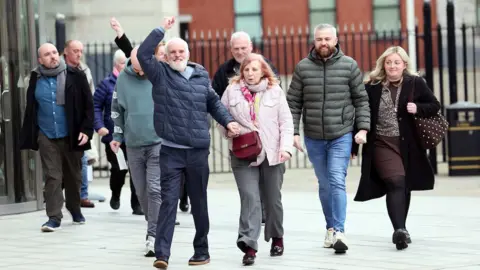
For one of Natalie's local politicians, this violence is at an epidemic level.
Upper Bann MLA and Ulster Unionist Party justice spokesperson, Doug Beattie, said he believes there should be stricter sentencing.
"We are losing women who are being murdered by violence being perpetrated by men.
"I would not argue against a whole life sentence in regards to this particular crime, the murder of Natalie and baby Dean (the name chosen for Natalie's unborn child).
"What we need to ensure is that when we have a sentence, that that sentence is robust enough for people to say that we are taking this seriously.
"Sometimes I do despair that some of the sentences that are being given for murders do not take it seriously enough."
On Monday, Stephen McCullagh was found guilty of murdering Natalie in her Lurgan home in December 2022.
Det Ch Supt Eamonn Corrigan welcomed the verdict, and said the PSNI "now await the sentencing".
"My thoughts remain with Natalie's family who have suffered terribly," he added.
McCullagh, 36, of Woodland Gardens in Lisburn, had denied murdering his pregnant partner, but it took a jury just over two hours of deliberation to deliver a guilty verdict.