Support hub opens in deprived former mining town

 BBC
BBCA new community hub for people living in the former mining town of Knottingley has been officially opened by a government minister.
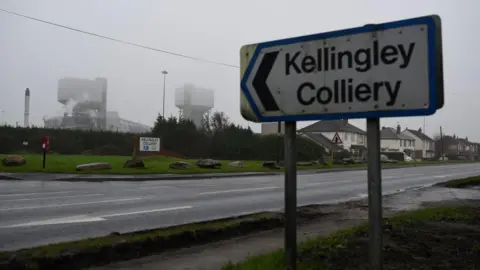
The town has faced long‑term economic hardship and higher‑than‑average ill health since the closure of Kellingley Colliery, which was Britain's last deep coal mine, in 2015
The facility is one of several set-up by the Coalfields Regeneration Trust (CRT) to tackle some of those challenges by offering support with physical health, mental wellbeing, skills development and wider community services.
Care minister Stephen Kinnock said: "These centres are a massive leap forward in terms of understanding how to absorb that impact and how to help people to rebuild."
 AFP via Getty Images
The closure of Kellingley Colliery, which at its height employed 2,000 people, marked an end to centuries of deep coal mining in Britain.
Resident Joshua Hampshire, who has been getting help from the CRT, said the support he had received had "saved his life."
Although he did not work in the industry, Hampshire, 28, said he had grown up in former mining communities in the area and had seen the impact of the closures.
"There are no youth clubs or anything for kids to do - you just run around the streets getting into trouble.
"That's not good for anyone and leads to anti-social behaviour."
The CRT said the new centre, on the High Street, would enable its staff, who are already working in the community, to expand their work and reach more local people.
It said it would "primarily focus on improving health and wellbeing, while also connecting local people to opportunities to improve their skills".
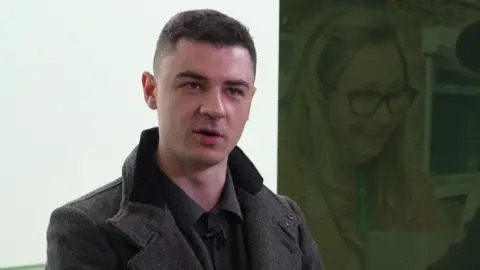
Hampshire said the one-to-one support the hub had given him and encouragement to eat healthily and exercise had "genuinely saved my life" and he has worked towards gaining more qualifications.
He added: "These days if you have not got any qualifications you've only got factory work or rural work.
"I've struggled to find work that I can physically do but now I'm looking more at training courses and I've already got my food safety certificate."
Another resident, Colin Wherrett, described the support he had received from the CRT as "amazing" and said the new centre would create "an even better sense of community".
He added: "It is just an oasis of calm. The help I've had with dealing with my mental health has been incredible."
Coaches based at the centre offer nutritional advice, skills guidance, support with anxiety and depression, exercise classes and help to manage long-term health conditions.
Eventually space in the building will be leased to other organisations offering a range of services.
Andy Lock, chief executive of the CRT, said: "Our aim is to make opportunities for people living in coalfield communities as easy to access as possible."
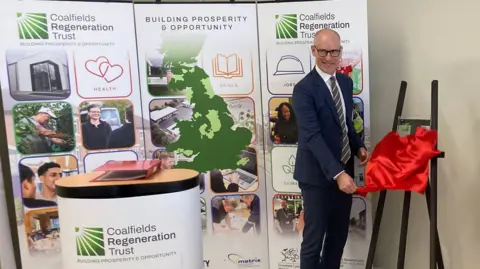
Officially opening the centre, Kinnock said he had first-hand experience of former coalfield communities in his own constituency in Wales.
"Many coal miners were just put onto unemployment benefits," he said.
"There was no transition plan, there was no real thinking about how to absorb the impact of that massive change and to help those communities to rebuild."
Kinnock said the centre was an "excellent example" of bringing "health to the high street".
He added: "We are absolutely committed to this model of neighbourhood care, so we can provide integrated services as close as possible to people's homes."
Listen to highlights from West Yorkshire on BBC Sounds, catch up with the latest episode of Look North.