Welsh government publishes £27.5bn final budget

 PA Media
All government departments will get more funding from April to cover inflation and pay rises, Welsh ministers have announced, as they published their £27.5bn final budget.
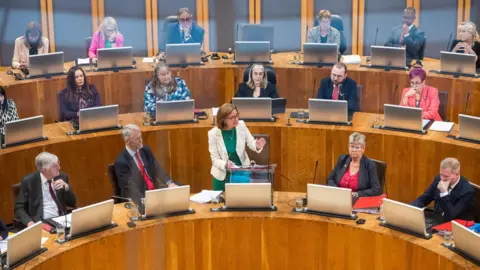
Additional cash for the NHS and local government was already agreed as part of a Labour-Plaid Cymru deal worth just under £300m to ensure the 2026-27 budget is passed by the Senedd.
More money was announced for other areas of spending on Tuesday, to allow for higher pay and inflation forecasts. There is additional spending on bus services, apprenticeships, further education and flood prevention.
The Conservatives called the Plaid-Labour budget "stitch-up" a "bad deal for Wales".
The budget is the Welsh Labour government's last before the Senedd election on 7 May.
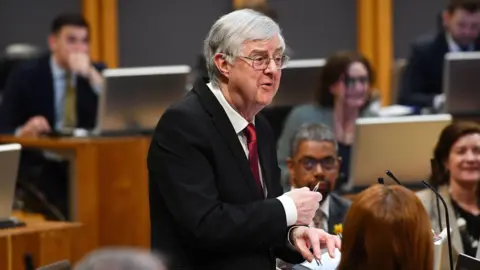
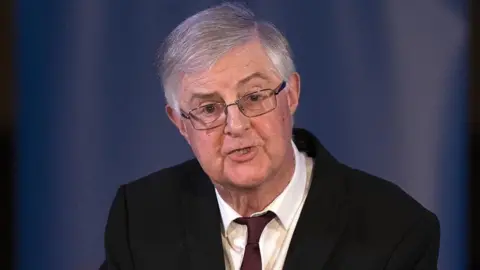
Finance Secretary Mark Drakeford said it "provides stability and certainty to public service" and was an example of "parties working together to secure the vital resources people, business and public services need for the year ahead".
There will be £113m additional funding for local government to increase council budgets by 4.5% next year, with no individual council getting a rise of less than 4% under a deal forged between the Welsh government and Plaid in December.
There will also be an additional £180m for the NHS with the health and social care budget increasing by 3.6% to £12.6bn, more than 55% of the Welsh government's budget for day-to-day spending.
In addition, a total of £120m of capital funding will be set aside for the next government to spend on big investment projects, for example building new hospitals or roads, following the Senedd election.
The Labour government does not have a majority in Cardiff Bay, a situation made worse when Labour lost the Caerphilly by-election in October, so an agreement with another party was necessary in order to pass the budget.
In addition to the money agreed with Plaid there are further changes since the draft budget was published in November.
Additional cash in the final budget includes:
- £6m for bus services in Wales, £10m to invest in buses and depots, and an extra £2.8m for rail services.
- £116m package of support over the next two years for businesses affected by changes to business rates due to come into force in April.
- £6m to pay for pay increases for teachers in further education institutions and sixth forms.
- £4.2m to support children with additional learning needs, as well as £5m to support the increased number of learners in further education.
- £20m for improvements to school buildings.
- £2.6m for tackling homelessness, £6m more for flooding and an uplift of £3.5m for the new Sustainable Farming Scheme.
- £2.5m for the National Library for Wales to help store and care for its collections of books, manuscripts, art and films.
Welsh Conservative shadow finance secretary Sam Rowlands said: "Plaid and Labour's budget stitch-up is a bad deal for Wales.
"A budget that contains funding for an ever-bloating bureaucracy, foreign aid, overseas offices, the Nation of Sanctuary plan, Senedd expansion and the creation of 36 more politicians is a budget that will not address the people's priorities."
Darren Hughes, director of employers' body the Welsh NHS Confederation, said: "NHS leaders in Wales broadly welcome the final budget during a difficult time for public finances."
But he added: "We know this is a fairly 'business as usual' budget, given the proximity to the Senedd election, meaning we have not seen the significant shifts we've been calling for.
"This includes a meaningful shift to prevention across departments and capital investment that meets the needs of services in order to bring down running costs and improve services in the face of rising demand.
"Unless we think long term and target areas such as social care, prevention and capital investment, we can't expect demand to come down on its own and see tangible improvement for the people of Wales."
Universities Wales complained that the budget "does not reflect the continued financial pressures facing our universities".
A spokesperson said: "We are disappointed not to see further support for universities, and in particular that the critical in-year funding received last year has not been consolidated.
"A sustainable university sector is key to unlocking business investment, productivity and growth."