Christmas turkeys killed early to avoid bird flu

 Shaun Whitmore/BBC
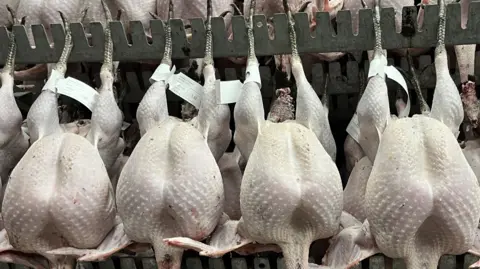
Turkey farmers have killed their birds earlier this year in an attempt to avoid avian flu and fulfil Christmas orders.
Since October, there have been 18 cases of bird flu in the East of England, with Norfolk hit hardest.
After four years of the deadly H5N1 strain, poultry farmers have had to adapt, but many want to see the government bring in a vaccination to help stop the spread.
The Department for Environment, Food and Rural Affairs (Defra) said action had been taken to stop the spread this year, and while a vaccination was not permitted, it was researching into one.
'You're so frightened'
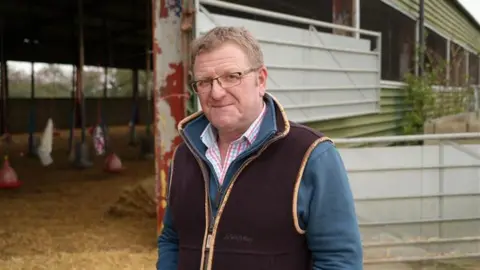
Robert Garner, owner of Godwick Turkeys near Fakenham, said he had fortunately managed to process his Christmas birds in time, but it had been "really hard".
He brought his culling forward by three or four days to ensure this, but said he felt sorry for those in the industry who worked all year round.
"We've got to be looking at vaccinations... I think on a human perspective, it's very difficult to explain to people what it is like," he said.
"I get up in the morning, I get out of bed, and I know I've got to go and look at my turkeys because that's what I do.
"There's a feeling that you don't actually want to go in because you're so frightened of what you might find."
He continued: "All your work and everything that you've done to try and protect them can be gone; you could have a problem, and it's gone in a nanosecond.
"It has affected my mental health; this year has been really difficult, but we have got there, and we are one of the lucky ones. Long may it continue."
 Shaun Whitmore/BBC
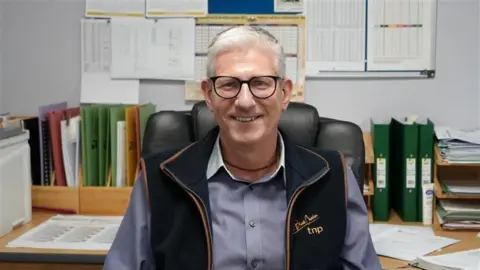
Mark Gorton, managing director and owner of Traditional Norfolk Poultry, lost two of his turkey farms to bird flu, including one in Suffolk, and "tens of thousands" of birds were culled.
"It's clear, and the government can see that this problem isn't unique to us in the UK," he said.
"It's a worldwide problem, and what we're doing isn't sustainable, and it's not stopping this disease. We have to do something differently, and vaccination is the answer."
He explained: "We vaccinate our birds against all sorts of things, the same as everything else that lives is vaccinated against something.
"So there's nothing unusual about that, but we need to get legislation sorted out and the red tape to allow us to be able to do it to protect our flocks."
 Shaun Whitmore/BBC
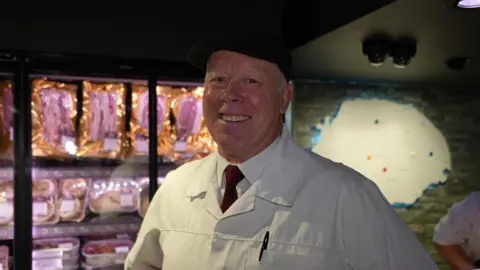
Tony Perkins is a butcher in Attleborough and said there was a "little bit of nervousness" about supplies coming from his Christmas customers.
Fortunately, he has no shortages, but he also wanted to see vaccinations rolled out.
"We're getting quite used to [bird flu], but it is unsettling," he said.
"Every season now, as soon as the migratory birds come, we feel the effect of it.
"I'm not on the coal face end, but we do feel the effect even on the high street here by customers being a bit nervous... we need that reassurance."
 Shaun Whitmore/BBC
Defra said it had introduced new housing measures to protect birds this year.
"Consumers should not be concerned about the availability of Christmas turkeys; however, all bird keepers must comply with the housing measures to protect their flocks," a spokesperson said.
"We continue to support poultry farmers by extending the Seasonal Worker Visa Scheme, investing hundreds of millions in biosecurity, and driving fairer supply chains."
They added that a joint industry and cross-government UK HPAI Vaccination Taskforce report this year found that species-specific preventative vaccination was identified as a potential future option.
But the Taskforce set out key next steps before a final recommendation could be made, including a turkey vaccination field trial and understanding laboratory and veterinary capacity.
A follow-up report will be published next summer.
Follow Norfolk news on BBC Sounds, Facebook, Instagram and X.