Man on trial for rape that saw Andrew Malkinson wrongfully jailed

 BBC
BBCA man has gone on trial accused of raping a woman in 2003 in an attack that led to the wrongful conviction of Andrew Malkinson, who spent 17 years in prison.
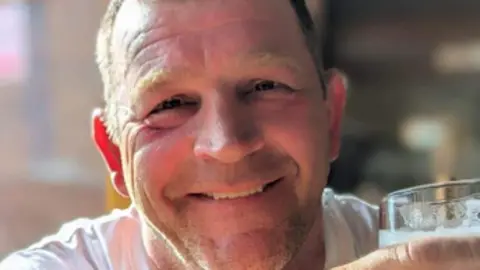
Paul Quinn, 51, has pleaded not guilty to rape, strangulation and inflicting grievous bodily harm with intent and is facing a jury at Manchester Crown Court.
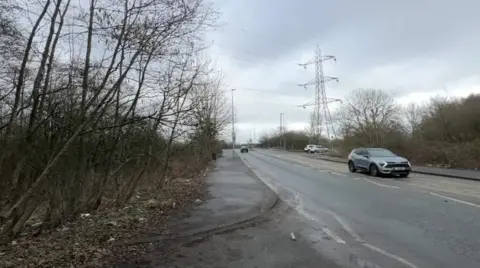
Prosecutors say the victim was stalked towards the M61 motorway in Little Hulton, Salford, before being seized and dragged into secluded bushes, where she was raped, choked and beaten unconscious.
John Price KC, prosecuting, told jurors that Malkinson had been "the victim of a most terrible miscarriage of justice, one of the worst there has been".
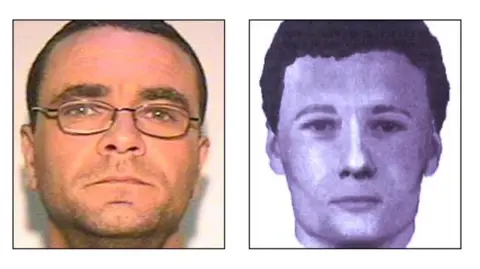
Price said it was a "very sad fact" that the descriptions of the alleged attacker "appeared to tally" with the apperances of both Quinn and Malkinson.
However, he told jurors DNA evidence from the victim's clothing and body had been linked to Quinn.
 Greater Manchester Police
Price said that there was "no plausible explanation" for how Quinn's DNA had been recovered at the scene other than if he was the attacker.
The jury heard that at about 05.30 BST on 17 July that year, a man walking his dog found an extremely distressed woman staggering along the pavement.
The woman, who is legally entitled to anonymity, said she had been raped after being followed, snatched and dragged down a wooded bank by a motorway bridge.
She reported losing consciousness and later waking up to realise she had been attacked.
Price said the woman had been "subjected to sexual violence of the gravest kind".
The jury were shown a photograph taken at the time that showed extensive bruising to the victim's face, with one eye swollen shut, and damage to a cheekbone which needed surgery.
The victim described the attacker to police as "white, olive skinned and tanned", a "muscular build" and "a shiny, hairless chest", Price said.
The jury was shown images of Malkinson and Quinn from around the year of the attack, as well as a police e-fit image that had been produced in 2003.
Price said the assault must have been carried out by someone who knew the area.
"He was not only a local man, he was also someone who knew of that obscure location," he said.
"A man with prior knowledge of its existence and accessibility, someone who, as he followed her over that distance as he did, knew she was soon going to reach it and so timed his attack upon her precisely to coincide with her passing close to somewhere he knew he might easily, forcibly and swiftly take her out of sight and away from the road."
The jury was told Malkinson, who worked at the nearby Ellesmere Shopping Centre, became the prime suspect within hours.
He was originally linked to the crime by two police officers who had stopped him on a motorbike a few weeks before the attack and thought he resembled the e-fit of the suspect.
However, Price said that when police spoke to Malkinson the day after the attack, he had no sign of a scratch to the face that the victim had recalled inflicting as she struggled.
At the time he lived with a friend in a flat in Little Hulton, around a mile-and-a-half from the scene of the attack.
Six days after the rape, Malkinson, who had been having problems with people who he had previously lived with, abruptly quit his job and left, telling a friend he was going to Holland.
This sudden departure prompted police to track him down to a Salvation Army Hostel in Grimsby, where he was arrested and brought back to Salford to attend an identity parade.
Price told the jury: "The identifications of [Malkinson] were all honestly and genuinely made but, we submit, mistaken.
"As anybody's own personal experience shows, it is easy to do, even with someone you know."
He added: "Evidence gathered in the second investigation, including DNA evidence, and which will be put before you in this trial, proves, it is submitted by the prosecution, that it was Paul Quinn and not Andrew Malkinson."
'Slow burn'
Jurors later heard about DNA evidence in the case, which had only emerged during a "slow burn" process, as new techniques came to be developed, which revealed DNA which had previously lain undetected.
At the 2004 trial of Malkinson there was no DNA evidence to assist as to the identity of the attacker but advances made since had ruled out Malkinson's DNA being present on the victim or her clothing.
However, Price said the earliest indication of a DNA test result which, "ought to have set alarm bells ringing" had been in 2007, some 13 years before Malkinson was released from prison.
Renewed scientific testing gathered pace around 2020, as the safety of Malkinson's conviction was looked at.
A DNA profile had been re-tested from the area of the victim's vest top, which had saliva staining as the woman's nipple was partially severed from a bite by her attacker.
The sample, which did not match Malkinson's, was given the name, "Unknown Male 1."
Jurors heard in 2022 that Greater Manchester Police received information which helped them identify the sample as belonging to Paul Quinn, who, in 2003, had lived in Little Hulton.
The jury was told that in a police interview in 2022, Quinn was asked to explain how his DNA may have been found on the alleged victim but wasn't told exactly where it had been found.
He said he that he had been "highly promiscuous" in 2003 and had had unprotected sex with between 1,800 and 2,700 local women between 1992 and 2010, having "cheated on my wife hundreds of times with girls that we've met on nights out".
Price told the jury: "The reason for the telling of this story of rampant, sexual profligacy may be thought to have been so he might imply that [the victim] could have been one of these many local women fortunate to have enjoyed his unprotected sexual favours".
Scientists will explain the likelihood of the DNA profile belonging to Quinn or somebody else, the prosecutor said.
Price continued: "But the bottom line is, ladies and gentleman, that it is estimated the findings would be at least one billion times more likely if he was a contributor than if he was not."
The trial was adjourned until Thursday morning.
Listen to the best of BBC Radio Manchester on Sounds and follow BBC Manchester on Facebook, X, and Instagram. You can also send story ideas via Whatsapp to 0808 100 2230.