The skull that fooled the scientific world for years

 Getty
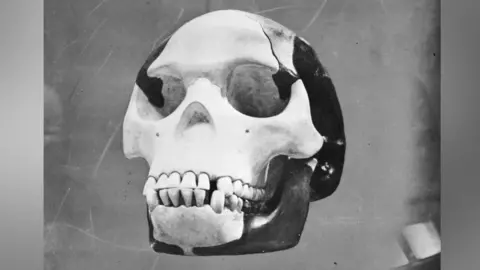
GettyOver 100 years ago the unearthing of a skull in the Sussex countryside became an international story of scientific discovery, later revealed to be a sophisticated hoax.
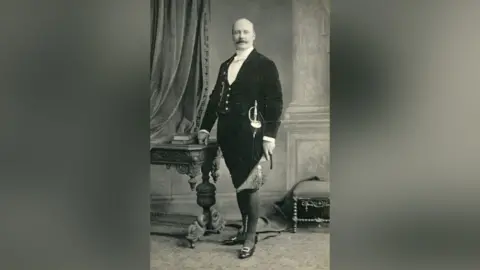
In 1912, Lewes solicitor and amateur archaeologist Charles Dawson found a skull he claimed was half ape and half human.
According to historian Kevin Gordon, Dawson's discovery, named the Piltdown Man, appeared to be the "missing link" for a scientific community trying to substantiate Charles Darwin's theory on evolution.
"The problem is the scientific community had no evidence of it...and that all changed in 1912," he told Secret Sussex.
 Geological Society of London
Gordon said Dawson was "quite renowned" at the time for making archaeological discoveries in towns including Bexhill and Chichester, but the Piltdown Man put him on the map internationally.
However, there was some scepticism from the start.
"I think some people, even then, were suspicious. For instance, the Sussex Archaeological Society didn't mention it in any of their journals," he said.
The legitimacy of Dawson's discovery began to unravel in the 1950s as new techniques allowed scientists to test the age of the bones.
Gordon said: "In 1953, Time Magazine published a report proving that the Piltdown Man skull was a forgery.
"Even the teeth had been shown to have been filed down to make them look more original...the whole thing was a fake."
Tests have since shown that the bones came from two or three humans and one orangutan.
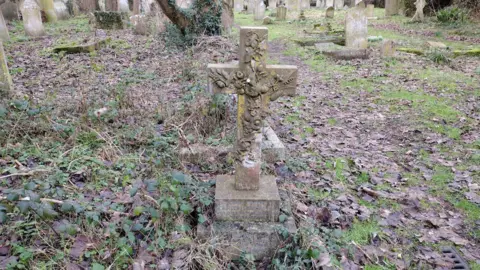
A further study in 2016 concluded that Dawson, who died in 1916, worked alone.
 Fiona McCarthy/BBC
According to Gordon, Dawson actually found the first fragment of skull in 1908.
"He [Dawson] then took it home and decided to go back three years later, and amazingly he found other parts of the skull in the same place," the historian said.
As for Dawson's legacy, Gordon believes it is complicated.
While he was at one time considered an "eminent scientist and historian", the amateur archaeologist was ultimately the architect of a huge deception.
"Unfortunately he's probably remembered as a fraud, somebody who hoodwinked the scientific community," Gordon said.
Follow BBC Sussex on Facebook, on X, and on Instagram. Send your story ideas to southeasttoday@bbc.co.uk or WhatsApp us on 08081 002250.