Vast seagrass meadows will shield coastline

 Finn Varney
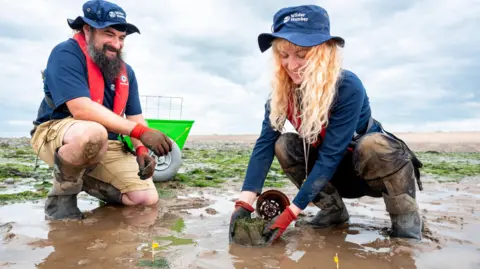
A project to restore vast meadows of a saltwater plant to the Humber Estuary has reached a major milestone, experts say.
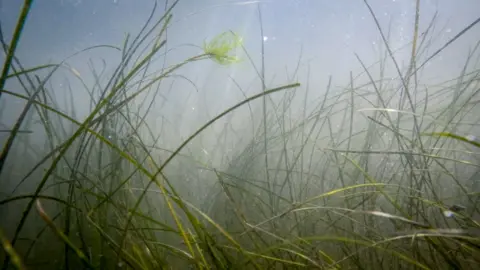
Seagrass is one of the most powerful natural tools for tackling climate change and can protect coastlines from storms and erosion, according to Wilder Humber – a partnership of the Yorkshire and Lincolnshire wildlife trusts.
It once covered about 1,100 acres (445 hectares) of the estuary, but declined dramatically during the 20th Century due to pollution, disease and the loss of natural coastal space.
Dr Andy van der Schatte Olivier, of Yorkshire Wildlife Trust, said trial plantings had been "hugely encouraging" for the future of the meadows.
He added: "We're giving these meadows the best possible chance to recover, thrive and deliver real benefits for wildlife, climate and coastal communities."
According to Wilder Humber, seagrass captures carbon up to 35 times faster than tropical rainforests and improves water quality by absorbing pollutants.
The meadows also provide a habitat for fish, eels and birds.
But the plant declined to about 12 acres (4,85 hectares) by the turn of the century.
 Finn Varney
The latest trial, monitored over a full growing season, tested three planting techniques to identify the most effective.
It found that direct injection of seeds into the seabed, along with the transplanting of small intact patches of seagrass had delivered the best results.
Van der Schatte Olivier said: "They show that, even in a dynamic estuary like this, we can successfully restore seagrass at scale when we use the right methods."
Wilder Humber is supported by the renewable energy firm Orsted.
Listen to highlights from Hull and East YorkshireorLincolnshireon BBC Sounds, watch thelatest episode of Look Northor tell us about a story you think we should be covering here.
Download the BBC News app from the App Storefor iPhone and iPad orGoogle Play for Android devices