Guernsey undersea cable to be out for a month
 Chris George Photography
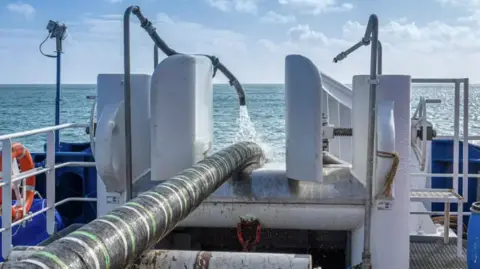
The cable which brings in 90% of Guernsey's electricity from the European mainland is set to be out of action for about a month later this year, so maintenance can be carried out.
It will mean almost all of Guernsey's power will have to be generated by burning heavy fuel oils at the power station on The Bridge.
Guernsey Electricity's CEO Alan Bates said it was a clear demonstration of why the island needed two cables bringing power to the island.
Before the end of September this year the States Trading Supervisory Board and the Committee for the Environment and Infrastructure have said they would bring plans for a new interconnector before the States.
Bates said with oil prices rising due to the conflict in the Middle East, if fuel prices did get temporarily too high the work could be postponed.
"In terms of the actual cable itself, it's very hard to maintain that particular thing, but the bits that sit at each end, the switch gear, the transformers and the reactors, do need maintenance."
Cable plans before September
In an update to States members earlier this week, States Trading Supervisory Board President Mark Helyar said the proposals for a new electricity cable would depend on "outstanding workstreams which sit with the wider States, a clear hydrocarbons importation and storage policy, decisions on future harbour requirements, and the interface between these and broader climate and energy objectives".
"Until those are settled the Trading Group cannot optimise its capital programme," he added.
Guernsey Electricity alongside the States is looking at a number of different routes for the new cable, which would have implications on costs, including going via Jersey or straight to France.
"That is a key element of the island's electricity strategy: it improves resilience, reduces reliance on on‑island generation, and in time should reduce the requirement to import heavy fuel oil through St Sampson's," commented Helyar.
Follow BBC Guernsey on X and Facebook and Instagram. Send your story ideas to channel.islands@bbc.co.uk.