'One massive wave, then bang, the tide was in'

 Chris Haffenden
A man has described the terrifying moment a walk along the beach turned into a fight to escape huge waves and a high tide.
Chris Haffenden was walking from Seven Sisters to Birling Gap, near Seaford, in East Sussex, last Thursday, when, he said, there was "one massive wave, then bang, the tide was in".
Within moments, the 44-year-old gardener was trapped against the Sussex cliffs and knee-deep in water.
Lifeboat crews described "challenging shore-dump conditions", with two-metre (6.5ft) waves breaking on the shore, just before 11:30 GMT.
Freezing wet 'sucker punch'
Haffenden, from Hailsham, who has always lived in Sussex and knows the coastline, said he had never understood how people got cut off - until it happened to him.
Wave after wave was "crashing", he said, adding: "That massive sucker punch of freezing wet water is something I never want again."
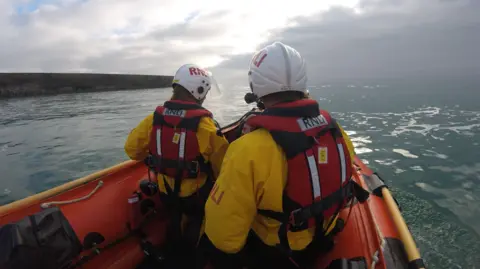
RNLI volunteer lifeboat crew member Dan Wittenberg said the powerful, breaking waves which can capsize a boat made the rescue "challenging".
When the boat took on water, the crew had to retreat to bail out, leaving one volunteer in the sea.
Haffenden was found about 500 metres west of the William Charles Monument, between the Seven Sisters cliffs and Birling Gap, the RNLI said.
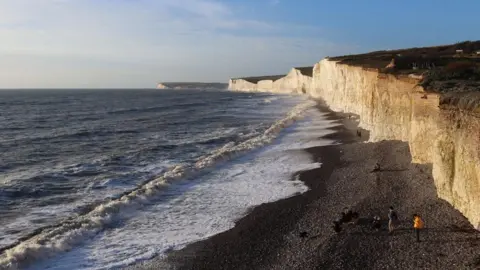
Haffenden said he thought he had two hours before high tide, with an hour's walking time.
The only refuge was a cubby hole in the base of the cliff, he said, with the cove rapidly decreasing, the former estate manager said.
With no phone reception, he contacted the coastguard using a radio that can transmit, which he keeps in his bag.
Rescued by Newhaven's D class inshore lifeboat, he said the team got him aboard and gave him a life jacket, while a crew member kept a reassuring hand on him as they brought him to shore, cold but uninjured.
He described it as "an emotional moment".
Afterwards, he realised it was a spring tide, something he had not seen before.
 RNLI/Newhaven
Haffenden said his rescuers were "heroes", adding: "They are modest and they are voluntary, they've got lives and jobs and they're not getting paid to look after us. It's amazing."
The RNLI website states 97% of its frontline lifesavers are volunteers, with 7,828 crew and shore crew volunteers at stations around the UK and Ireland, 15% of whom are women.
Haffenden said he felt "embarrassed" but would do the walk again. "I'll make sure the tide is 100% going out," he said.
RNLI water safety officer Claire Rozario urged walkers to check tide times, allow enough time to return safely and to carry a means of calling for help.

Follow BBC Sussex on Facebook, on X, and on Instagram. Send your story ideas to southeasttoday@bbc.co.uk or WhatsApp us on 08081 002250.