Net zero plans tested in the Fenland landscape

 Holly Wilkinson
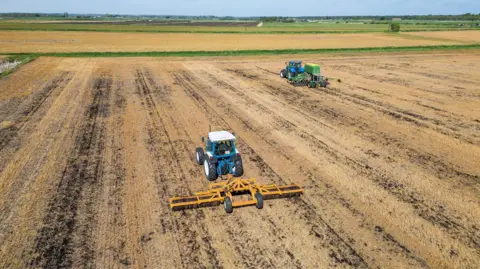
A major project in the Cambridgeshire Fens is exploring how the UK can meet its climate targets while protecting one of the country's most productive farming regions.
A team from the University of Cambridge's Centre for Landscape Regeneration is testing ways to reduce greenhouse emissions and restore wetlands.
Prof Emily Shuckburgh, co-director of the Cambridge centre, said farmers had been "absolutely brilliant at coming up with ideas themselves as to what might be done differently in terms of future farming techniques".
A guest editor on BBC Radio 4's Today programme this week has been former Conservative Prime Minister Theresa May, who introduced the UK's legally binding net zero target.
The Fens, often described as the "breadbasket of Britain", faces severe pressure and there is just 1% of it left in its original wetland condition, with the rest drained for arable farming, said Dr Laurie Friday, from the centre.
"Once you have drained peat, it dries out. It will break down into fibrous substance and carbon dioxide, which goes into the atmosphere which makes climate change worse," she added.
Extreme heat and drought in the summer of 2025 also contributed to major crop losses, highlighting the vulnerability of farming.
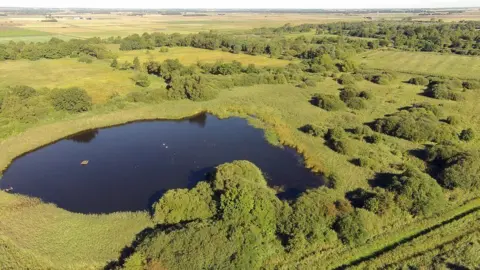
In 2021, the UK's first major experiment in "wet farming" was awarded £8m from the National Lottery Heritage Fund to create wetlands across the Great Fen near Ramsey, aiming to lock up more than 4,000 tonnes of carbon by growing crops without disturbing peat soils.
Prof Shuckburgh, who is also the chief scientific adviser at the Department for Energy Security, highlighted those challenges.
"We are looking at how to address those twin challenges, but doing so in collaboration with the farming community, with the conservation community and with all the other stakeholders that are associated with the landscape," she said.
 Henry Stanier
Ms Shuckburgh added: "One option is literally raising the water table to reduce emissions from peatlands... but it also has the potential to increase methane... so farmers need to understand the complex balance.
"Without farmers' input, we wouldn't know what is practical or realistic for the landscape."
Megan Hudson is head of research at Oxwillow, which is part of the Taylor Farms group which is experimenting with growing crops in much wetter soil, known as paludiculture.
One method stops the peat breaking down and producing carbon dioxide.
"We're understanding a little bit more about how easy it is to manage a water table on these sites," said Ms Hudson.
"It gives you a little bit of hope that actually there might be a solution going forward in terms of changing our farming systems."
Follow Cambridgeshire news on BBC Sounds, Facebook, Instagram and X.