New heat network rules tokenistic, says homeowner

 BBC
BBCA homeowner from south London says new regulations for customers connected to communal heating systems do not include an energy price cap and simply "feel tokenistic".
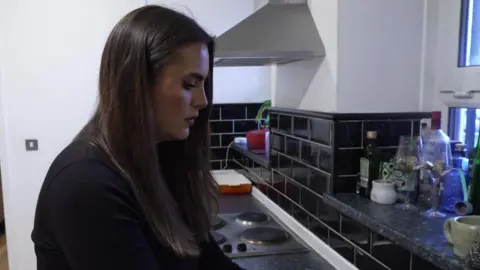
Hannah Strickland, 31, who lives in Camberwell, says "it's the one thing people were seeking, just like everyone else in England who does not operate within a district heat network".
The energy regulator Ofgem which introduced the rules last month said "customers will begin to benefit from stronger protections on billing, complaints, and support for those in vulnerable situations".
"Some areas of protection will require further policy work, given the complexity of the sector and the interaction with housing legislation."
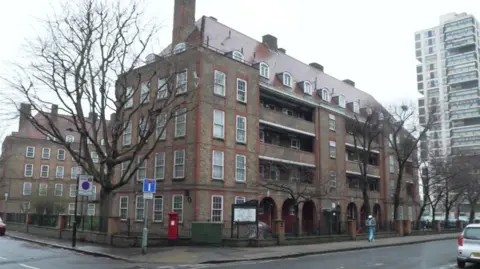
Hannah bought her dream home on the Wyndham and Comber Estate in Camberwell three years ago and says affordability was a big factor in deciding where to buy.
She chose her apartment based on previous years' service charges, which included heating and hot water.
"I was able to see the service charges for the last few years and I thought it was affordable. But when I moved in those prices really increased.
"I don't have the lifestyle that I thought I was going to have living in this flat. I'd carefully worked out what my take-home was going to be at the end of the month - and it's not been what I expected because of these huge bills.
"If I'd known what they would have been before I moved in, I would have thought twice about buying this flat."
Cabinet member for council homes, Portia Mwangangye, said: "Ensuring that all residents of Southwark have access to warm, well-maintained homes is a priority for the council.
"Whenever we action repairs or renewals to heating networks, we prioritise ensuring systems are reliable and economical, meaning there will be less cost on future repairs and less cost for residents due to more efficient materials and systems being in place."
"Regarding Wyndham and Comber Estate, we have appointed consultants with work to be undertaken on renewing sections of the underground heating mains.
"We have not yet developed full costings for this work."
She added that the council understood residents' concerns and if additional payments were needed, a "transparent consultation" would be carried out but no definitive estimates were available yet.
'We feel trapped and helpless'
A recent BBC London freedom of information request found that there are 101 heat networks within the Southwark borough - the highest number for any local authority in the capital.
They serve around 17,000 households, including Denise and Ray's one-bedroom flat on the Surrey Docks Estate in Rotherhithe.
As council tenants they pay over £160 a week for their rent which includes heating and hot water.
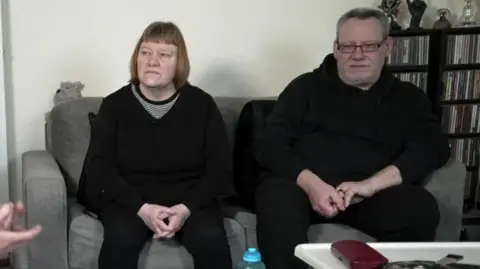
But, Denise says it constantly breaks down.
"It's every week, about two, three times a week that it goes off for several hours."
She says the situation is affecting her health.
"I have arthritis and the cold weather digs in. I'm sitting shivering and I feel like I'm back in the 1970s when it didn't exist.
"We are trapped, and feel helpless."
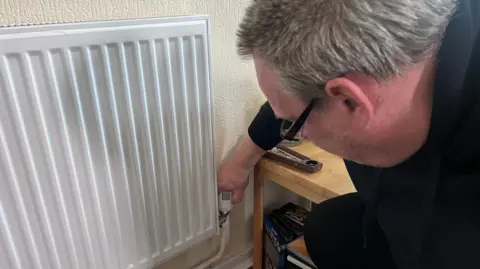
Ray believes the boiler that heats his estate is over 40 years old and feels the council does not care about tenants.
"I'm annoyed that we are paying for the heating on a weekly basis to keep warm and we are not getting that service from them."
Mwangangye said the council was aware of the issue with the Surrey Docks heat network.
She added: "We have already taken several actions to improve the situation, including diagnosing the primary issue and putting in place a plan to deal with blockage and corrosion issues at the heart of the disruption.
"Our maintenance teams are working hard to address the remaining issues as a priority, and we have communicated with residents throughout to ensure that they are kept in the loop, and given access to local leisure centre amenities if their water supply is disrupted at any stage."
What are the new regulations?
Ofgem introduced new mandatory regulations for heat networks in Great Britain which came into effect on 27 January 2026.
They say the rules will ensure:
- fair pricing: the cost of heating should be "fair and not disproportionate" and if there is no specific price cap in place, the regulator can now intervene if prices are excessively high compared to alternatives
- an improved service for customers: operators must provide clearer billing, better communication, and specific support for vulnerable customers
- stronger consumer protection: tailored debt recovery plans must be offered to customers who miss payments or fall into difficulties with payments.
Ofgem can impose fines of up to 10% of turnover or £1m on operators for non-compliance, such as poor service or unfair pricing.

Stephen Knight, chief executive of the Heat Trust who champions customers connected to district heating systems welcomes the new regulations but says they "don't go far enough".
"They're a really important first step to getting a basic set of rules in place that will make a difference," he said.
"There's a lot more to do like a technical assurance scheme to make operators improve their efficiency, performance and reliability."
He is concerned that there are still a number of gaps in the rules that would help customers even further, adding: "We need compensation payments, price protection and debt relief schemes in place."
Denise and Ray's problem of frequent outrages may not be covered by the new regulations.
According to Knight, compensation for outages is currently not in place for heat network customers.
He said: "Ofgem are thinking about consulting about this later this year, but it's not clear when compensation and guaranteed standards are going to be in place."
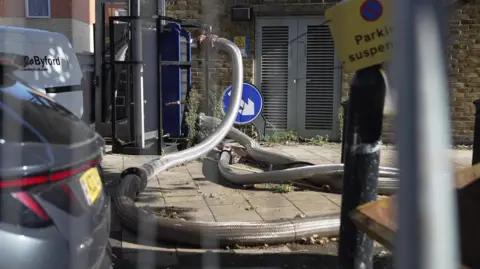
More regulations are in the pipeline.
A consultation by The Department for Energy Security and Net Zero (Desnz) is currently under way into a new Heat Network Technical Assurance Scheme (Hntas).
It will set performance standards for new and existing heat networks.
With many council-run networks old and poorly maintained, Knight says some costs could be passed on to leaseholders.
Denise and Ray are optimistic that help is around the corner now that the new rules have been introduced by Ofgem.
Ray says "hopefully they will resolve some of the issues".
Hannah is worried that if councils have to upgrade their heating systems in the future, leaseholders like her will end up paying.
Listen to the best of BBC Radio London on Sounds and follow BBC London on Facebook, X and Instagram. Send your story ideas to hello.bbclondon@bbc.co.uk