Lack of autism support in school led me to a psychiatric ward as a teen

 BBC
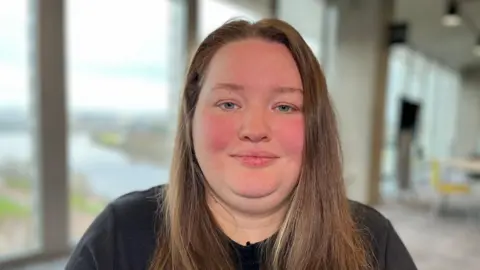
BBCA woman who says she ended up admitted to a psychiatric ward as a teenager after her school misunderstood her autism is calling for mandatory autism training for teachers.
Becca Galloway believes her hospitalisation was in part due to lack of support in the classroom, leading to a decline in her mental health and bullying from other pupils.
The National Autistic Society Scotland (NASS) also wants training to be compulsory for teachers in how to support children with the condition.
The Scottish government says teachers already undertake additional support needs training during initial teacher education and it is investing more money to support the workforce.
'Severely bullied'
Becca, now 27, describes her school years as "incredibly hard". She was not diagnosed with autism until she was a teenager.
She struggled from the start. In primary, there was more routine but by high school the constant change of subjects and classes became a problem.
"I'd say Primary four is when I started to get severely bullied," she said.
"My mum remembers a lot of physical bullying as well as people just saying stuff.
"She remembers the time I got shoved up against a fence. Because of things like the constant change (of class), I think that's where my sensory challenges started kicking in - in terms of noise and people and the constant moving around of everybody moving around the building the whole time".
Autistic children and adults often have sensory issues, where noise is amplified and lights seem too bright, so classrooms can seem loud and chaotic.
Routine is vital for most autistic people as it brings predictability, reducing anxiety in a world that may feel confusing.
Like a lot of autistic children, Becca found friendships difficult.
Becca was assessed for autism at eight but was told it was social anxiety. A diagnosis finally came at 14. But no support was offered.
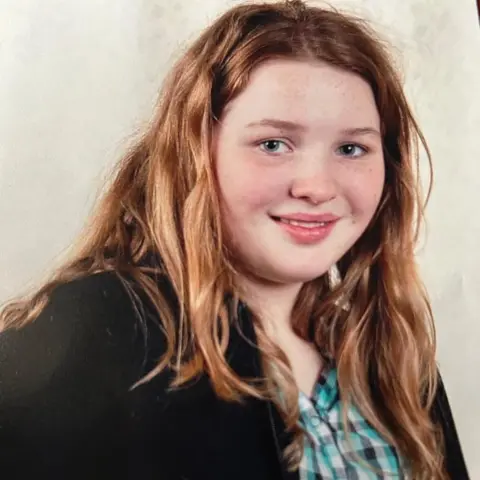 Becca Galloway
Becca says she ended up in psychiatric care because the link between her mental health and autism had not been made.
"The next two years was when I saw a massive decline in my mental health," she said.
"My parents split up when I was 15 which didn't help and I ended up being admitted to Skye House, the psychiatric unit, when I was 16, for more than three months."
She said an occupational therapist at the unit was the first person to consider that her autism might be "part of the problem".
"She did a lot of work in sensory input and she brought my mum and dad in for conversations," Becca added.
"There were a couple of teachers throughout the years who were very important too."
NASS says it hears of too many experiences where pupils' autism is misunderstood as bad behaviour by staff who don't have specialist training.
More than a decade since Becca was at school, the charity believes the situation has deteriorated.
Recent Scottish government figures show the number of pupils classed as having Additional Support Needs (ASN) has risen to 43%.
This figure includes autism but also a range of other needs, for example living in poverty or having a parent in prison.
'Exclusion and part-time timetabling'
A recent report from the EIS teaching union using Scottish government figures found that whilst the percentage of pupils with ASN rose between 2010 and 2024, the number of ASN teachers in Scotland fell from 3,524 to 2,837.
This is a drop of 19.5%, meaning a fifth of the ASN teachers that Scotland once had have disappeared from the system in the last decade and a half, it said.
NASS says anxiety felt by autistic children can lead to behaviours that are often dealt with through exclusion or part-time timetabling, rather than support.
The organisation wants the Learning Disabilities and Neurodivergence Bill - which is currently subject to consultation - introduced to the Scottish Parliament.
It says that would ensure mandatory training for not just teachers but health and social care staff too and would also look at how buildings could be made more inclusive - with things like quiet rooms or spaces.
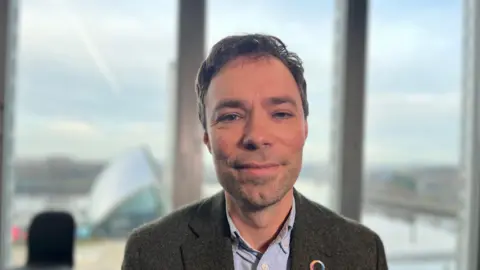
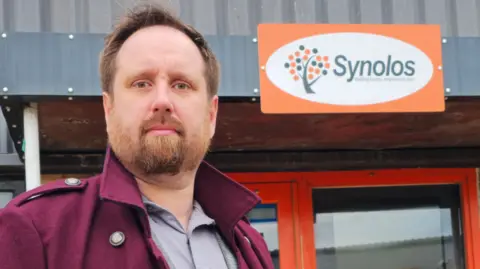
Director Rob Holland says young people and their families tell them that while teachers do their best, they are not specially trained.
"Teachers want to do the best job they can, they want to support autistic children," he said.
"Training is not mandatory so not all teachers have the appropriate level of training, tools and skills that they need to support people.
"We also need to make sure classroom environments work for autistic children and young people."
He said Becca's story was not uncommon.
A spokesman for the Scottish government said all teachers currently receive ASN training which includes conditions such as autism during their initial training, and it is a requirement to meet General Teaching Council (GTC) standards.
"Local authorities oversee the delivery of education and have a statutory duty to identify, provide and review the support that they provide for pupils with additional support needs in their local community," he added.
He said a further £28m would be made available this year to support the ASN workforce, while new guidance on sensory inclusive learning environments is being finalised.
'Can't train your way out of a crisis'
The EIS, Scotland's largest teaching union, told BBC Scotland that what was needed was more money and more ASN teachers.
A spokesperson said it was not possible to "train our way out of a crisis in ASN resourcing" where record numbers of ASN pupils are being taught in mainstream classes of up to 33 pupils.
"Calls for mandatory training in specific additional support needs, whilst well-intentioned, must recognise that Scotland's teachers support children with a vast array and increasing complexity of needs," the spokesperson added.
Looking back, Becca feels training in autism for teachers and staff would have changed her sense that no one understood her.
"There were maybe three teachers who did," she added.
Despite difficult teenage years, Becca is thriving.
She did an HND at college and is now at Edinburgh Napier University studying music.
Working as a volunteer and community musician with Glasgow charity the GK Experience brings a social life that is rewarding, enjoyable and allows Becca to be herself.
"They look for the best in you," she said. "They don't try and change who you are, or try to fix you."