Rare plants survive storm 'devastation'

 BBC
BBCHundreds of plants that are part of a garden's historic collection escaped storm damage despite 150 trees being destroyed, National Trust bosses have said.
The trees came down at Trengwainton, near Penzance, Cornwall, during Storm Goretti in January, but the trust said after a careful assessment, about 90% of the internationally-important collection had survived.
Some parts of the garden remain closed because of fallen trees but most of the site has reopened.
One of the garden team said the damage after the storm was a "living nightmare", and they planned to plant tree species "more resilient to wet weather and high winds".
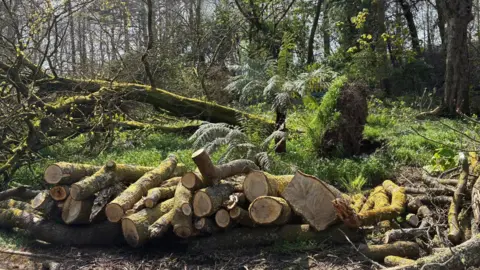
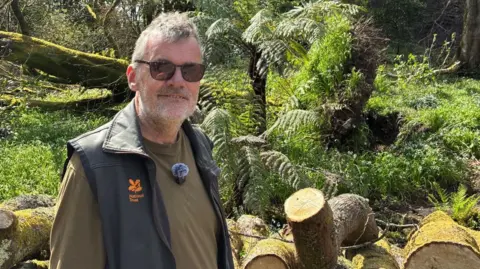
Matt Nixon, from Trengwainton's garden team, said: "When we first came in after Goretti it was a scene of utter devastation, there was a tangle of fallen trees and blocked paths, it was just a living nightmare
"We're going to take our time in choosing what to plant in place of the trees that blew down, we need to think about climate change and different species that can tolerate prolonged wet weather and droughts.
"Our famous collection of plants has remained relatively unscathed but some of them are underneath the bigger fallen trees so they'll need to be removed very carefully."
Trengwainton is famous for its mild, sheltered microclimate and its exceptional plant collection, which has been built over generations and includes species first introduced to Britain following plant-collecting expeditions in the early 20th century.
Plants including rare rhododendrons, camellias, magnolias and giant tree ferns survived the storm, bosses said.
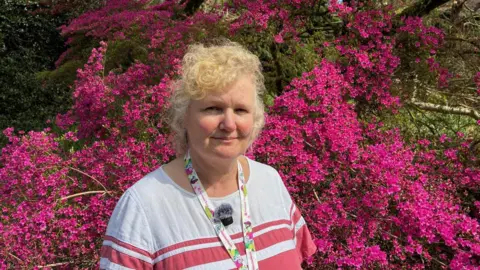
Marina Rule, head of visitor experience at the gardens, said: "I've worked here for 20 odd years and when I see the damage I still get choked up, these trees are personal to me.
"The storm caused significant damage and the safety of our visitors and team has had to come first, but thanks to a huge collective effort we're now able to welcome people back to more of the garden."
Rule said Trengwainton was not alone and "so many people, businesses and communities across Cornwall were affected by Storm Goretti".
She said: "To see these paths reopening, especially the lower woodland walk that so many people love, feels really special.
"The fact that the vast majority of our plant collection has come through the storm is something we're incredibly grateful for.
Visitors can enjoy the Jubilee Garden, William Walk and the Lower Tree Fern Glade again now storm damage has been cleared, as well as those already reopened parts of the garden, including the walled gardens, Camellia Walk and orchard.
But work is ongoing so visitors may still notice some restricted areas and occasional closures during high winds, as safety remains a priority for the National Trust team.
Follow BBC Cornwall on X, Facebook and Instagram. Send your story ideas to spotlight@bbc.co.uk.