My breast cancer was too small to be detected by the human eye - it was found by AI

 BBC
BBCBreast cancer detection can be improved by more than 10% with the use of an artificial intelligence tool, according to the results of a new study.
The evaluation was led by the University of Aberdeen following an NHS Grampian project.
The team assessed how the AI software could be used to support healthcare workers in the routine breast screening of more than 10,000 women, who could also then be notified of the results more quickly.
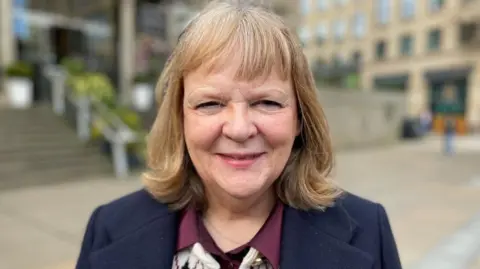
Yvonne Cook, from Aberdeen, who is in her 60s, had opted in to the AI research - and breast cancer was detected and then treated. "I just feel incredibly lucky," she said.
The study's findings will now be expanded as part of a further trial looking at the use of AI in breast screening at sites throughout the UK.
The AI tool, called Mia, has been developed by medical technology firm Kheiron.
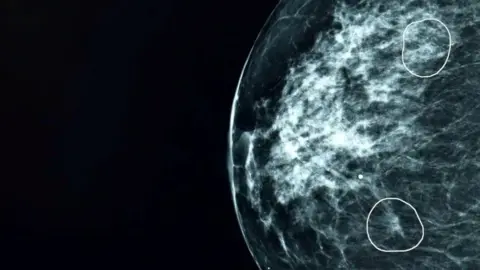
It can flag possible small and hard-to-spot areas of concern on mammogram scans that can be missed by the human eye.
The breast cancer screening study, published in the Nature Cancer journal on Tuesday, found it could increase detection by 10.4%.
It also found it could reduce staff workload, and cut the time to notify the women affected.
The research team described the findings as "hugely significant" as earlier detection enables earlier treatment, and, in turn, a greater likelihood of treatment success.
Yvonne went to what she thought would be a routine mammogram appointment in 2023.
In the waiting room she noticed a sign explaining that a project was under way involving AI to assist in reviewing mammograms, and participation was optional.
"It didn't occur to me for a minute to opt out," she said. "I think it said that AI would be utilised as part of the research project to review the mammogram and I just thought, why not?"
A short time later, she received a recall letter requesting additional imaging.
"I guess they don't want to alarm people unnecessarily, the letter said they wanted to do a follow-up mammogram which might be as a result of the initial result not being particularly clear.
"When I arrived for that appointment, they said that it was the AI part of the analysis that had picked up something.
"I had a scan and the consultant confirmed that the AI diagnosis was correct, that there was a small, Grade 2 tumour there, too small to be detected by the human eye."
'The cancer could have spread'
She added: "Overwhelmingly, I just felt incredibly lucky that I was part of the research programme and that it had been picked up at this early stage."
Yvonne was immediately put on medication to inhibit the growth of the tumour, followed by surgery.
"Had the AI not picked up the small tumour when it did, then either it would have been discovered at my next routine mammogram three years later, or I would have picked it up when it had grown to a stage that I was able to feel it," she said.
"If that had been the scenario, then it's likely that the surgery would have been more invasive.
"The cancer could have spread, it could have involved chemotherapy and a much longer recovery time with more impact on my life."
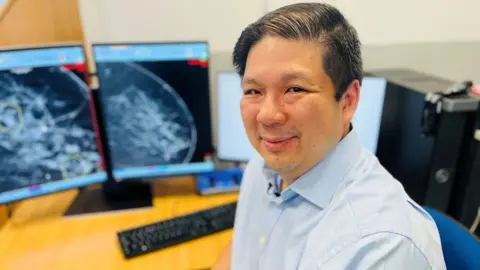
Prof Gerald Lip, clinical director for breast screening in the north east of Scotland, said the results showed that AI could "effectively support" services by increasing cancer detection and reducing workload.
"The bottom line here is without AI, doctors would not have caught these cancers as early," he said.
"The translation of AI into clinical practice is one of the operational challenges in the coming decade.
"Our findings will inform the conversation around using AI in healthcare."